日本の伝統芸能を代表する名作、能『道成寺』や歌舞伎『京鹿子娘道成寺』の舞台として知られる寺。世界的にヒットした映画『国宝』のポスターでも、『京鹿子娘道成寺』の衣装が使われています。
A temple known as the setting of the masterpieces of Japanese traditional performing arts: the Noh play Dōjōji and the Kabuki dance drama Kyōganoko Musume Dōjōji.
The costume from Kyōganoko Musume Dōjōji was also featured on the poster of the globally successful film Kokuho.
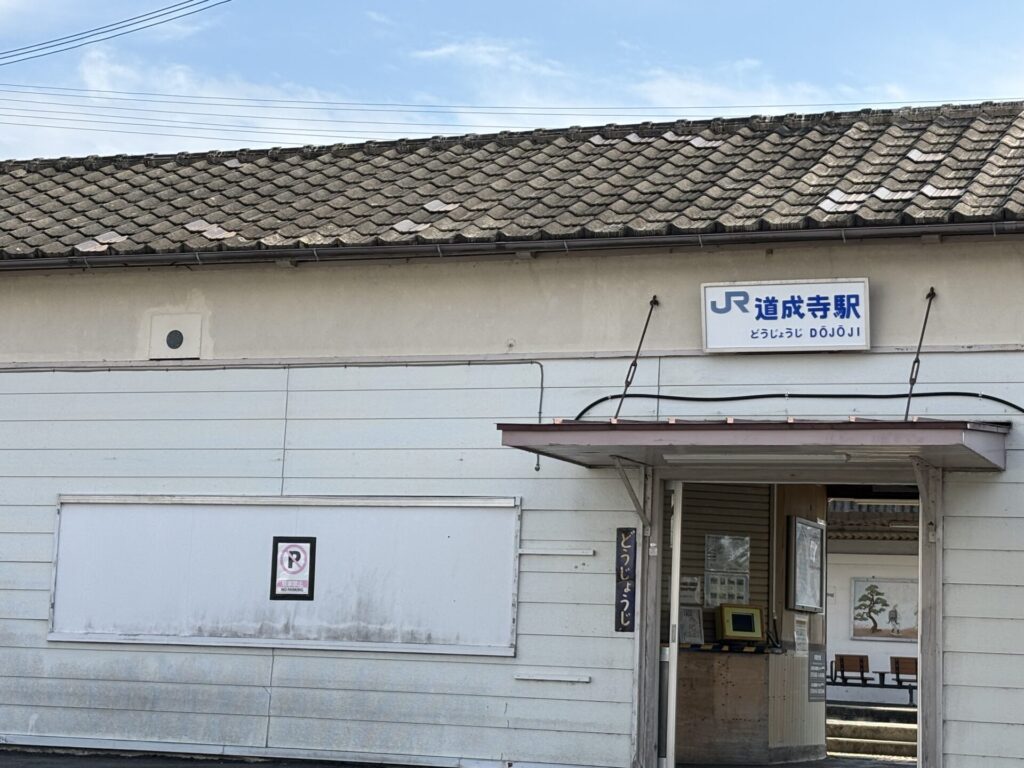
新大阪から熊野古道に行くまでの途中にあります。新大阪で特急に乗り、御坊で降り、きのくに線に乗り換え、道成寺駅下車、徒歩5分です。熊野古道には外国人観光客が多く訪れますが、道成寺ではほとんど見かけませんでした。
Dōjōji is located along the route from Shin-Osaka to the Kumano Kodo.
From Shin-Osaka, take a limited express train to Gobo Station, transfer to the Kisei Main Line (Kinokuni Line), get off at Dōjōji Station, and walk about five minutes.
Although the Kumano Kodo attracts many international tourists, I hardly saw any foreign visitors at Dōjōji.
道成寺の物語について、道成寺駅に絵が飾ってあったので、この絵で説明します。
There were illustrations of the Dōjōji legend displayed at Dōjōji Station, so I will explain the story using them.
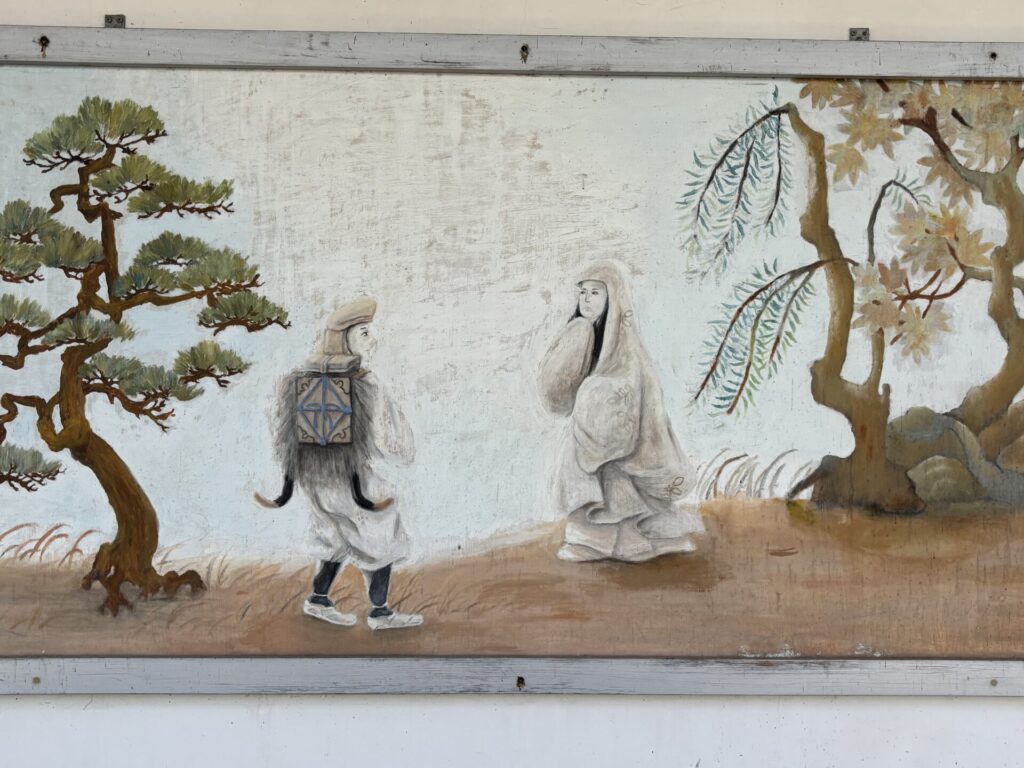
修行僧である安珍は、清姫に一目惚れされましたが、清姫の好意を断り切ることもできず、再び帰ってくることを約束して立ち去りました。しかし、約束の日にやってこない安珍を清姫は追い求めます。
A monk named Anchin was loved at first sight by Kiyohime.Unable to firmly reject her feelings, Anchin promised that he would return someday before leaving. However, when he failed to appear on the promised day, Kiyohime began searching for him.
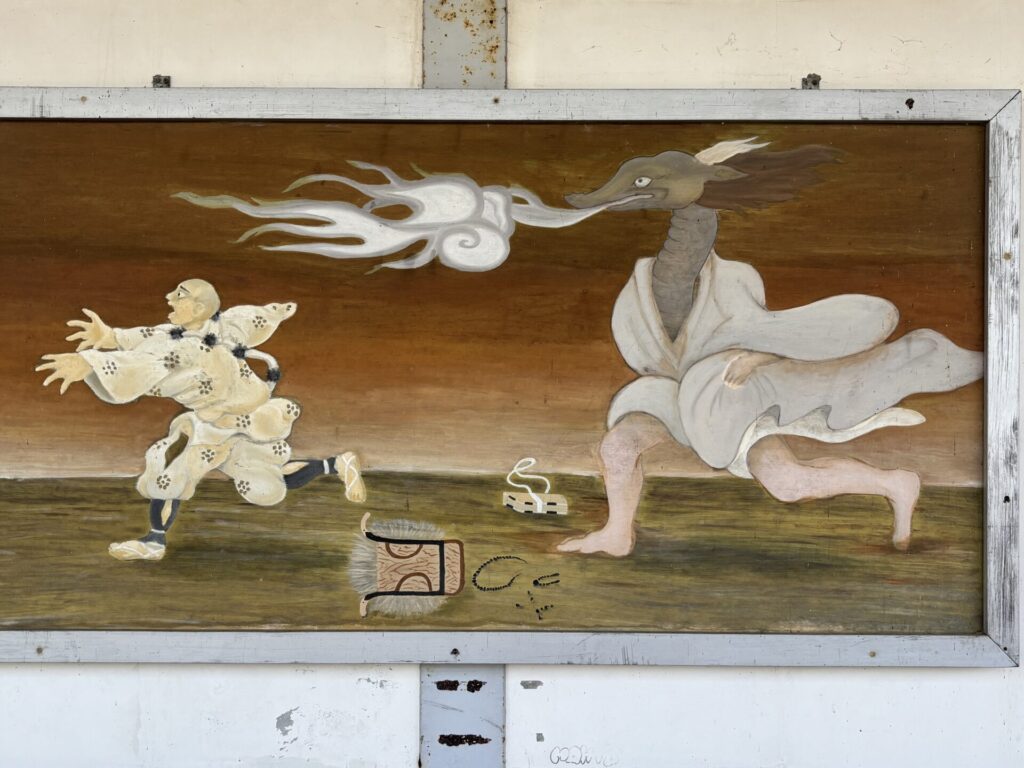
清姫に追いつかれた安珍は、とっさに「人違いだ」と言って逃げ出します。清姫は怒り、安珍を追いかけます。安珍が日高川を船で渡って逃げると、清姫は川に入り、蛇に姿を変えて川を渡ります。
When she finally caught up with him, Anchin panicked and claimed that she had mistaken him for someone else before fleeing. Furious, Kiyohime chased after him.As Anchin escaped across the Hidaka River by boat, Kiyohime entered the river herself and transformed into a serpent to pursue him.
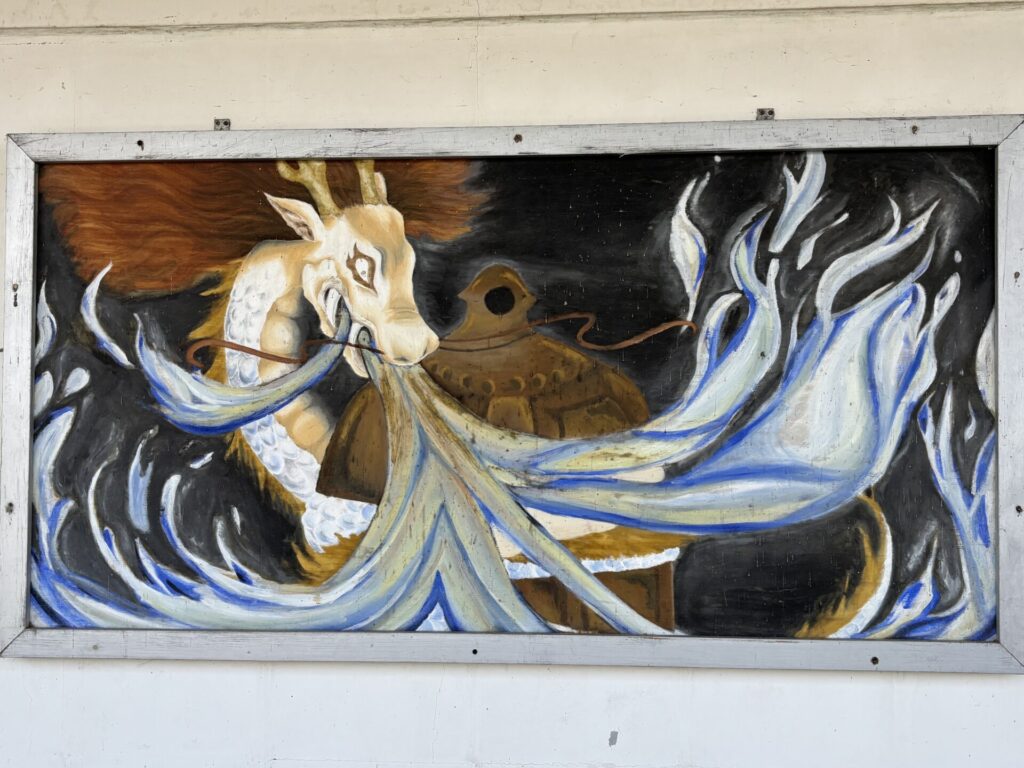
安珍は道成寺に逃げ込み、寺の鐘の中に隠れます。安珍の居場所を突き止めた清姫も、鐘の中には入れません。清姫は龍の姿となって鐘を抱くように巻きつき、さらに火を吹き始めました。鐘の中にいた安珍は焼死し、その後、清姫は入水自殺しました。
Anchin fled to Dōjōji Temple and hid inside the temple bell.Kiyohime discovered where he was hiding, but she could not enter the bell. Transforming into a dragon, she wrapped herself around it and began breathing fire.Anchin, trapped inside the bell, was burned to death. Afterwards, Kiyohime threw herself into the river and died.
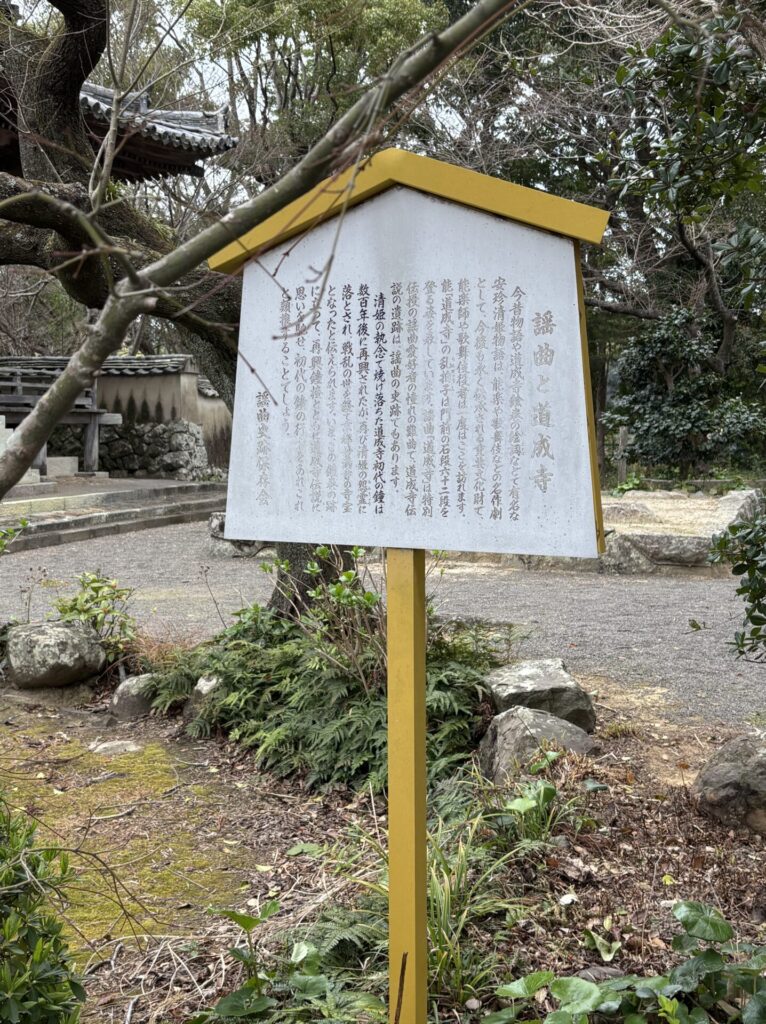
恐ろしい物語ですが、日本の古典芸能では、名曲として愛されてきました。日本の古典芸能には、愛しい男を追い求めて狂ってしまう女を描いた物語は数多くあります。清姫のように、思い余って蛇の姿となり恋人を殺してしまうほどの女の思いは、激しくも切ないものとして受け取られてきたのでしょう。
It is a terrifying story, yet it has long been beloved as one of the great classics of Japanese traditional performing arts.Japanese classical theater contains many stories of women consumed by love.The feelings of a woman like Kiyohime—so consumed by passion that she transforms into a serpent and kills the man she loves—must have been seen as both intense and deeply tragic.
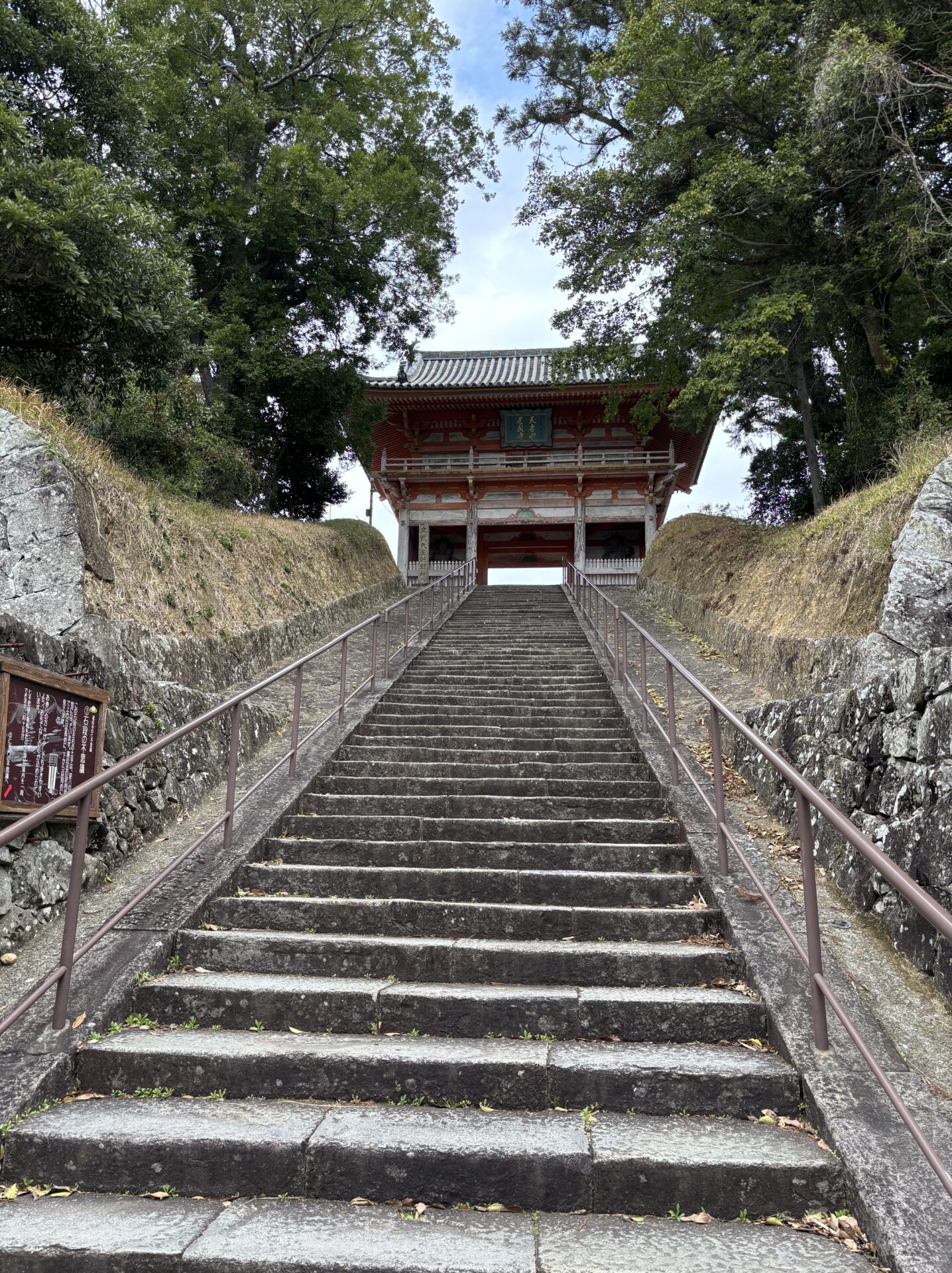
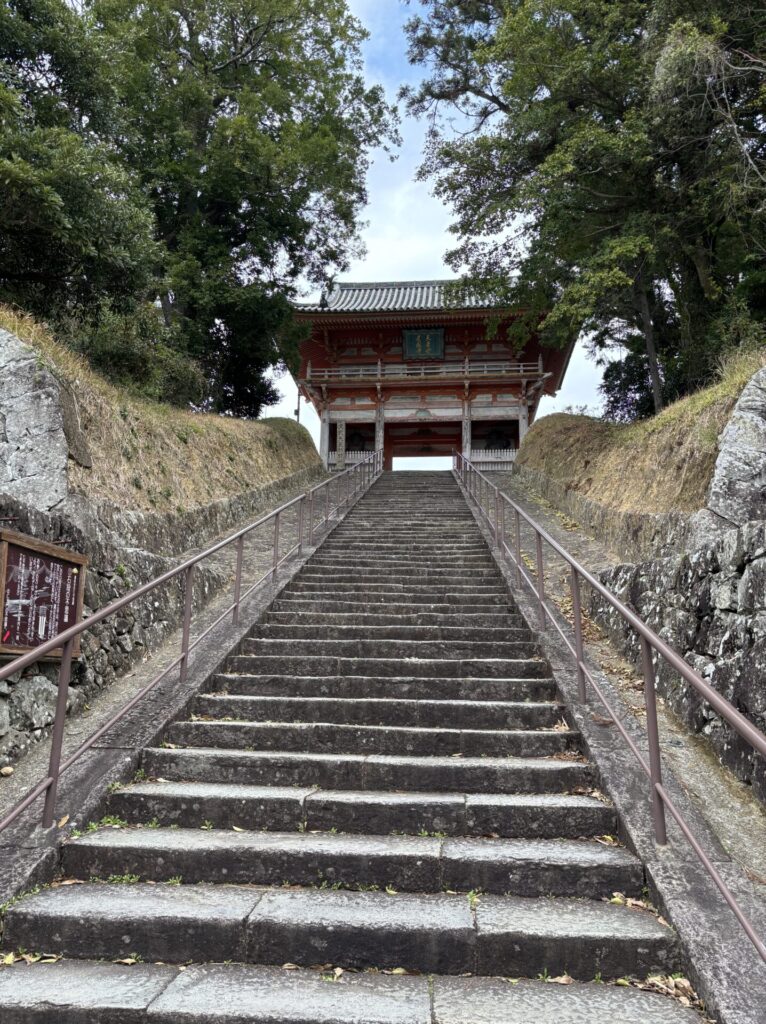
道成寺の石段。清姫が安珍を探してこの石段を登る様子が、能や歌舞伎では見せ場の一つなのだそうです。
The stone steps of Dōjōji Temple.In Noh and Kabuki performances, one of the highlights is the scene in which Kiyohime climbs these steps searching for Anchin.
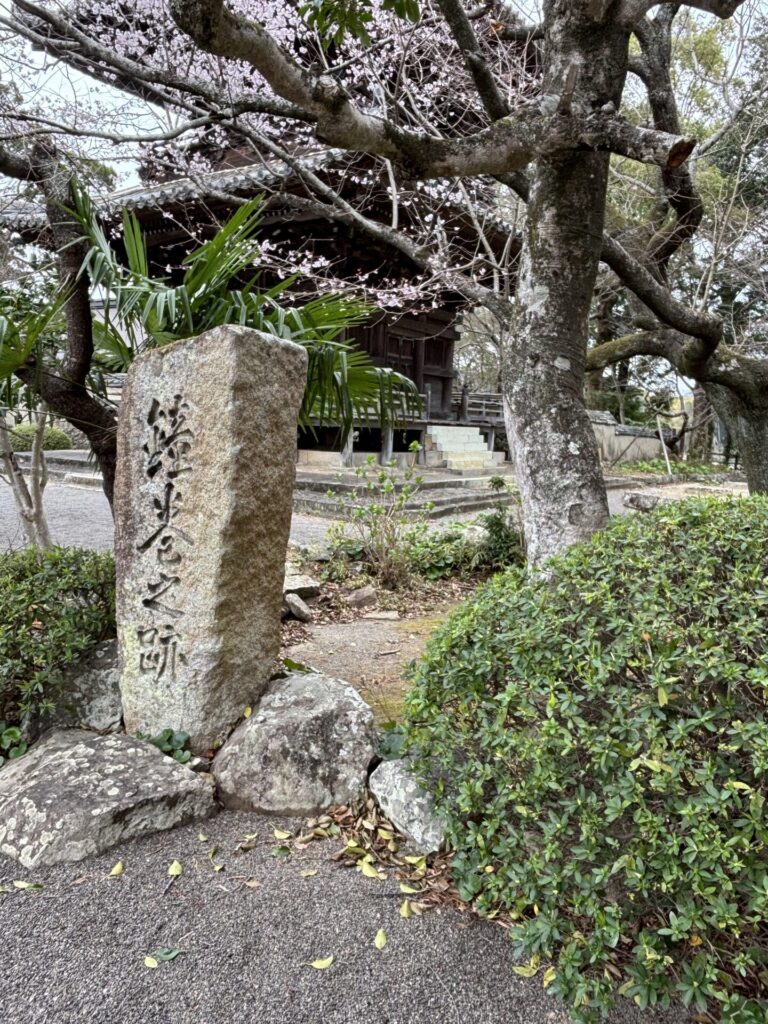
二代目鐘楼の跡。再建された二代目の鐘楼も、清姫の怨霊によって落とされたと伝えられます。鐘が落ちる場面は、能や歌舞伎のクライマックスです。
The site of the second bell tower.It is said that the rebuilt second temple bell was also brought down by Kiyohime’s vengeful spirit.The scene in which the bell falls is one of the climactic moments in both Noh and Kabuki.
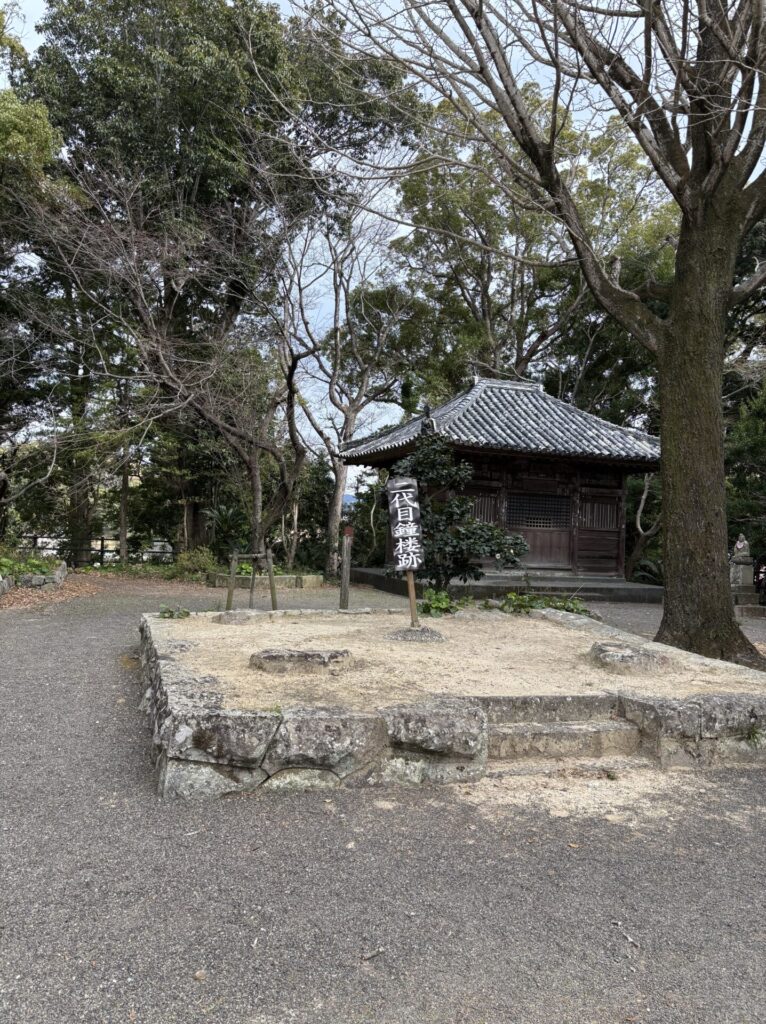
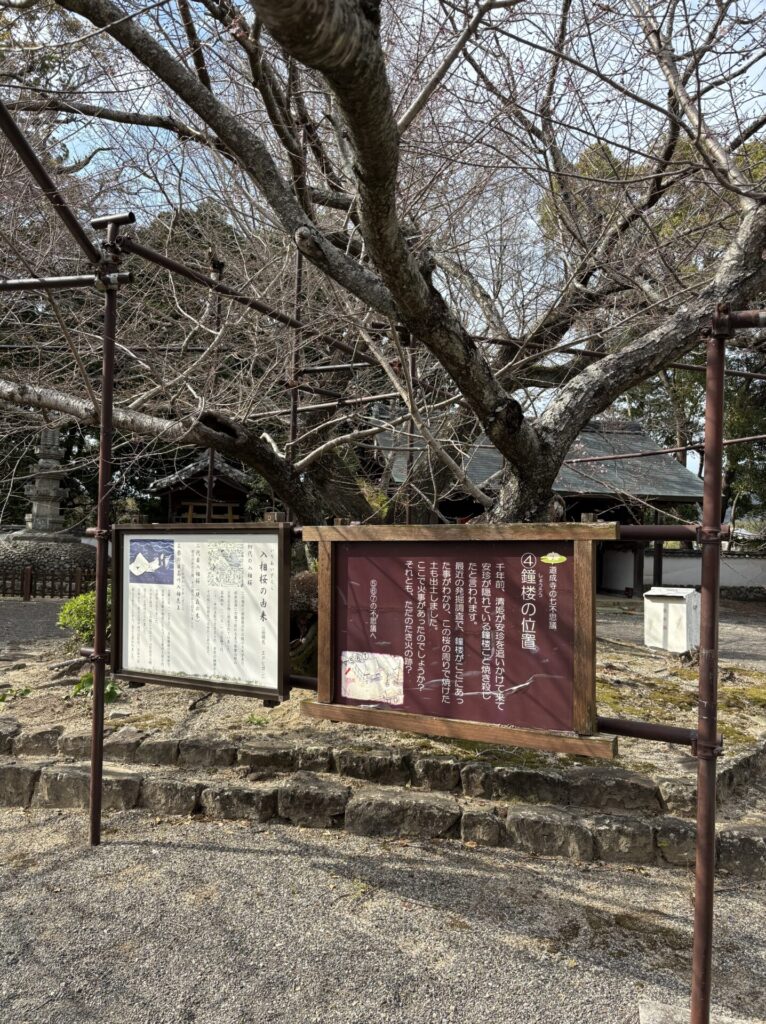
この場所に鐘楼があり、焼けた土も見つかったそうです。
The bell tower once stood here, and burned soil was reportedly discovered at the site.
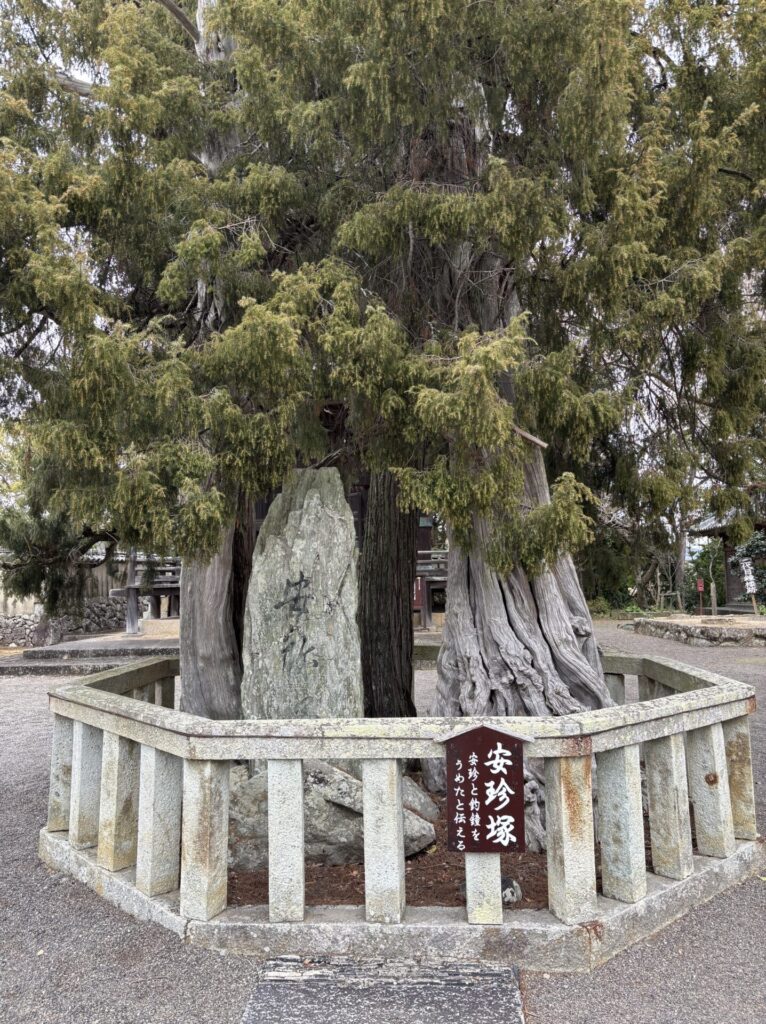
安珍の墓。
The grave of Anchin.
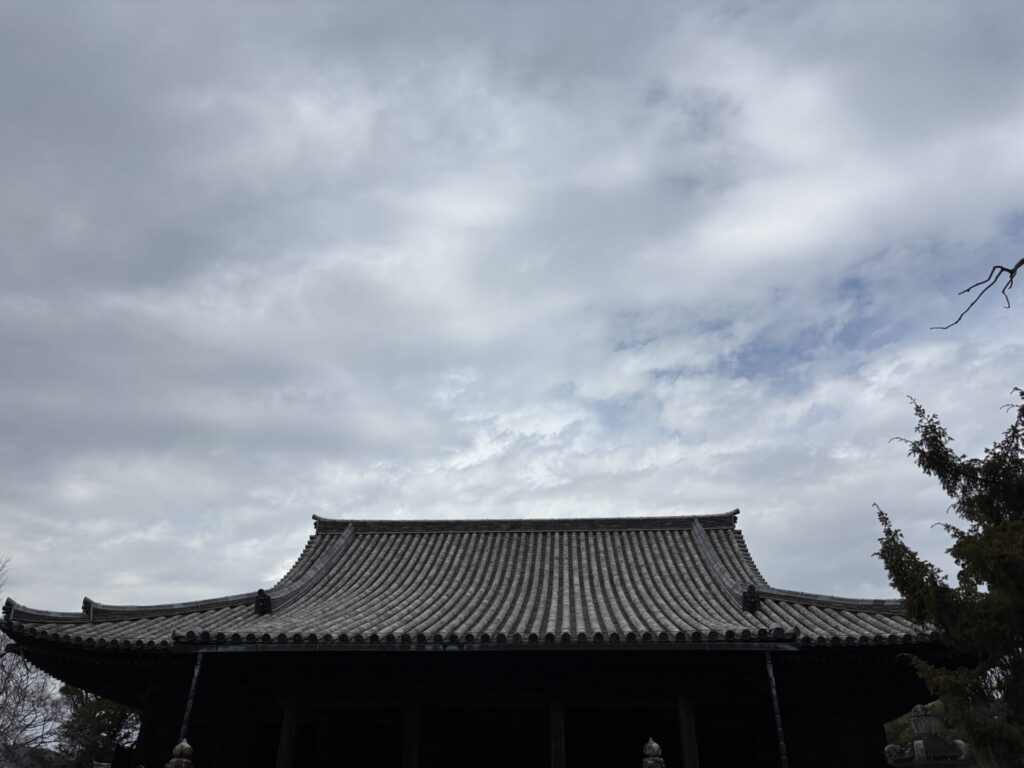
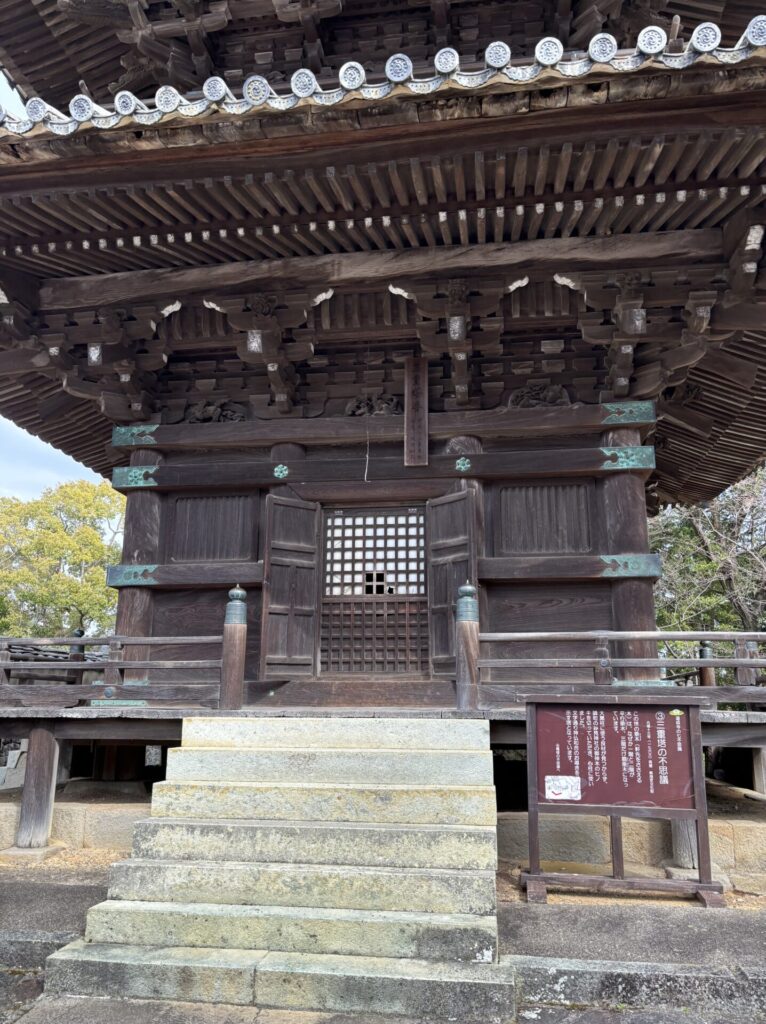
本堂。清姫の怨霊で知られる一方で、道成寺は和歌山県最古の寺であり、ご本尊は千手観音です。千手観音は、たくさんの人々を救うためにたくさんの手を持つ仏様です。
The main hall.
Although Dōjōji is famous for the story of Kiyohime’s vengeful spirit, it is also the oldest temple in Wakayama Prefecture, and its principal deity is the Thousand-Armed Kannon.
The Thousand-Armed Kannon is a Buddhist deity depicted with many arms in order to save countless people.
コメント