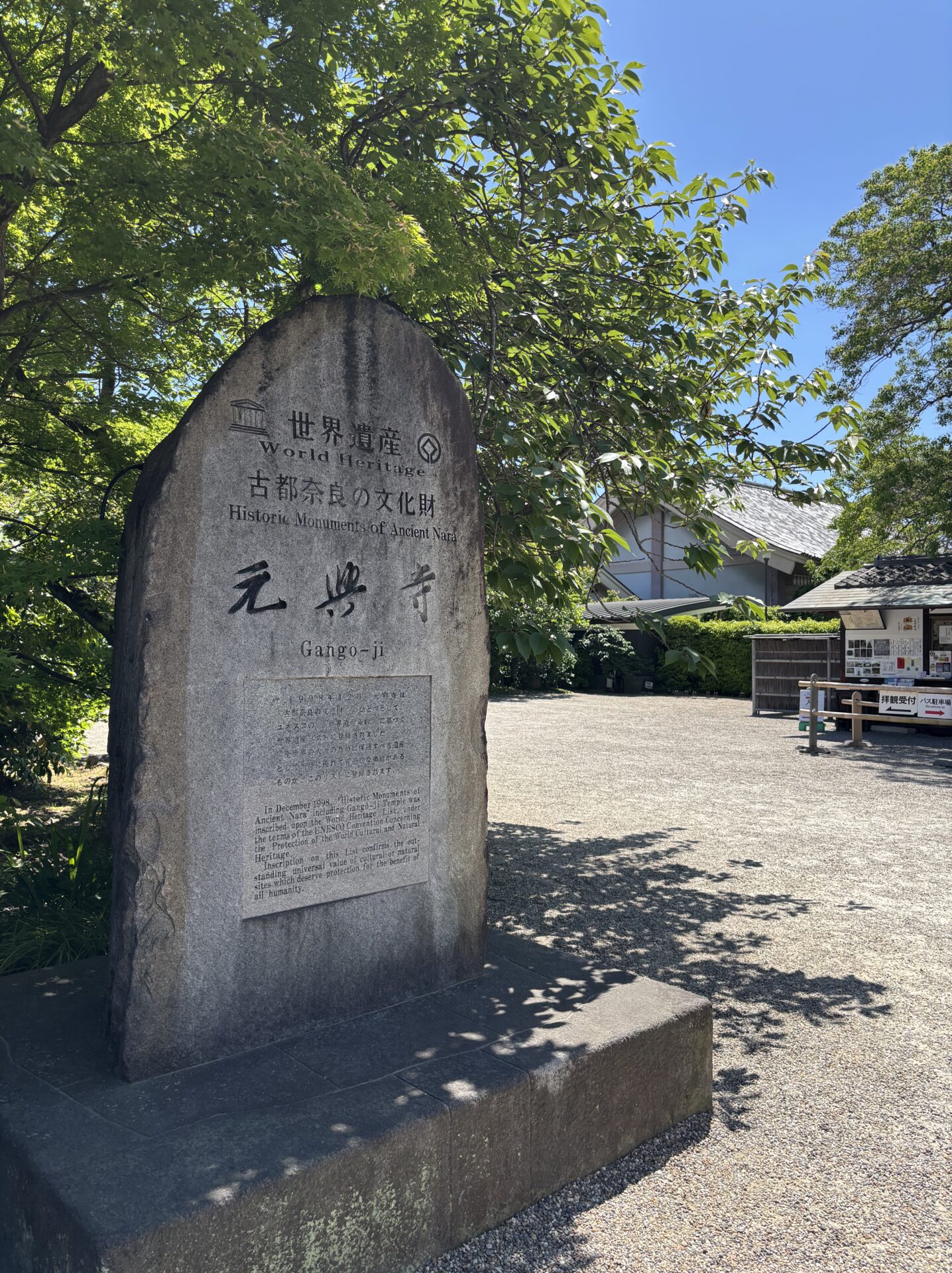
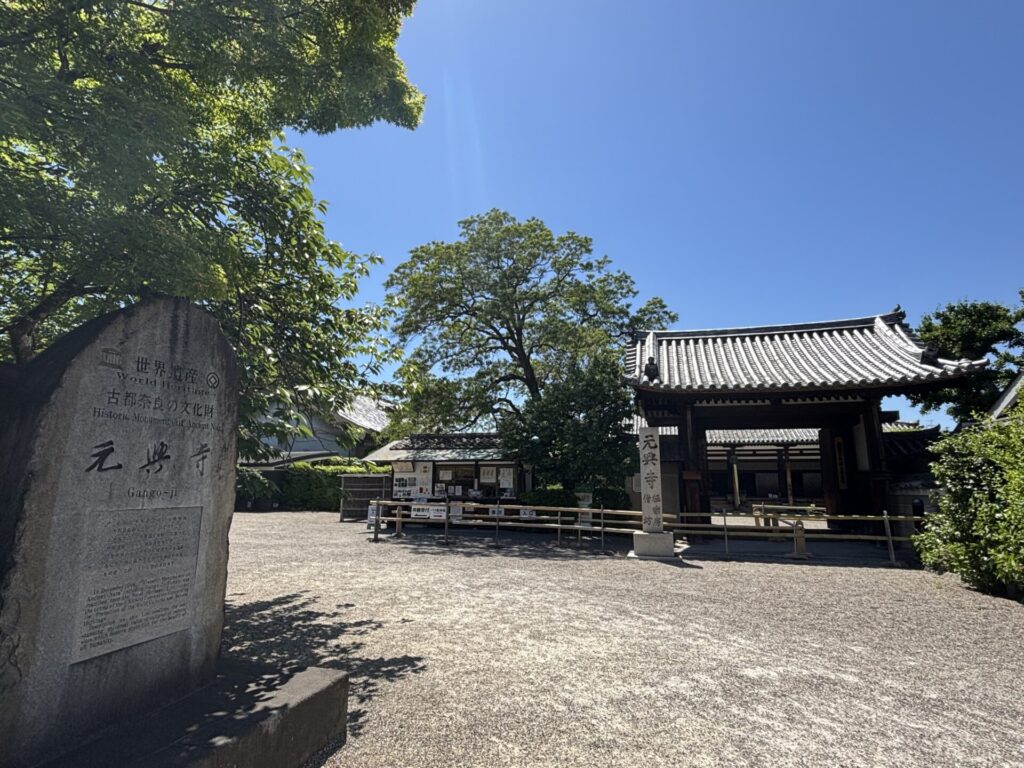
迫害を乗り越えて建てられた仏教寺院 A Buddhist Temple Born Out of Persecution
6世紀、日本に仏教が伝わった時、当時の先進国であった中国の文化の受容に積極的な蘇我氏は仏教を受け入れようとしました。一方、保守派の貴族たちは、もともとの日本神道の神々が怒る、と言って反対しました。そしてちょうど蘇我馬子が仏殿や仏塔を建てた頃に疫病が発生し、仏教反対派は仏教を取り入れたせいで疫病が流行ったと主張し、天皇は仏像や仏塔を焼き捨て、仏教を信仰していた尼は鞭打ちになるなど、迫害を受けました。それでも仏教の信仰をやめなかった蘇我馬子は、同じく仏教を信仰する聖徳太子とともに軍を集め、仏教反対派の貴族である物部守屋を打ち破り、仏教は日本に受容されるようになりました。奈良地方に最初に建てられた寺は法興寺であり、中国文化の輸入の中心的な役割も果たしたそうです。都が飛鳥から平城京に移る時に法興寺も現在の奈良市街の地に移り、元興寺となっています。
平安時代までは国家に保護され日本の仏教の中心的役割を担っていた元興寺でしたが、中央政府の力が衰えると、元興寺の勢いも衰えました。しかし、庶民の間で元興寺を信仰すると極楽に行けると信じられるようになり、元興寺は庶民の力によって伝統を伝えることになったそうです。
In the sixth century, when Buddhism was introduced to Japan, the Soga clan, who actively embraced the advanced culture of China, sought to accept the new religion. Conservative nobles, however, opposed it, fearing that the native Shinto deities would become angry.
Around the time Soga no Umako began constructing Buddhist halls and pagodas, an epidemic broke out. Opponents of Buddhism claimed that the disease had been caused by the introduction of the new faith. Influenced by these arguments, the emperor ordered Buddhist images and pagodas to be destroyed. Nuns who had embraced Buddhism were publicly whipped, and Buddhism itself faced persecution.
Nevertheless, Soga no Umako refused to abandon his faith. Together with Prince Shotoku,who also supported Buddhism, he raised an army and defeated Mononobe no Moriya, leader of the anti-Buddhist faction. As a result, Buddhism gradually became accepted throughout Japan.
Hokoji Temple, the first major Buddhist temple in the Nara region, played an important role in introducing Chinese culture to Japan. When the capital was moved from Asuka to Heijo-kyo, Hokoji was relocated to what is now the city of Nara and became Gangoji Temple.
Until the Heian period, Gangoji flourished under the protection of the state and served as one of the centers of Japanese Buddhism. However, as the power of the central government declined, the influence of the temple also waned. At the same time, ordinary people came to believe that devotion to Gangoji would ensure rebirth in the Pure Land. In this way, the temple’s traditions were preserved not by political power, but by the faith of common people.
極楽堂Gokurakudo Hall
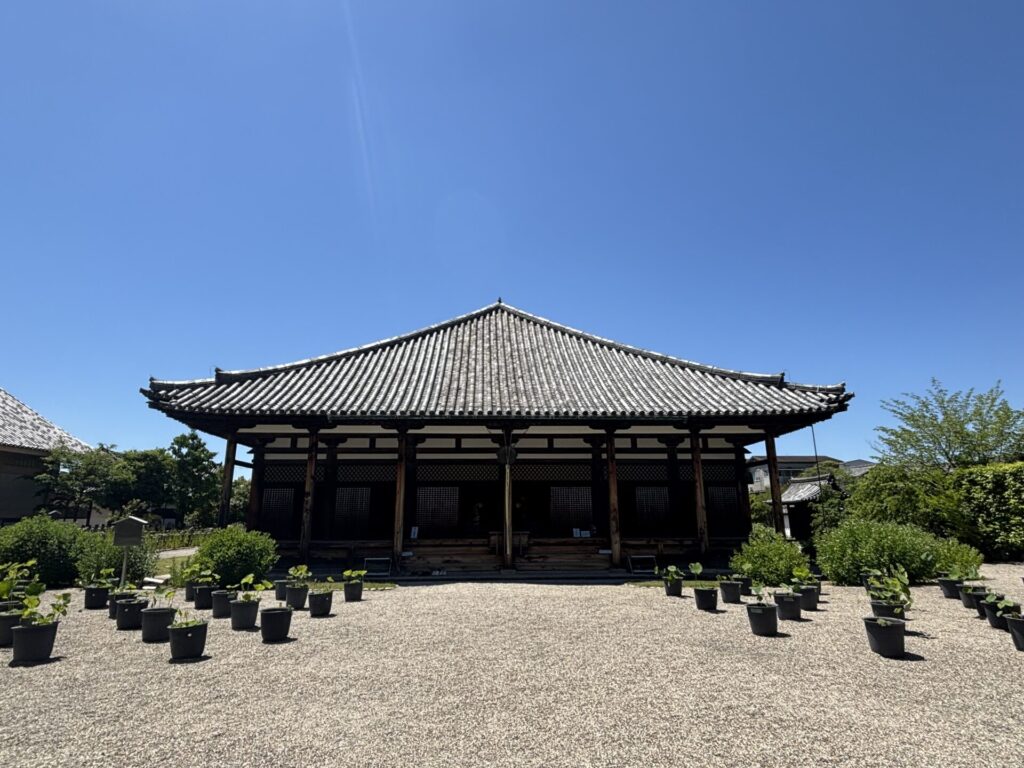
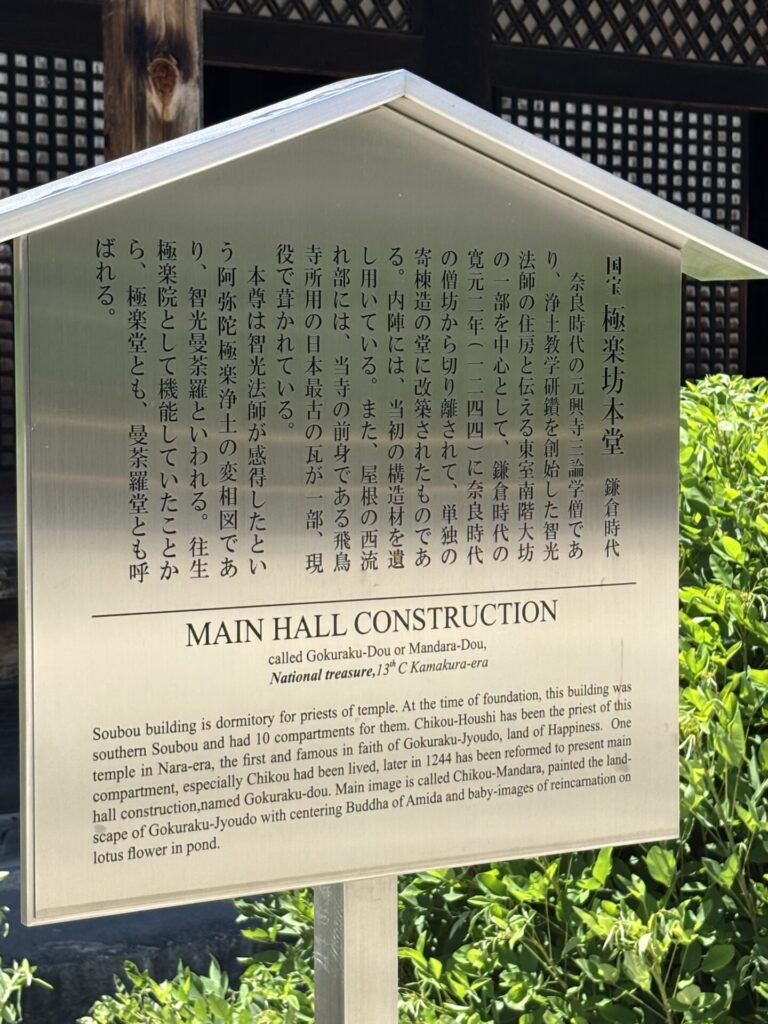
極楽浄土を描いた智光曼荼羅を祀るための場所として成立しました。元興寺の中心であり、人々の極楽浄土への願いとともに守られてきました。この屋根には、日本で最初に作られた1400年前の瓦が使われています。
Gokurakudo Hall was established to enshrine the Chiko Mandala, a representation of the Pure Land paradise. It has long served as the spiritual heart of Gangoji and has been preserved through people’s prayers for rebirth in the Pure Land.
Its roof contains tiles that were made about 1,400 years ago. These are believed to be the oldest surviving roof tiles in Japan.
禅室Zen Room
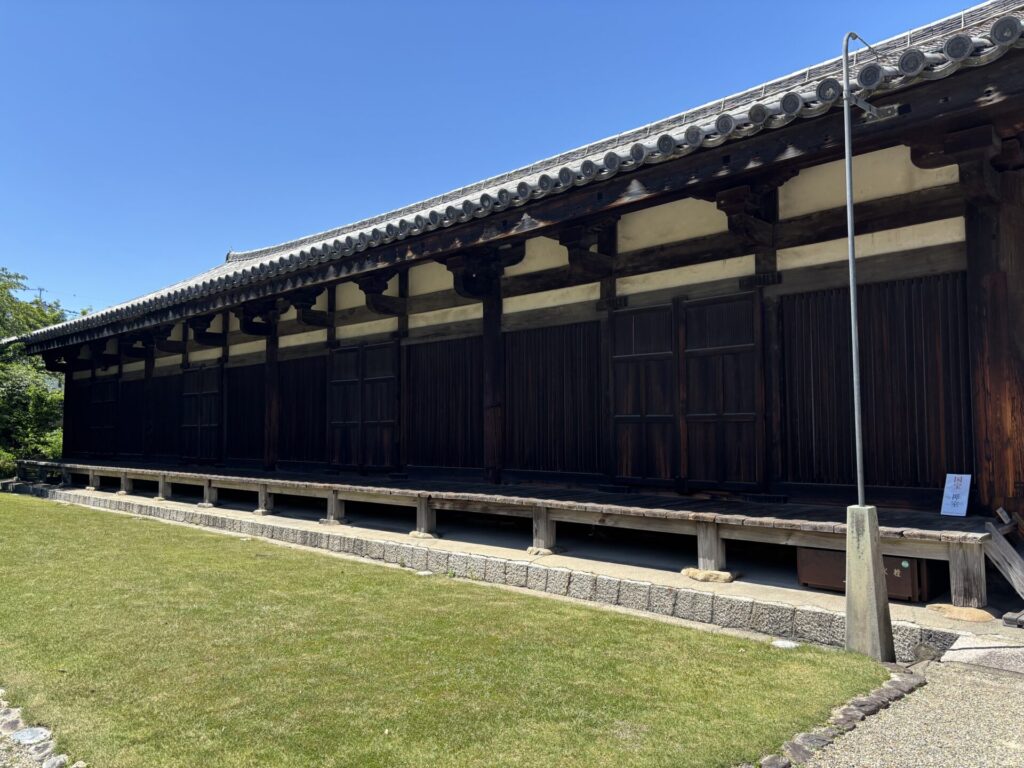
ここにも1400年前の瓦が使われています。また、空海が修行中に春日大明神が降りて来られたと言われています。
The Zen Room also preserves roof tiles dating back 1,400 years. According to tradition, Kasuga Daimyojin, the deity worshiped at Kasuga Shrine, descended before Kukai while he was practicing here.
講堂礎石Foundation Stones of the Lecture Hall
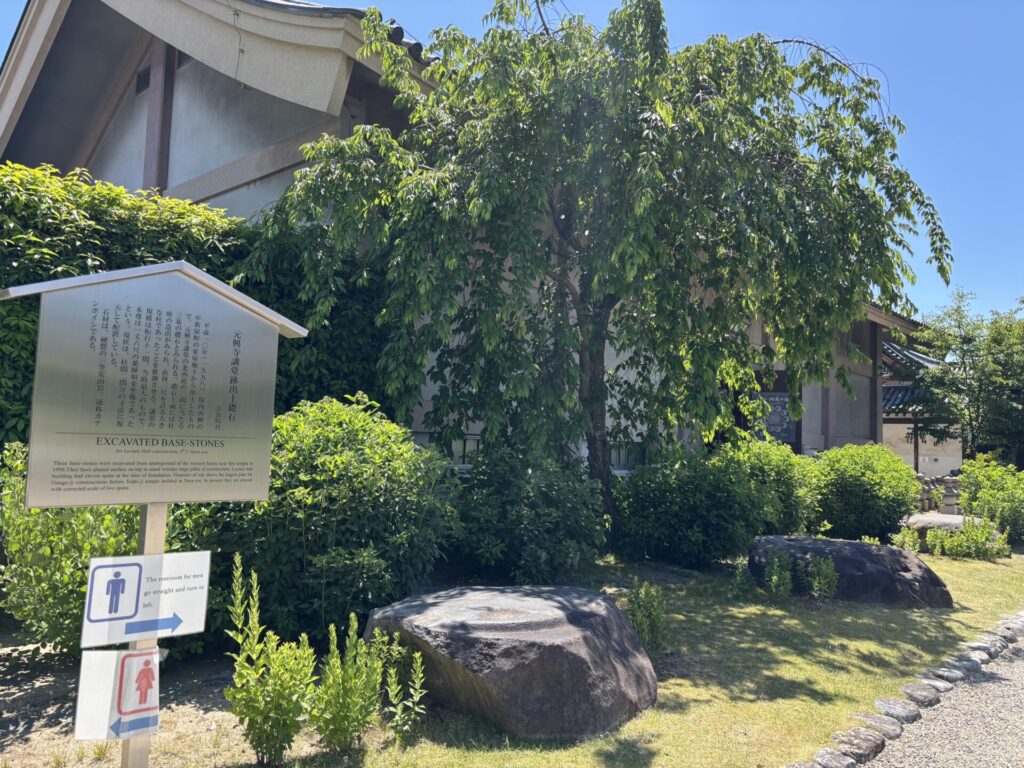
元興寺のかつての講堂の礎石とされ、直径80~90センチの柱が立っていたと推定されるそうです。
These stones are believed to be the remains of Gangoji’s former lecture hall. Archaeologists estimate that massive pillars measuring 80 to 90 centimeters in diameter once stood upon them.
浮図田Futo-den Memorial Stones
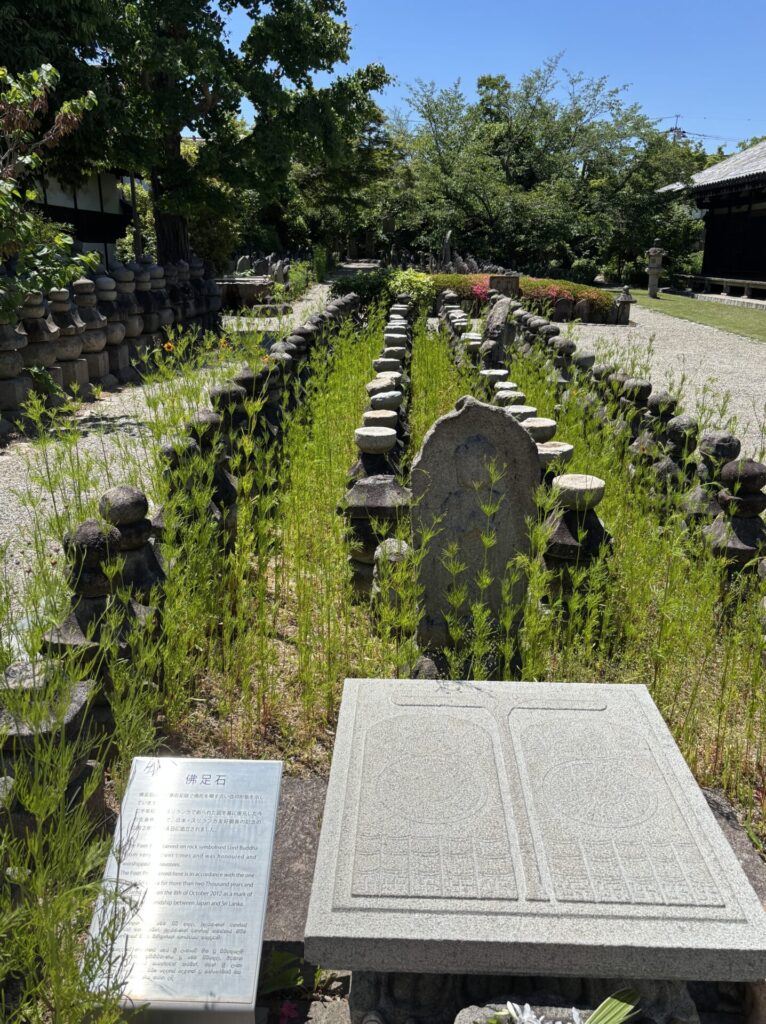
中世から江戸時代の供養石。鎌倉時代から江戸時代までの墓石で、貴重な資料でもあるそうです。
These memorial stones date from the medieval period through the Edo period. The gravestones, ranging from the Kamakura period to the Edo period, are valuable historical materials that preserve centuries of memorial traditions.
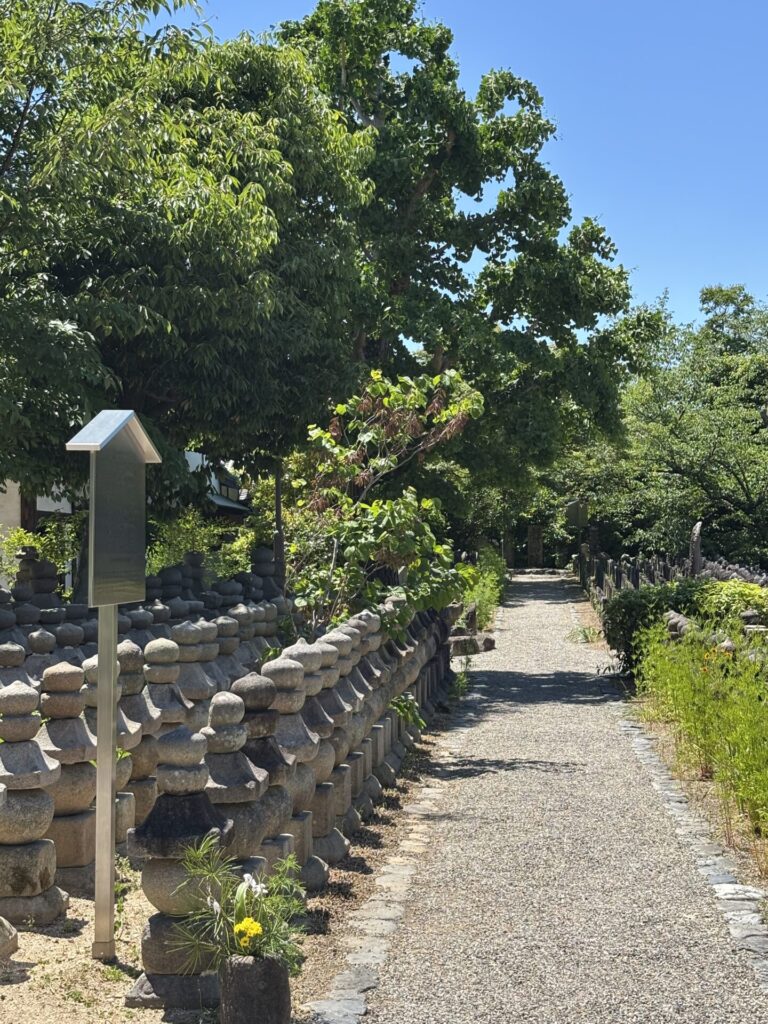
宝輪館Horinkan Museum
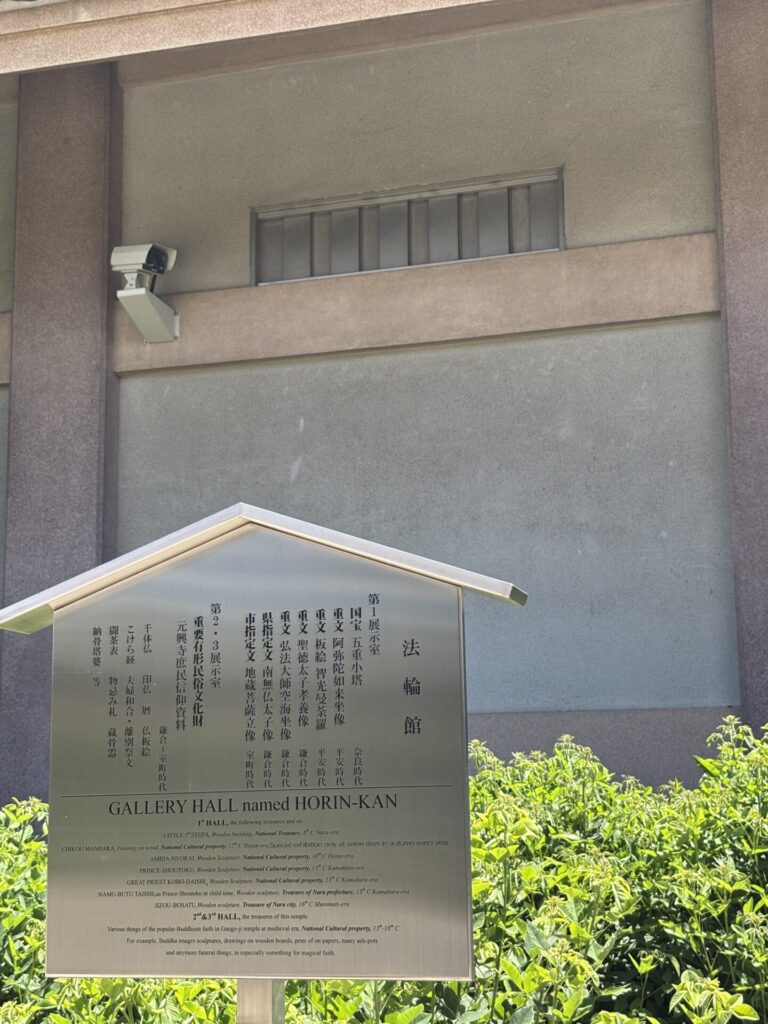
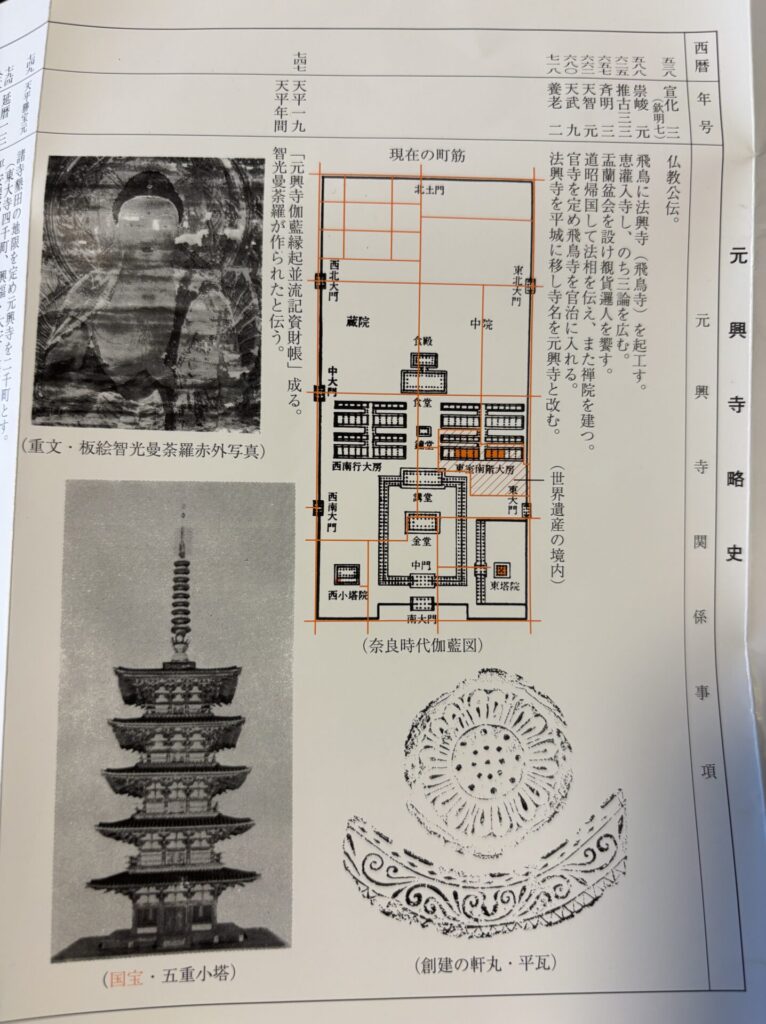
元興寺の資料館。奈良時代最盛期に作られ現存する唯一の五重小塔も法輪館の中にあります。
この中には、元興寺が奈良の人々にどれほど敬われてきたかが分かる資料がたくさんあります。元興寺に骨を埋めると極楽に行けると信じられたため、元興寺に骨を奉納したり墓を作ったりすることが流行したそうで、骨を収める容器などが展示されています。
Horinkan is the museum of Gangoji. It houses the only surviving miniature five-story pagoda built at the height of the Nara period.
The museum contains numerous artifacts showing how deeply the people of Nara revered Gangoji. Since many believed that being buried at Gangoji would ensure rebirth in the Pure Land, it became common to dedicate ashes or construct graves within the temple grounds. Containers used to hold cremated remains are among the exhibits.
蛙石Frog Stone
もともとは大阪城にあり数々の怪奇現象に関わると言われ恐れられてきましたが、今では「無事帰る」石として縁起が良いとも言われています。
Originally located at Osaka Castle, the Frog Stone was feared because it was associated with various mysterious incidents. Today, however, it is regarded as a lucky stone symbolizing a safe return, since the Japanese word for “frog” (kaeru) is pronounced the same as the word meaning “to return.”
元興寺の鬼The Demon of Gangoji
元興寺には鬼が出て、夜な夜な人を殺していたそうです。その鬼は、雷によって生まれた怪力の少年に捕まえられ、血を垂らしながら逃げていったそうです。血の跡を追っていくと、寺で働いていた男の墓場まで続いていた、と言われています。
According to legend, a demon once appeared at Gangoji and killed people during the night. Eventually, the creature was captured by a boy blessed with extraordinary strength born by lightning. The demon escaped while bleeding, and the trail of blood is said to have led to the grave of a man who had worked at the temple.
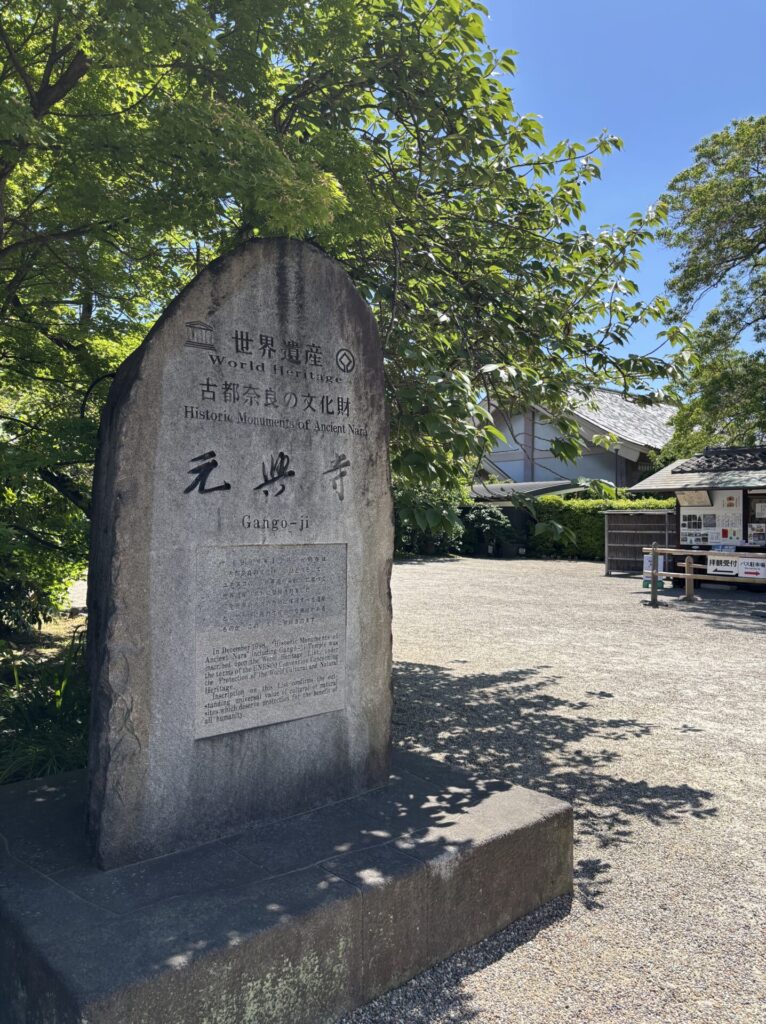
世界遺産ですが静かな雰囲気です。奈良で最古の歴史を持ち、中世以降は権力者ではなく庶民の浄土への祈りに支えられたという、他の寺社とは違う歴史を味わえる場所です。
A Quiet World Heritage Site
Although Gangoji is a UNESCO World Heritage Site, it retains a peaceful atmosphere. As the oldest temple in Nara, it offers visitors a history unlike that of many other temples and shrines. Since the Middle Ages, it has been sustained not by rulers or political power, but by the prayers of ordinary people who sought rebirth in the Pure Land.

コメント