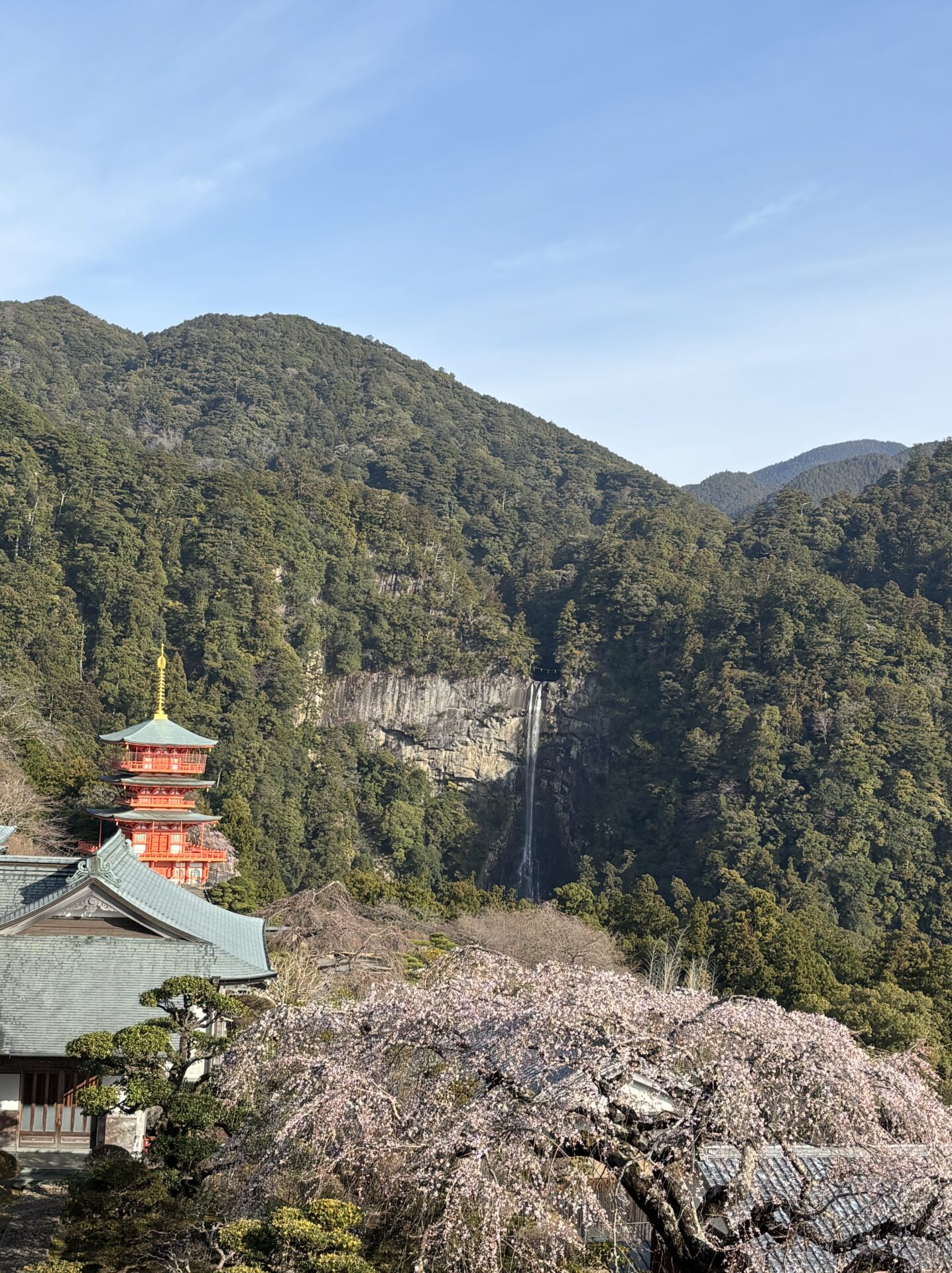
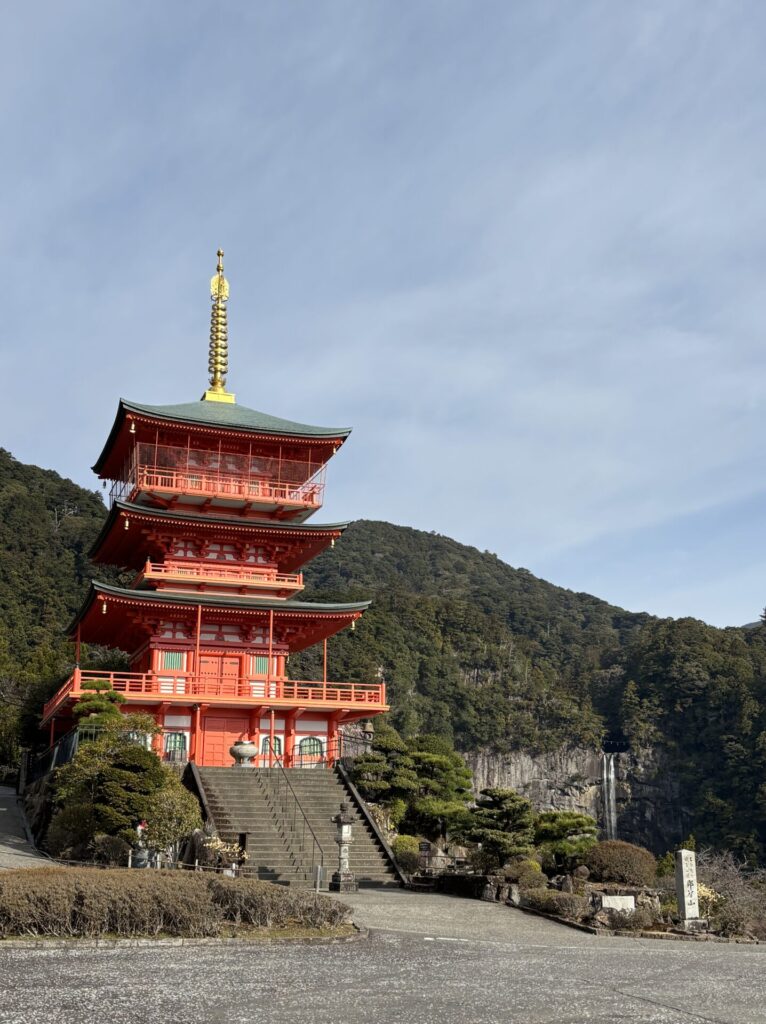
青岸渡寺は、熊野三山の中で唯一、明治以前の面影をとどめる仏堂です。
Seiganto-ji is the only temple among the Kumano Sanzan that still retains its pre-Meiji appearance.
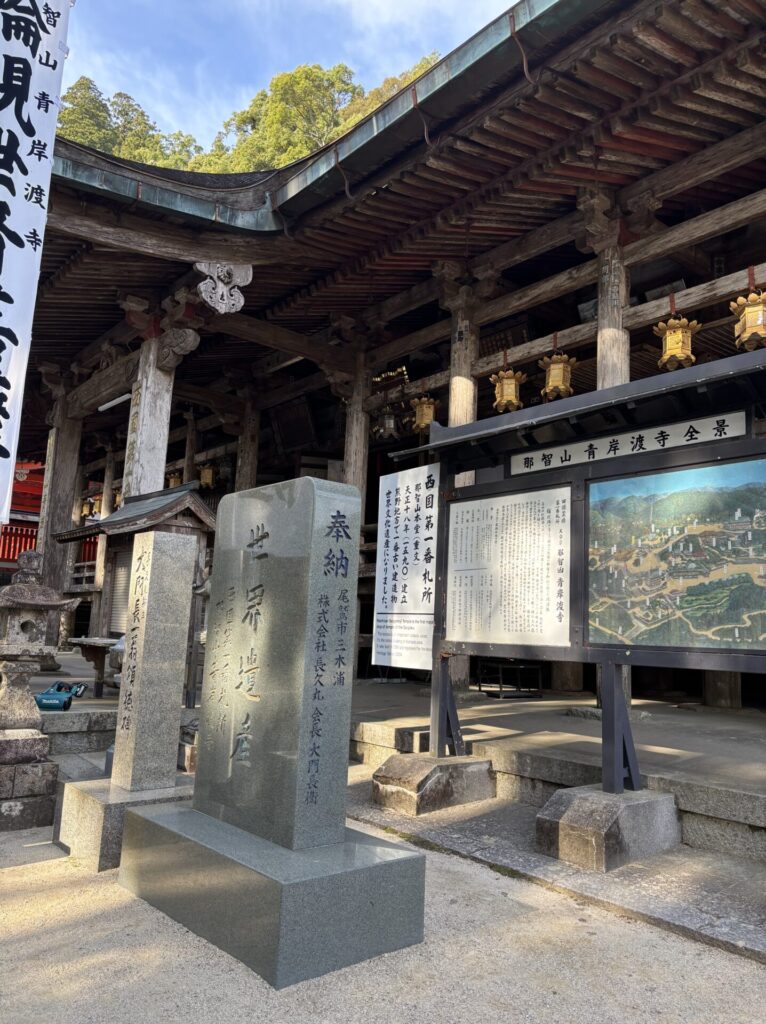
本堂は1590年、豊臣秀吉の命により再建されたものとされています。熊野本宮大社や熊野速玉大社の仏堂は、明治時代の廃仏毀釈によって失われましたが、この場所には今も神仏習合の名残が感じられます。
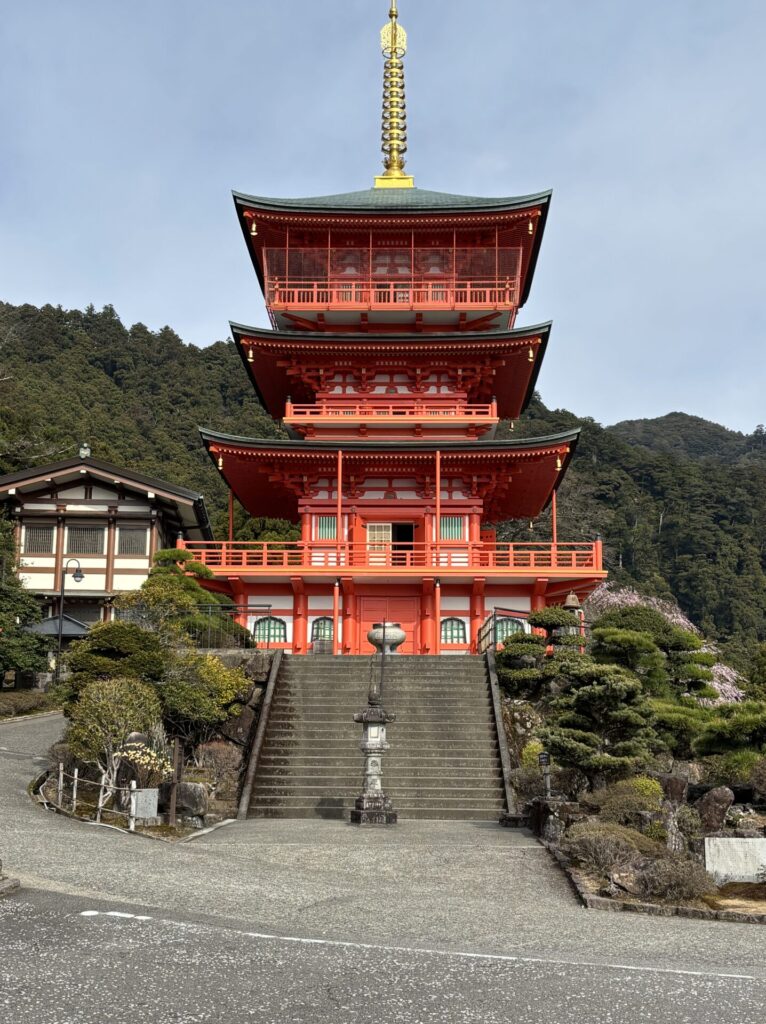
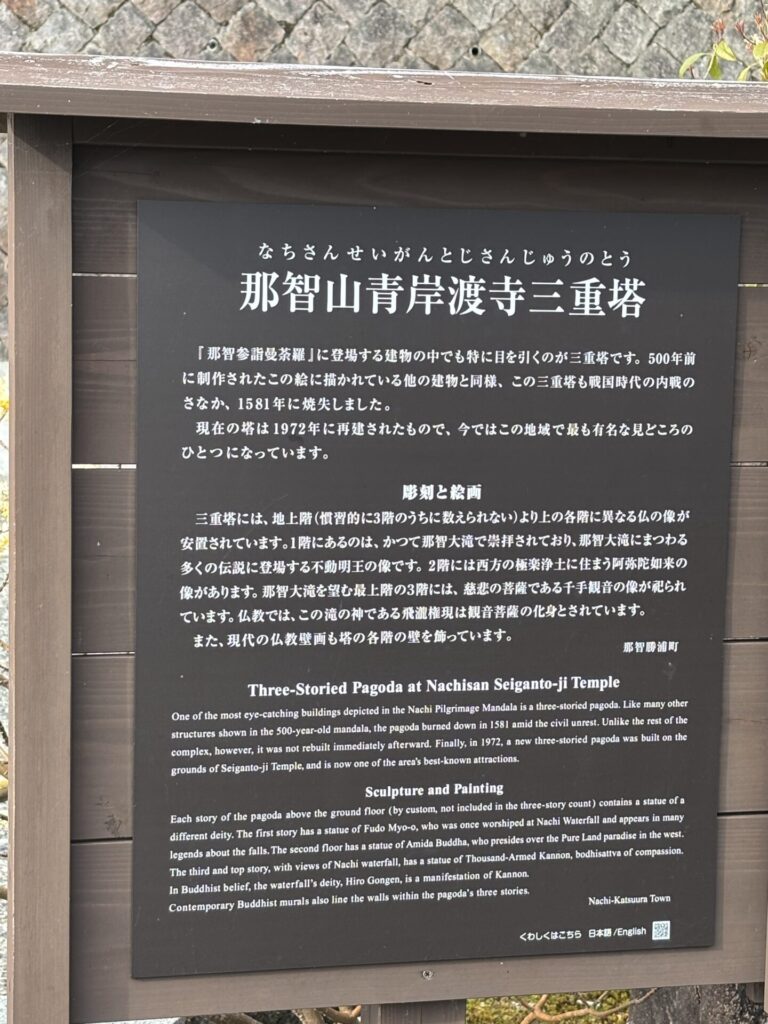
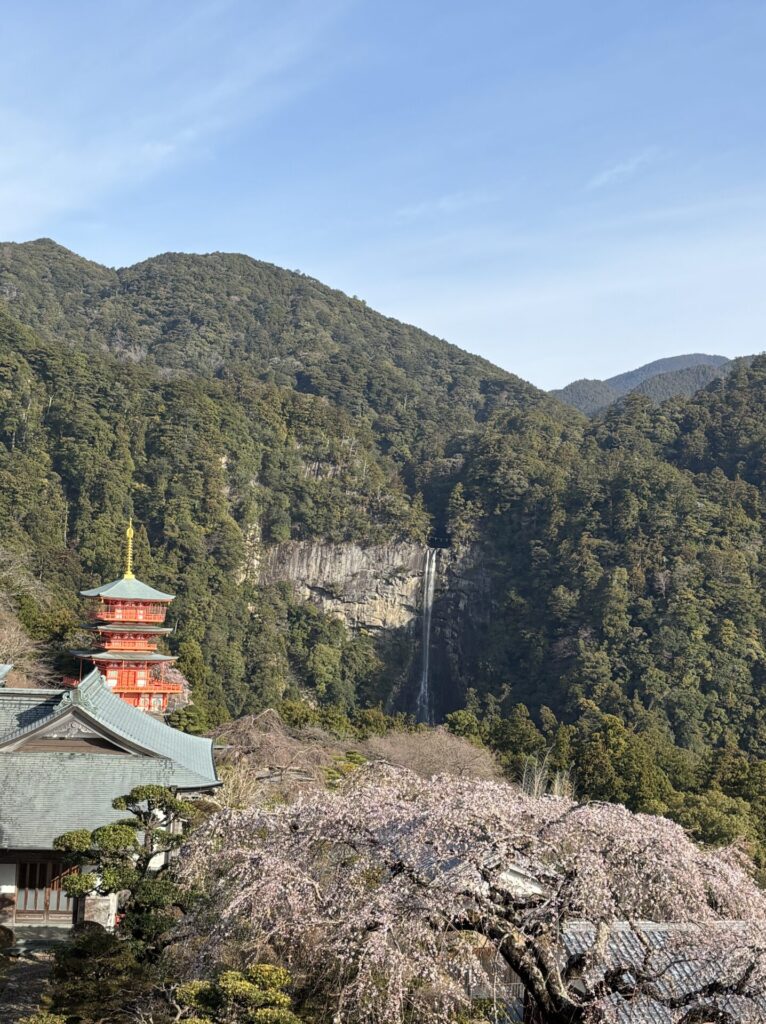
有名な三重塔も青岸渡寺のものです。
那智の滝と並ぶ風景は、この地を象徴する景色の一つです。
山中には修験道の歴史があり、山伏の修行も行われているといいます。
この日も、どこからか法螺貝の音が聞こえてきました。
The main hall is said to have been rebuilt in 1590 by order of Toyotomi Hideyoshi.While the Buddhist halls of Kumano Hongu Taisha and Kumano Hayatama Taisha were lost during the anti-Buddhist movement of the Meiji period, traces of the fusion of Shinto and Buddhism can still be felt here.
The well-known three-story pagoda also belongs to Seiganto-ji.
Together with Nachi Falls, it forms one of the most iconic views of this area.
This mountain has a long history of Shugendo, and ascetic training by yamabushi is still said to take place here.
On this day as well, the sound of a conch shell echoed faintly through the mountains.
西国三十三所Saigoku Kannon Pilgrimage
青岸渡寺は、西国三十三所巡礼の第一番札所です。
西国三十三所は、日本で最も歴史のある巡礼の一つで、関西一円にある観音菩薩を祀る33の寺を巡るものです。
巡礼を終えることで、この世の罪が清められ、死後に極楽往生できると信じられてきました。その起源は、長谷寺の徳道上人が一度死んで蘇った際に、閻魔大王から霊場を定めるよう告げられたことにあるとされます。そして後に、那智山での神託を受けた花山院によって復興されたと伝えられています。
Seiganto-ji is the first temple of the Saigoku Kannon Pilgrimage.
This pilgrimage is one of the oldest in Japan, consisting of 33 temples dedicated to Kannon (the Bodhisattva of Compassion) across the Kansai region.
It has long been believed that completing the pilgrimage purifies one’s sins in this world and leads to rebirth in the Pure Land.According to tradition, its origins trace back to the monk Tokudo of Hasedera, who, after dying and returning to life, was instructed by Enma, the ruler of the underworld, to establish these sacred sites.Later, it is said that Emperor Kazan revived the pilgrimage after receiving a divine revelation at Nachisan.
花山天皇Emperor Kazan
花山天皇は、波乱の生涯を送った天皇として知られています。若くして即位し、側近たちは貨幣流通の活性化など革新的な政治を進めましたが、それは他の貴族との対立を招きました。さらに、愛する妻を失ったことで深く心を痛めていたところを、側近の策略によって出家へと導かれたとされています。
退位後、失意の花山天皇は巡礼の旅に出ました。
那智の滝の近くで千日修行を行ったとも伝えられています。
那智の自然の中で、神や仏に向き合う時間は、花山天皇の心を癒したのかもしれません。その後、花山天皇は西国三十三所巡礼を復興し、御詠歌の普及にも大きな役割を果たしました。
Emperor Kazan is known for having led a turbulent life.He ascended to the throne at a young age, and his close advisors promoted progressive policies such as the circulation of currency, which led to conflicts with other aristocrats.After the death of his beloved wife, he fell into deep sorrow, and was eventually led into becoming a monk through the schemes of those he trusted.
After abdicating the throne, the disheartened Emperor Kazan set out on a pilgrimage.
It is said that he undertook a thousand days of ascetic practice near Nachi Falls.
The nature and faith of Nachi may have brought comfort to Emperor Kazan’s heart.
Later, Emperor Kazan revived the Saigoku pilgrimage and played a significant role in spreading devotional chants (goeika).
有名な牛馬童子像は、花山天皇の巡礼姿を写したものと言われています。
The well-known statue of Gyūba Dōji is said to depict Emperor Kazan in his pilgrim form.
興味がある方は、2泊3日で歩いた熊野古道のルートをまとめた記事も参考にしてください。
If you’re planning a trip, please also check out my summary article of the 2-day, 3-night Kumano Kodo route that I walked.
コメント