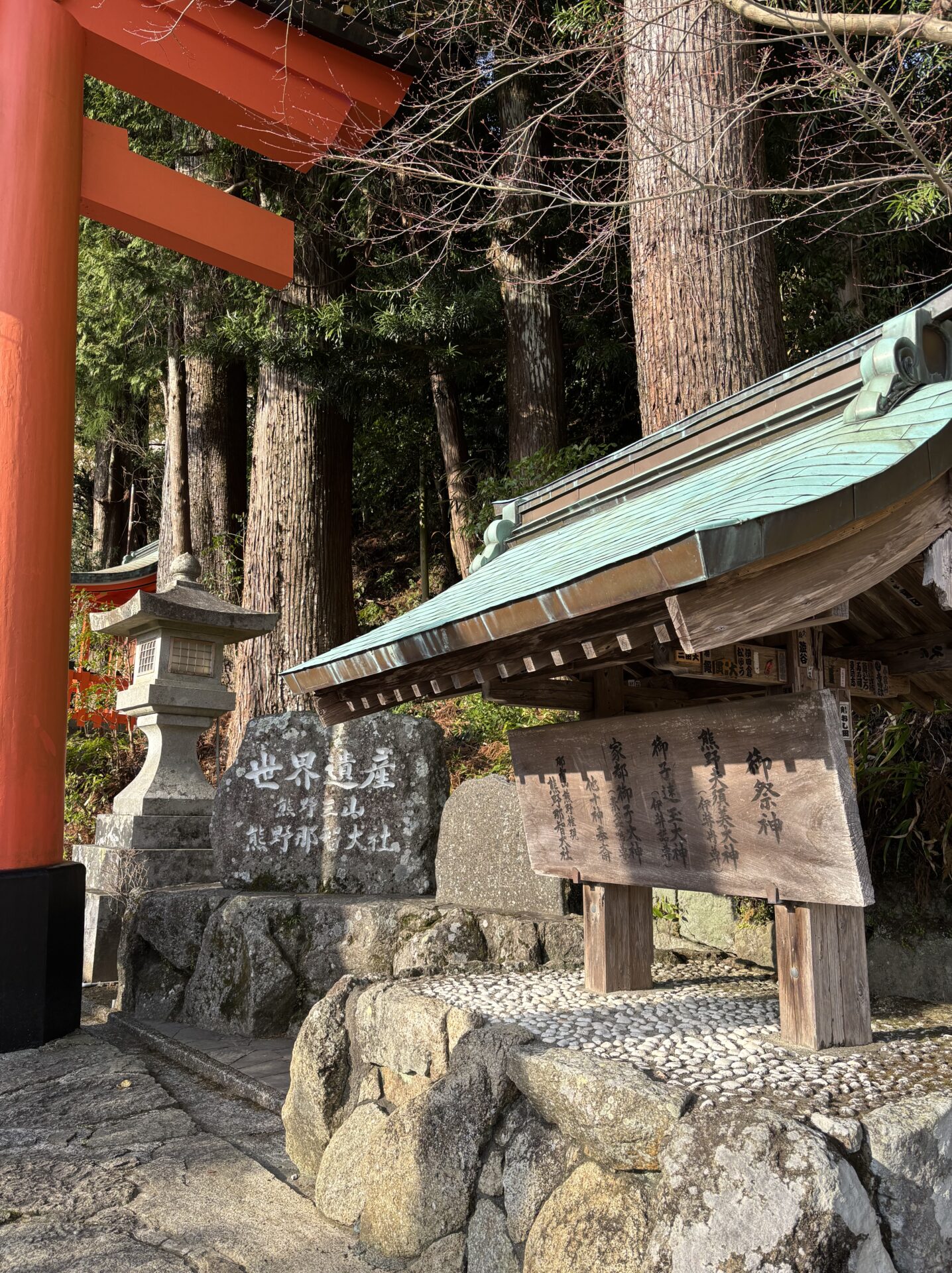
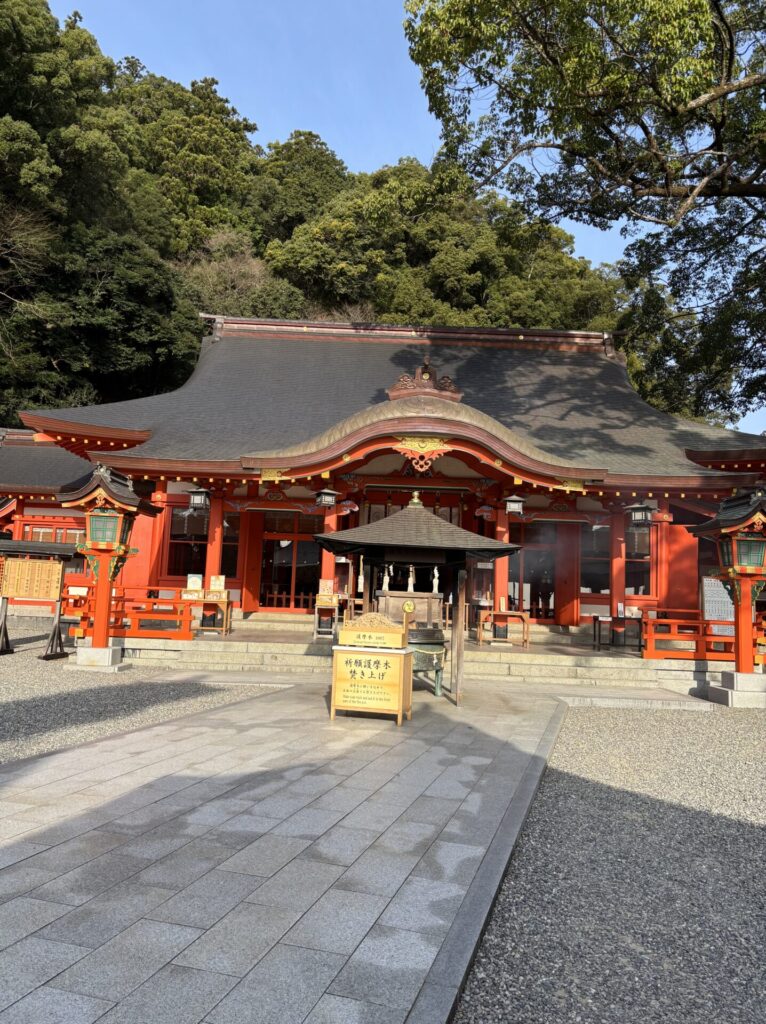
「むすびの宮」とも呼ばれ、縁結びや所願成就のご利益があるとされる那智大社。
Kumano Nachi Taisha, also known as the “Shrine of Connection,” is believed to bring blessings for relationships and the fulfillment of wishes.
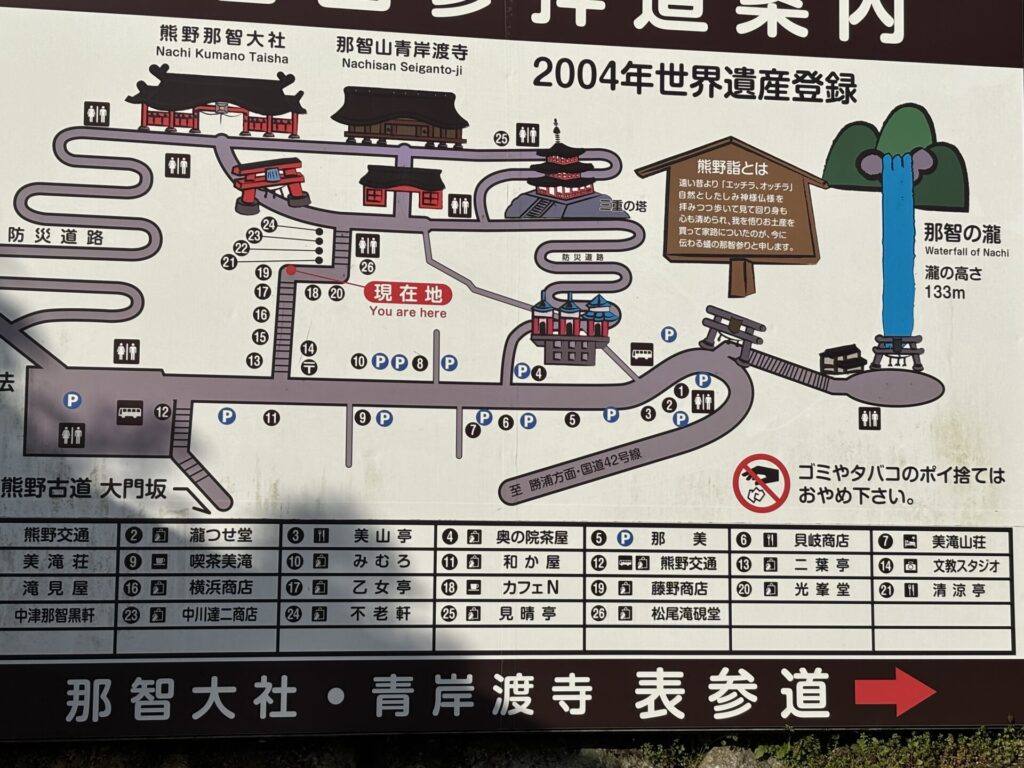
大門坂を登り切って約10分程度歩くと、熊野那智大社に着きます。那智山信仰は、もともとは那智の滝に対する自然信仰から始まったとされ、江戸時代には隣の青岸渡寺と一体となり、神道と仏教が混ざり合う信仰の形が続いてきました。宗教の違いというよりも、自然そのものを崇める感覚の方が強く感じられます。
After climbing Daimonzaka and walking for about another 10 minutes, you will arrive at Kumano Nachi Taisha shrine.The origins of the shrine is thought to have begun as a form of nature worship centered on Nachi Falls.During the Edo period, it became closely associated with the neighboring Seiganto-ji Temple, forming a unique blend of Shinto and Buddhism.Standing here, one feels less the distinction between religions, and more a quiet reverence for nature itself.
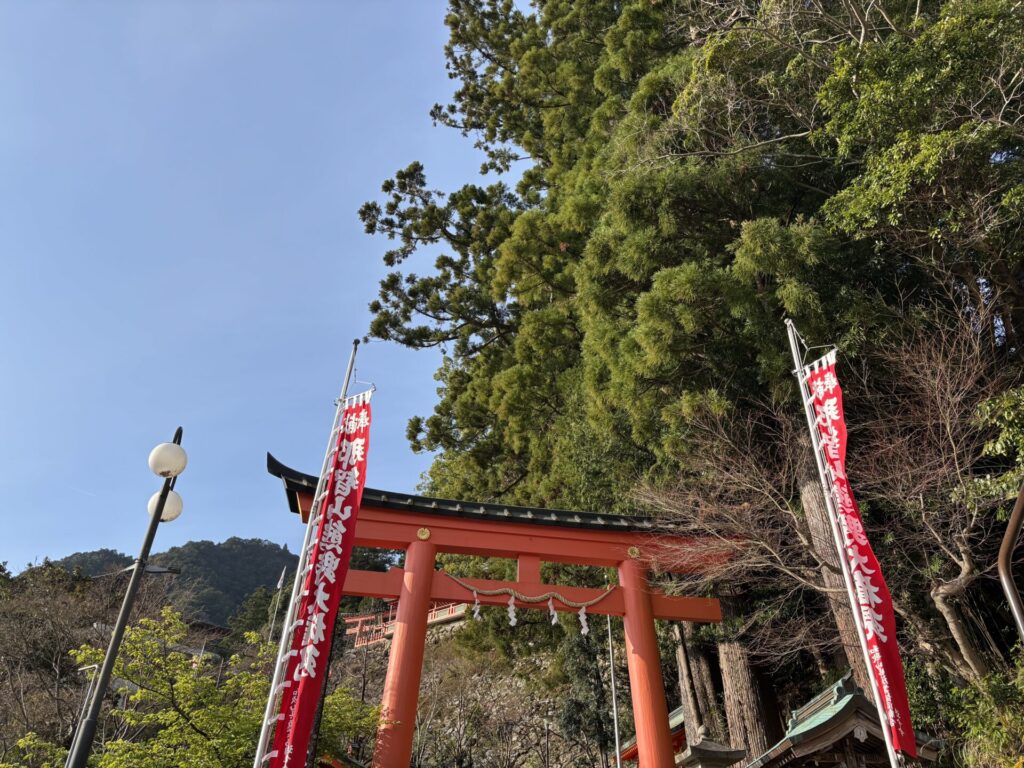
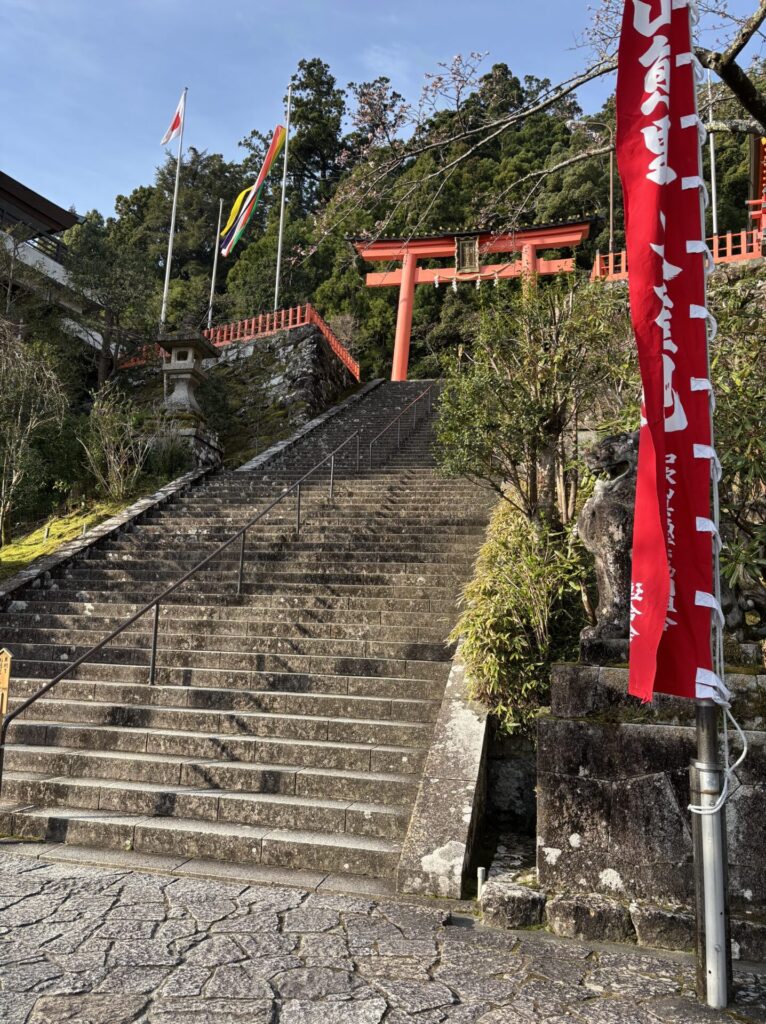
御縣彦社 Miagatahiko-sha Shrine
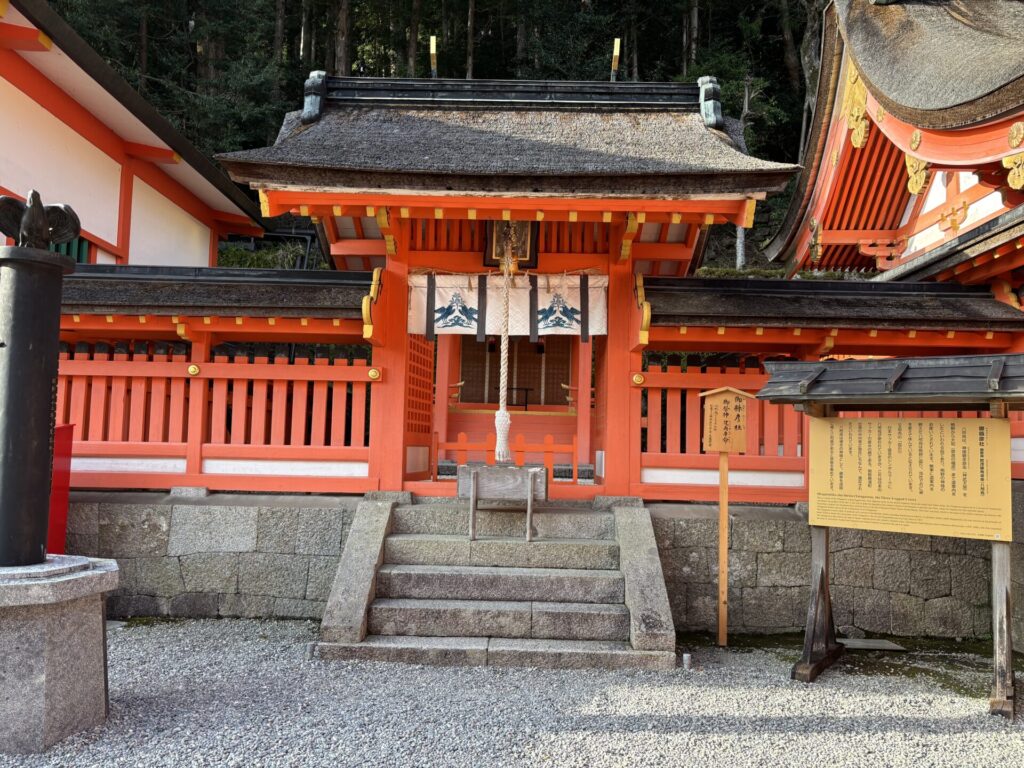
八咫烏を祀る神社。八咫烏は「大きな烏」を意味し、三本足の姿で描かれる、太陽の精とされる存在です。『日本書紀』には、神武天皇が東へ向かう途中、次々と仲間たちが戦いに倒れ、さらに道に迷ったときに登場します。夢の中で天照大神から「八咫烏を遣わすから道案内とすると良い」と告げられ、目覚めると実際にその烏が現れ、八咫烏の進む方向へと進むことで道を見つけたとされています。このことから八咫烏は、正しい方向へ導き開運をもたらす存在として信じられてきました。熊野の地では、至るところで八咫烏の姿を見ることができます。
A shrine dedicated to the Yatagarasu.Yatagarasu, meaning “great crow,” is depicted with three legs and is regarded as a symbol of the sun.In the Nihon Shoki, it appears when Emperor Jinmu, on his journey eastward to establish his capital, loses his way after many of his companions fall in battle.In a dream, Amaterasu appears and tells him that a Yatagarasu will be sent to guide him. When he awakens, the crow truly appears, and by following it, he is able to find his path again.For this reason, Yatagarasu has long been regarded as a divine guide, leading people in the right direction and bringing good fortune.
In the Kumano region, its image can be seen everywhere.
平重盛の樟The Camphor Tree of Taira no Shigemori
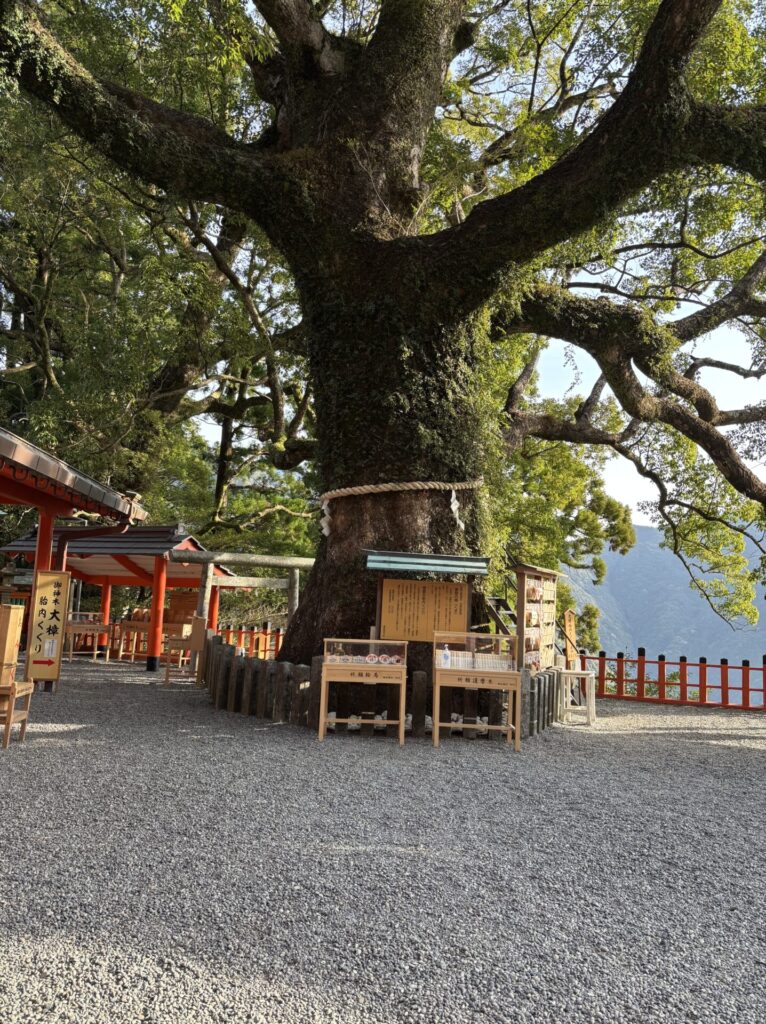
平重盛が植えたとされる樟。重盛は、平清盛の長男として生まれ、『平家物語』の中では穏やかで思慮深い人物として描かれています。清盛と後白河法皇の対立を憂い、仲を取り持とうとしましたが果たせず、早くに亡くなりました。この樟は、熊野三山造営の勅使として参詣した際に植えたと伝えられています。また、重盛は亡くなる数ヶ月前にも熊野に参詣し、後の世のことを祈ったとされています。重盛の願いがこめられたこの樟は、今も人々の祈りを受け止めています。
A camphor tree said to have been planted by Taira no Shigemori.Shigemori, the eldest son of Taira no Kiyomori, is portrayed in The Tale of the Heike as a calm and thoughtful figure.He lamented the conflict between his father and the retired Emperor Go-Shirakawa, and tried to mediate between them, but ultimately failed and passed away at a young age.This tree is said to have been planted when Shigemori visited Kumano as an imperial envoy for the construction of the Kumano Sanzan.It is also believed that he made another pilgrimage here just a few months before his death, praying for the future of the world.This camphor tree, imbued with Shigemori’s prayers, still quietly receives the wishes of those who visit today.
実方院跡
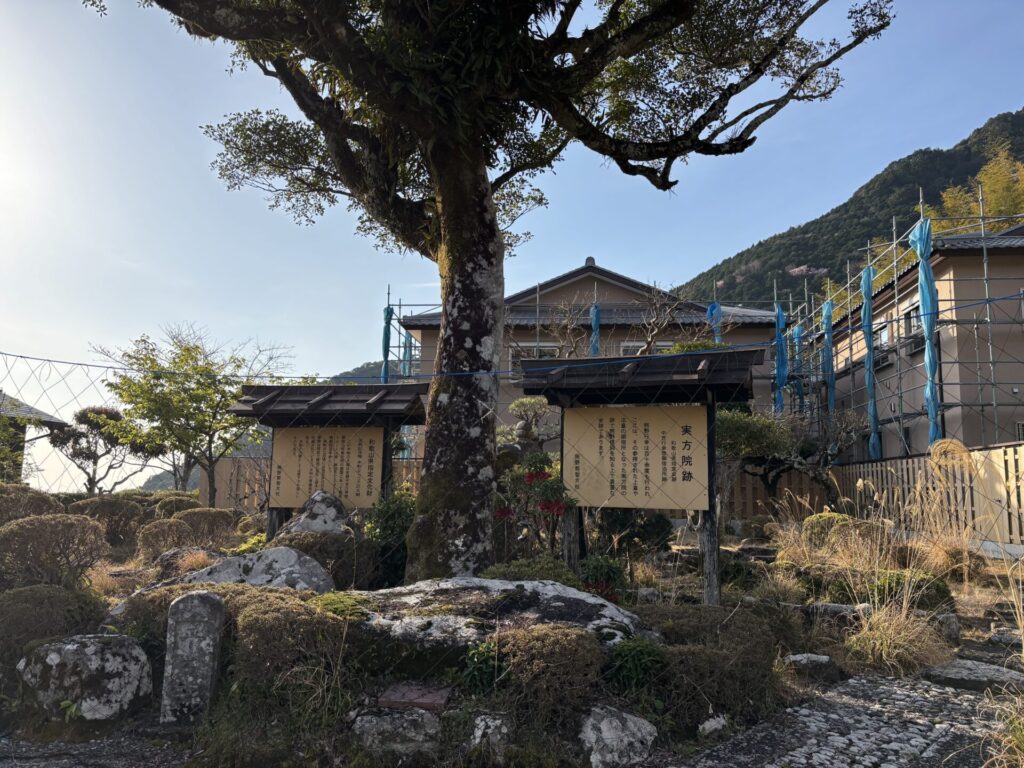
大門坂から那智大社に行くまでの道にあります。上皇や法皇の宿舎となっていた場所だそうです。建物はありませんが、日本庭園の跡が残っています。
Jippō-in Ruins
Located along the path from Daimonzaka to Kumano Nachi Taisha, there are the remains of Jippoō-in.It is said that this site once served as lodging for retired emperors and cloistered emperors.Although the buildings no longer remain, traces of a Japanese garden can still be seen.
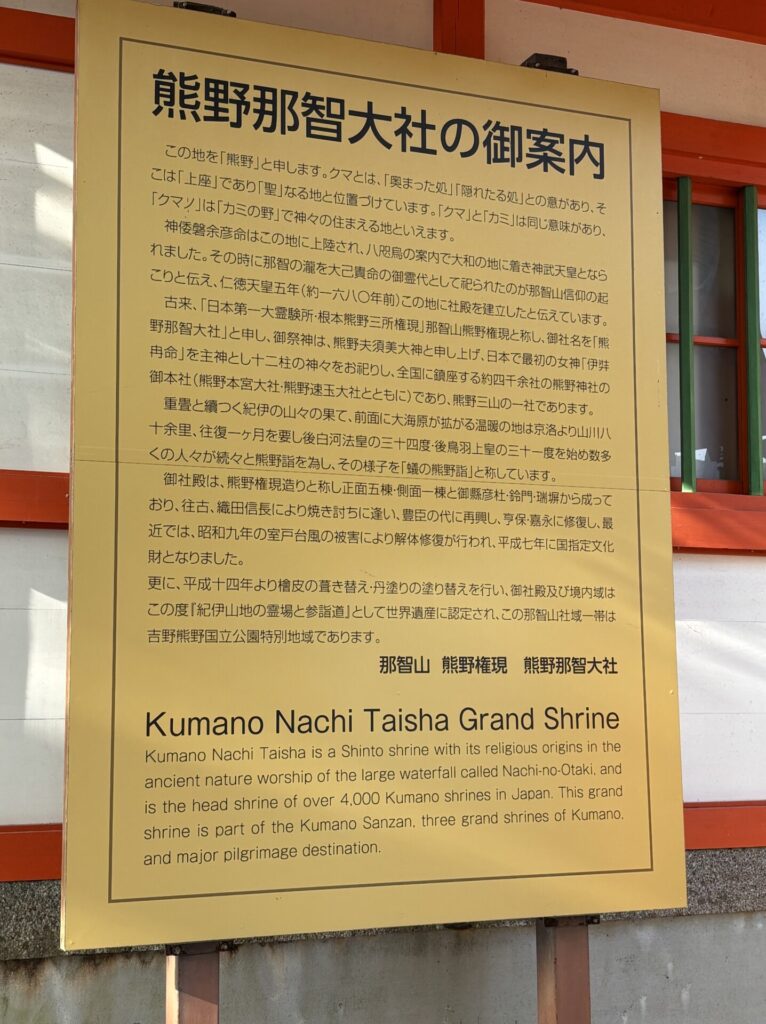
熊野の由来
「クマノ」とは「奥まったところ」「隠れたところ」であり「聖なる場所」を意味し、神の住まう土地と言える、とあります。神武天皇がこの地に上陸し、八咫烏の案内で大和に着き、その時に那智滝を祀ったのが那智山信仰の始まりだそうです。
The Origin of Kumano
The word “Kumano” is said to mean “a deep or hidden place,” implying a sacred space.
In this sense, it can be understood as a land where the gods dwell.According to tradition, Emperor Jinmu is believed to have landed in this region and, guided by the Yatagarasu, eventually reached Yamato.It is also said that the worship of Nachi Falls began at that time, marking the origin of the Nachizan faith.
コメント