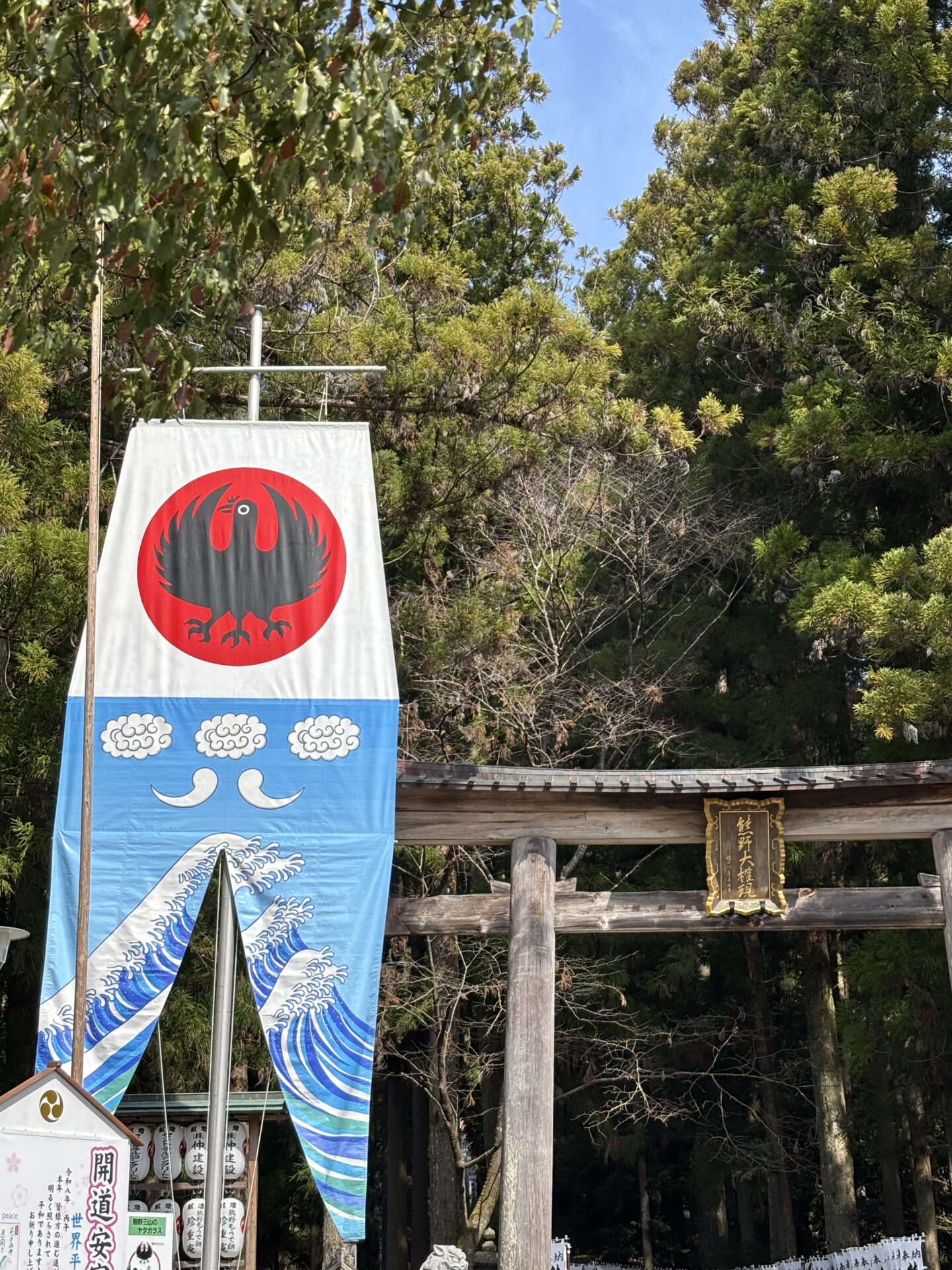
いくつもの山を越えてたどり着く、熊野古道の最終目的地、熊野本宮大社。大斎原から徒歩約5分の場所にあります。もともとは大斎原に社殿がありましたが、1889年の水害によって流され、現在の場所へと移されました。
After crossing countless mountains, you finally arrive at the ultimate destination of the Kumano Kodo pilgrimage: Kumano Hongu Taisya.It is located about a 5-minute walk from Oyunohara.Originally, the shrine stood in Oyunohara, but it was relocated to its current site after a devastating flood in 1889.
神と仏が共にある場所
熊野本宮大社の大きな特徴は、神道と仏教が融合していることです。古来の自然信仰に仏教が取り入れられ、神道の神と仏教の仏が、同じ存在として祀られています。例えば、主祭神である素戔嗚尊は、仏教では阿弥陀如来の化身とされています。本来、神道と仏教は別の宗教であり、時に対立することもあります。しかし熊野では、「神は仏でもある」という形で共存してきました。これは、日本人にとって重要なのが、教義の違いよりも「大いなるものに守られている感覚」だからかもしれません。実際、現代の日本でも、クリスマスを祝い、除夜の鐘を撞き、初詣に行くという、宗教に縛られない生活が自然に行われています。この感覚は、1000年前から変わっていないように感じられます。
A Place Where Gods and Buddhas Coexist
One of the most distinctive features of Kumano Hongu Taisha is the fusion of Shinto and Buddhism.Ancient nature worship was combined with Buddhist beliefs,and here, Shinto deities and Buddhist figures are worshipped as one.For example, the main deity,Susanoo-no-Mikoto,is considered an incarnation of Amitabha Buddha in Buddhist tradition.Normally, Shinto and Buddhism are separate religions and have even conflicted at times.However, in Kumano, they have been harmonized into the idea that “a god can also be a Buddha.”Perhaps for Japanese people, what matters most is not strict doctrine,but the feeling of being protected by something greater.Even today in Japan, people celebrate Christmas,ring temple bells on New Year’s Eve,and visit Shinto shrines to pray for happiness in the new year.This way of life—free from strict religious boundaries—seems to have existed for over a thousand years.
トリックスターの神 ― 素戔嗚尊スサノオノミコト
熊野本宮大社の主祭神、素戔嗚尊は、日本神話における最も人間的な神とも言われます。最高神である天照大神アマテラスオオミカミの弟という高貴な出身でありながら、非常に激しい性格を持つ存在です。母であるイザナミに会いたいと泣き叫び、海を荒らし、姉に会いに行こうとすれば大地を揺るがす。その力は制御しきれないほど大きく、まさに自然そのもののような存在です。しかし一方で、人々を苦しめていた八岐大蛇ヤマタノオロチを退治するなど、英雄的な側面も持ち合わせています。
A Trickster God: Susanoo-no-Mikoto
The main deity of Kumano Hongu Taisha, Susanoo-no-Mikoto,is often described as the ultimate trickster in Japanese mythology.He is the younger brother of Amaterasu, the supreme sun goddess,and was born to the creator deities Izanagi and Izanami.Despite his noble origins, he is known for his wild and uncontrollable nature.He cried uncontrollably, longing to see his deceased mother, which caused the seas to rage.When he tried to visit his sister, the earth itself trembled.His power is so immense that even he cannot fully control it—much like the forces of nature.Yet, this power is not only destructive.He is also a hero, famous for slaying the eight-headed serpent Yamata no Orochi.
自然そのものとしての神
素戔嗚尊は、まるで川や海のようです。氾濫すれば人間に被害をもたらす一方で、
豊かな恵みも与えてくれる。恐ろしさと恵み、その両方を併せ持つ存在。だからこそ、素戔嗚尊は自然信仰と深く結びついた神として信仰されてきました。
熊野の地に立つと、神とは遠い存在ではなく、自然そのものの中にあるものだと感じさせられます。
A God Like Nature Itself
Susanoo feels like a river or the sea.At times, it brings destruction through floods,but at the same time, it provides immense blessings.He embodies both fear and generosity.For this reason, Susanoo-no-Mikoto is deeply connected to ancient nature worship.
Standing in Kumano, you begin to feel that gods are not distant beings,but something that exists within nature itself.

コメント