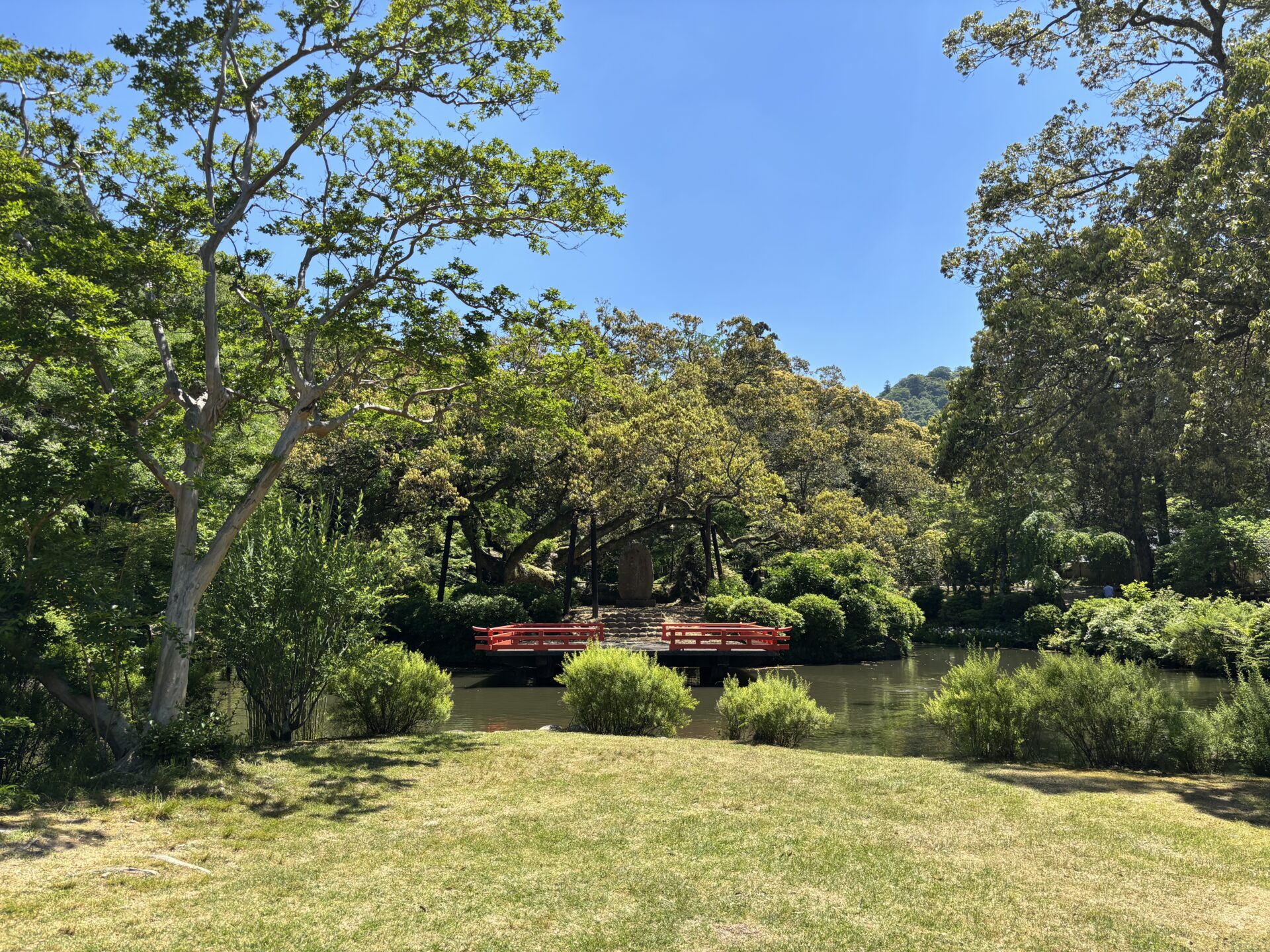
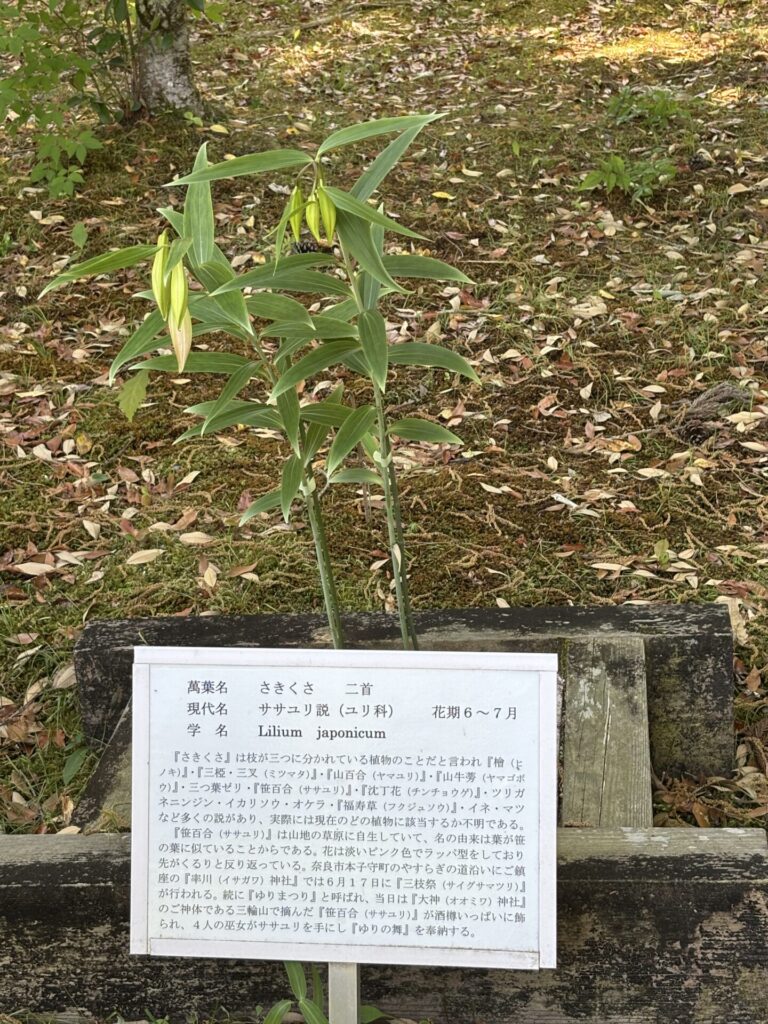
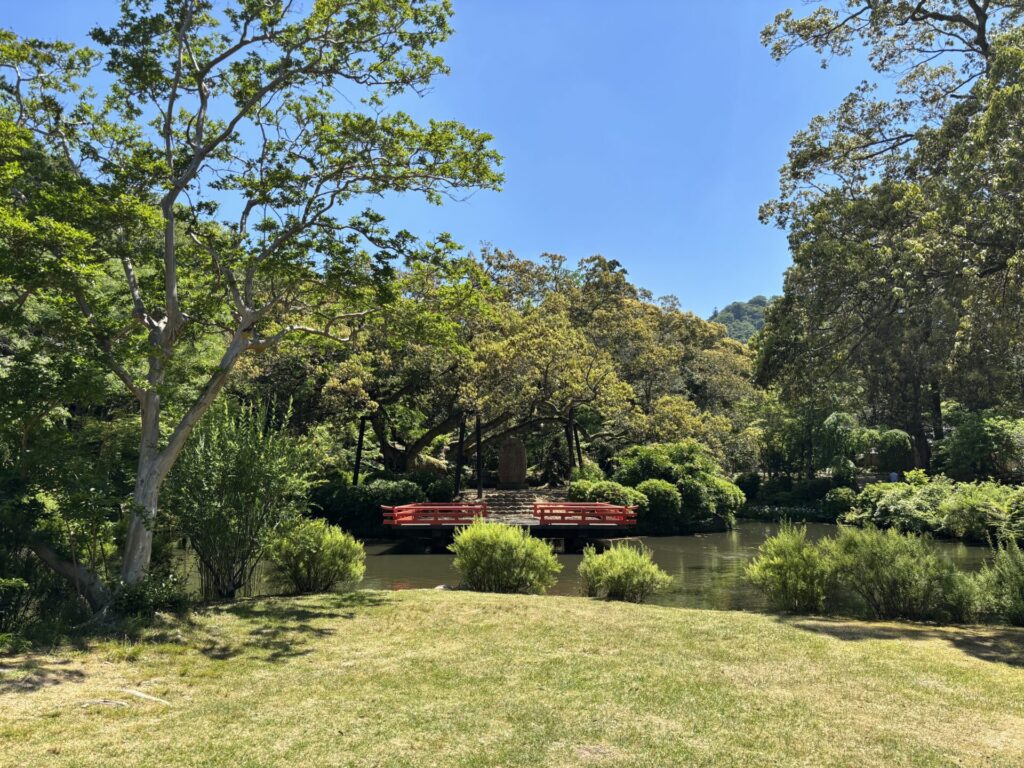
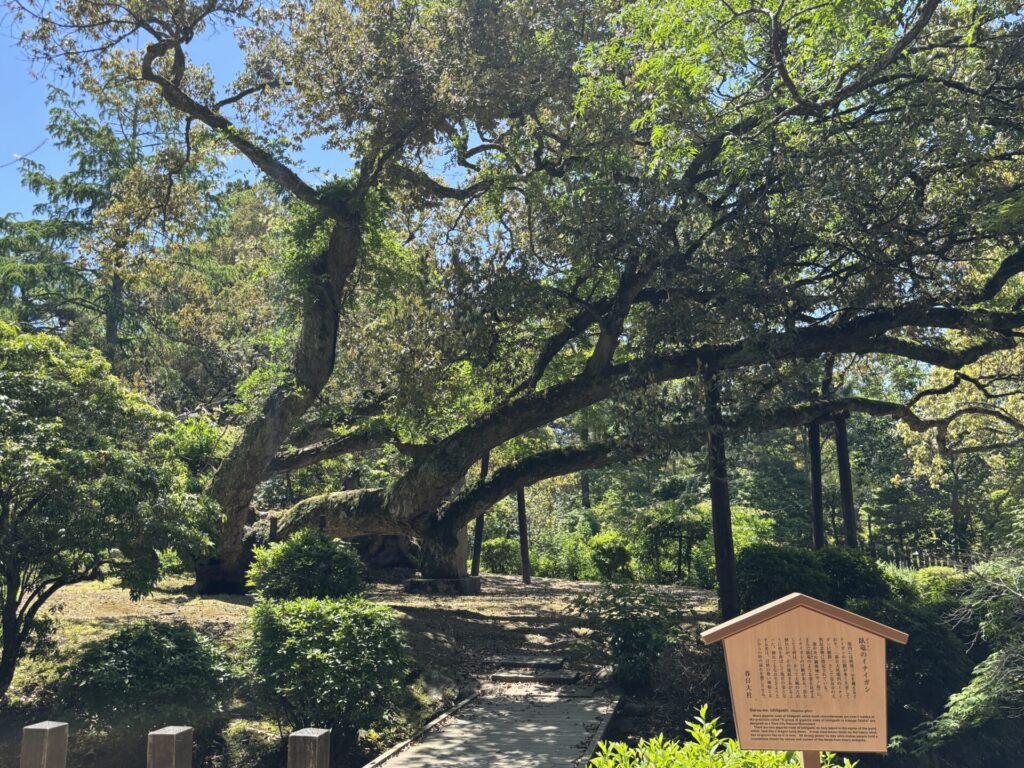
主に、万葉集に登場する植物が育てられています。
The Manyo Botanical Garden is home to many of the plants mentioned in the Manyoshu, Japan’s oldest anthology of poetry.
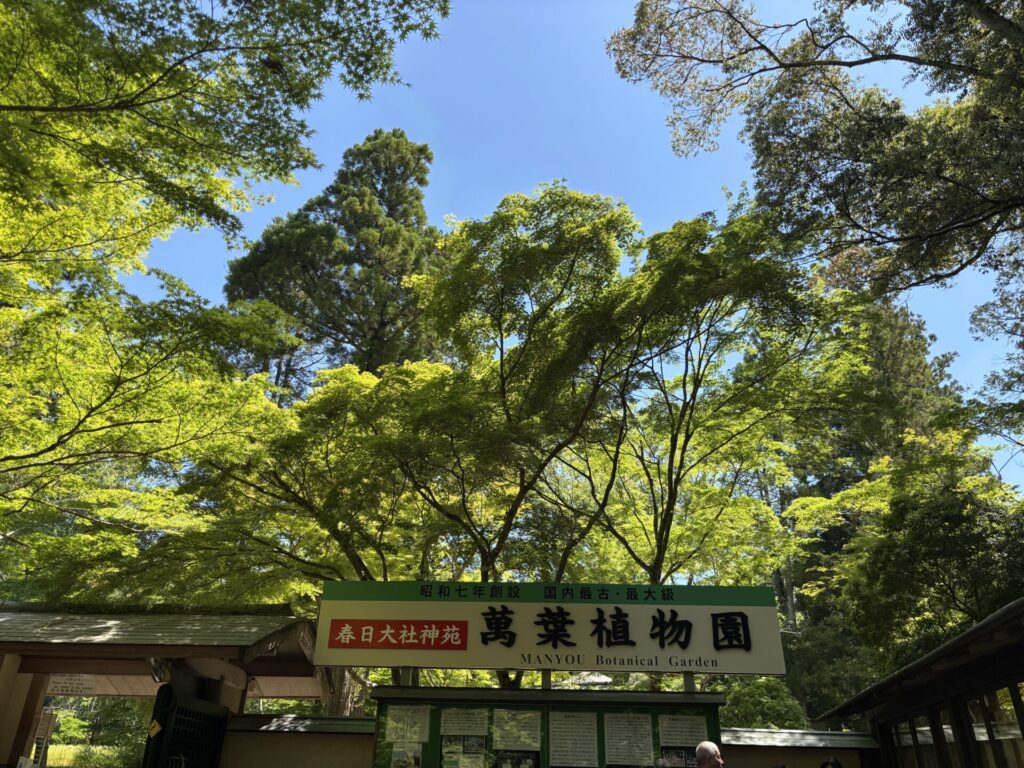
紫草 Murasaki
和歌などでよく登場するけれどなかなか見ることのできない、紫草も栽培されています。
One of its most fascinating plants is murasaki (gromwell), which frequently appears in classical Japanese poetry but is rarely seen today.
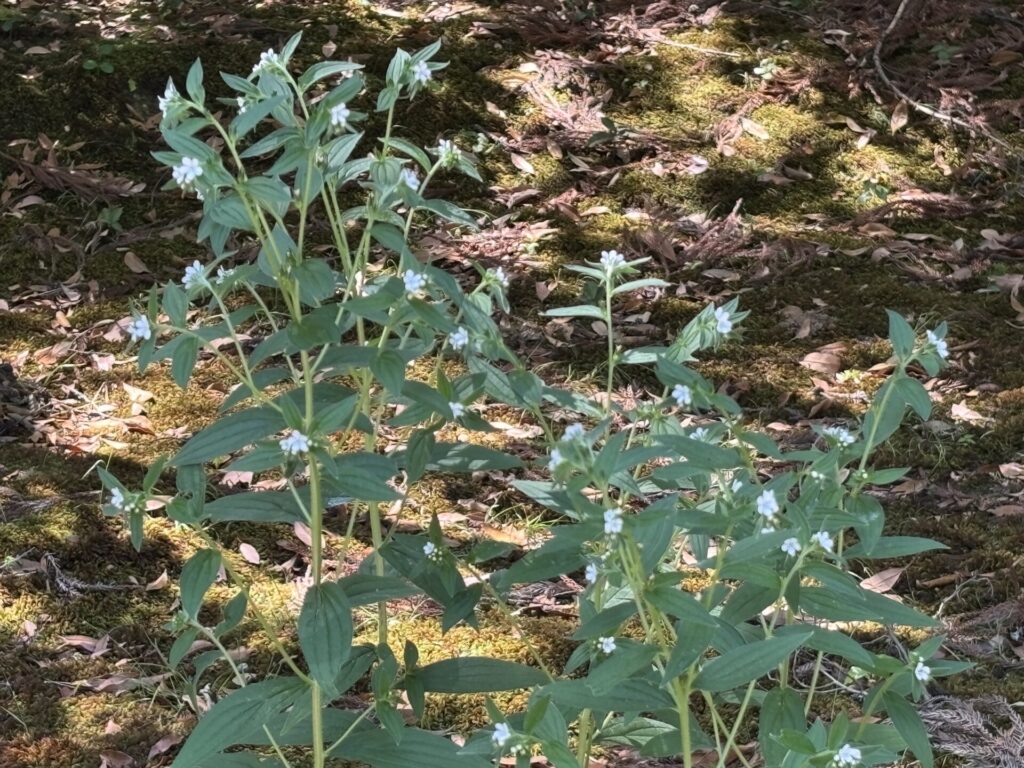
紫草で最も有名な和歌はおそらく、額田王と天武天皇の禁断の恋の歌です。
額田王:あかねさす紫野行き標野行き野守は見ずや君が袖振る
(紫草を栽培する野を行き、一般の人の立ち入りが禁じられた野を行き、野守は見ないのか、君が私に愛の印として袖を振っているのを)
天武天皇:紫のにほへる妹を憎くあらば人妻ゆゑにわれ恋ひめやも
(紫草のように美しいあなたが憎いならば、あなたは人妻であるのに、私は恋しいだろうか)
額田王の和歌が、人妻である額田王に愛情表現をする天武天皇を心配しているのに対し、天武天皇は返歌の中で、美しい紫草のような額田王を恋しく思わずにはいられない、と返事しています。
Perhaps the most famous poem about murasaki is the exchange of love poems between Princess Nukata and Emperor Tenmu.
Princess Nukata
“Across the field of murasaki,
across the guarded field where entry is forbidden—
do the field keepers not see you
waving your sleeve to me?”
She worries that Emperor Tenmu is openly expressing his affection for her, even though she is already married.
Emperor Tenmu
“If I did not love you,
beautiful as the murasaki,
why would I long for you
even though you are another man’s wife?”
In his reply, Emperor Tenmu confesses that, like the beautiful murasaki, Princess Nukata is simply too beautiful not to love.
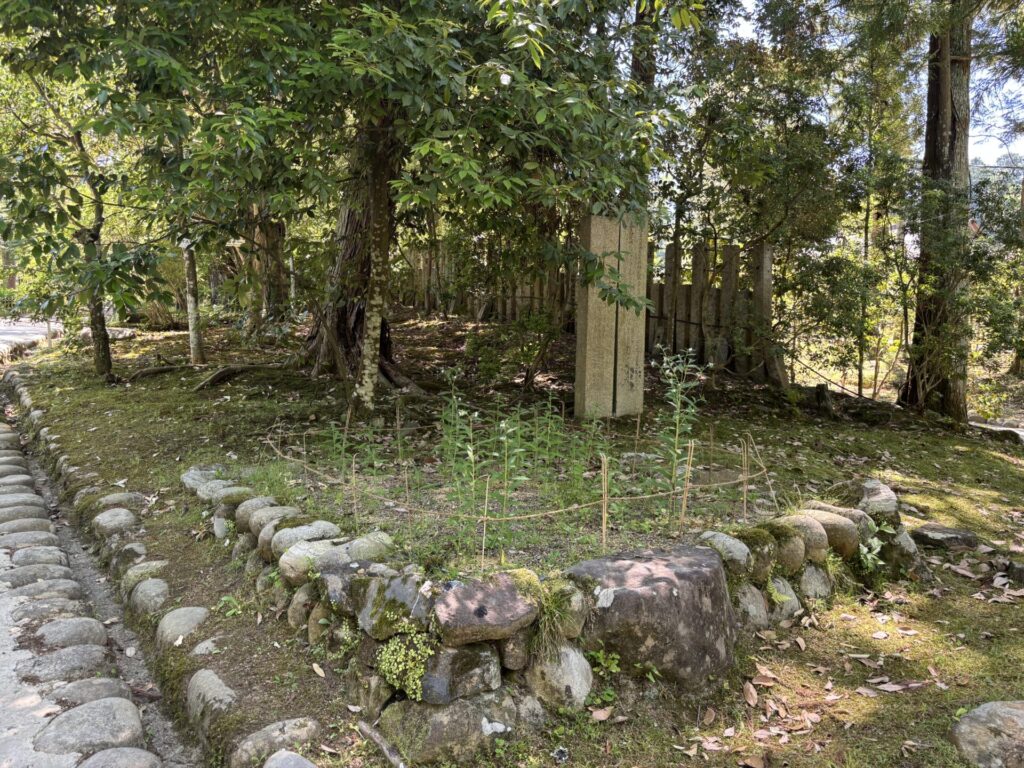
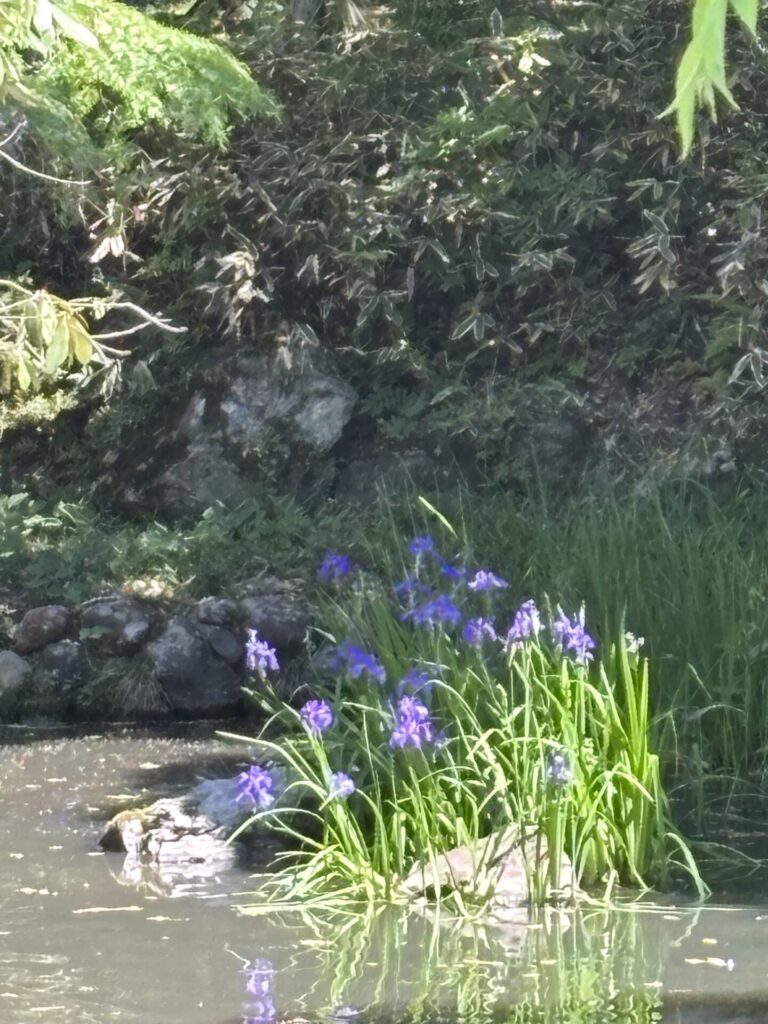
杜若かきつばたKakitsubata (Japanese Iris)
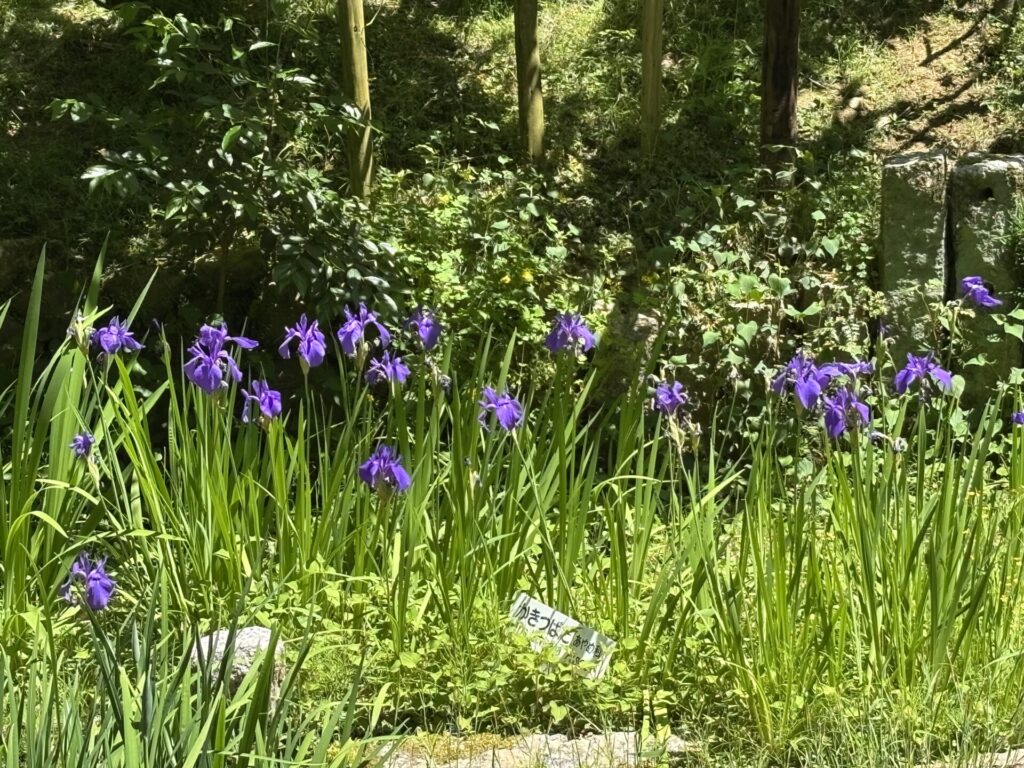
万葉集にも杜若の和歌はありますが、杜若を詠んだ歌の中では、『伊勢物語』で在原業平が京を離れて三河国八橋に行ったときに詠んだ和歌が最も有名です。
からころも
きつつなれにし
つましあれば
はるばるきぬる
たびをしぞおもふ
(遠い旅をするうちに着古した衣の褄が柔らかくなり、遠い旅路を来た私には、故郷になじんだ妻がいるので、はるばる来た旅を思う)
和歌のそれぞれの頭文字を取ると、「かきつばた」となります。
遠く離れた妻を思う心情が、「かきつばた」という文字を使いながら詠まれています。
Although the Manyoshu contains poems about kakitsubata, the most famous poem featuring the flower appears in The Tales of Ise. It was composed by Ariwara no Narihira while traveling through Yatsuhashi in Mikawa Province.
Karakoromo
Kitsutsu narenishi
Tsuma shi areba
Harubaru kinuru
Tabi o shizo omou
The first syllable of each line forms the word “kakitsubata.”
The poem expresses Narihira’s longing for the wife he left behind in the capital while skillfully incorporating the name of the flower as an acrostic.
たまかづらTamakazura
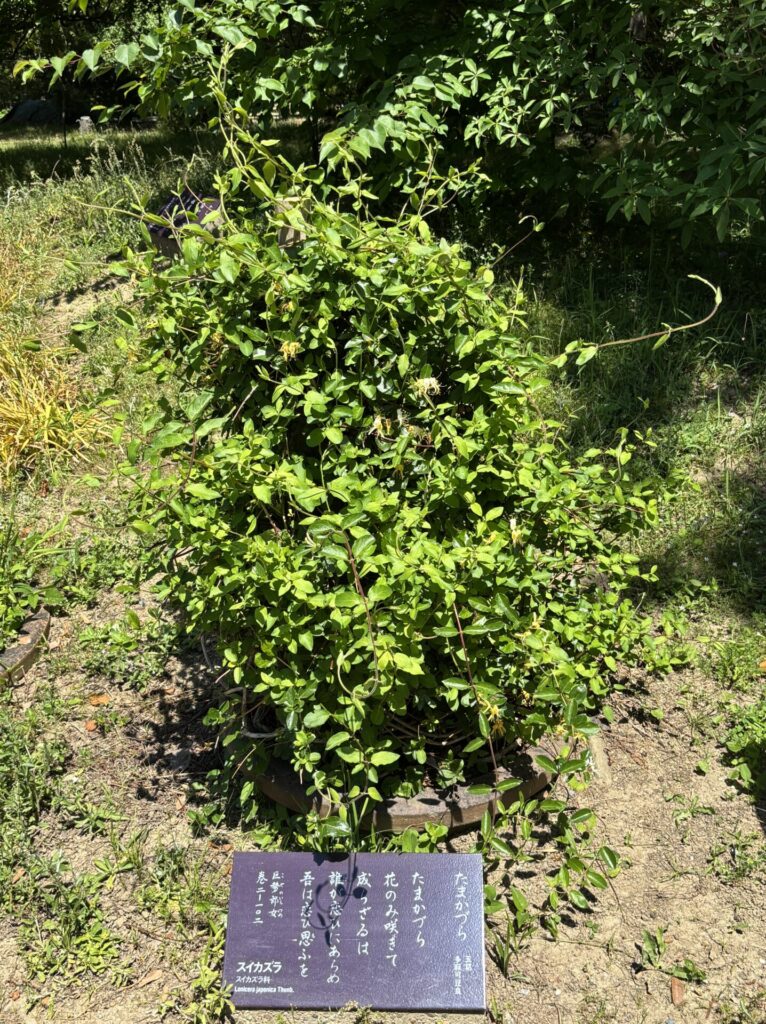
『源氏物語』に「たまかづら」という人物が登場します。
「たまかづら」が詠み込まれた和歌は、光源氏の和歌です。
恋ひわたる身はそれなれど玉かづらいかなる筋を尋ね来つらむ
ずっと恋しく思っていた身はそのままだけれども、たまかづらのつるのように、どんな細長い縁を通って尋ねてきただろうか
光源氏が、若くして亡くなった恋人の娘に再会した時に詠んだ歌です。この娘はこの和歌にちなんで「たまかづら」と呼ばれるようになりました。
A character named Tamakazura appears in The Tale of Genji.
The name comes from a poem composed by Hikaru Genji:
“Though my heart has longed for you all this time,
by what slender vine of fate,
like the tamakazura vine,
have you finally found your way to me?”
Genji composed this poem when he was reunited with the daughter of a woman he had deeply loved, who had died at a young age. Because of this poem, the young woman came to be known as Tamakazura.
万葉植物園は、植えられている植物は派手ではありませんが、文学に縁のある植物がたくさんあり、歴史や文学が好きな人にはおすすめです。
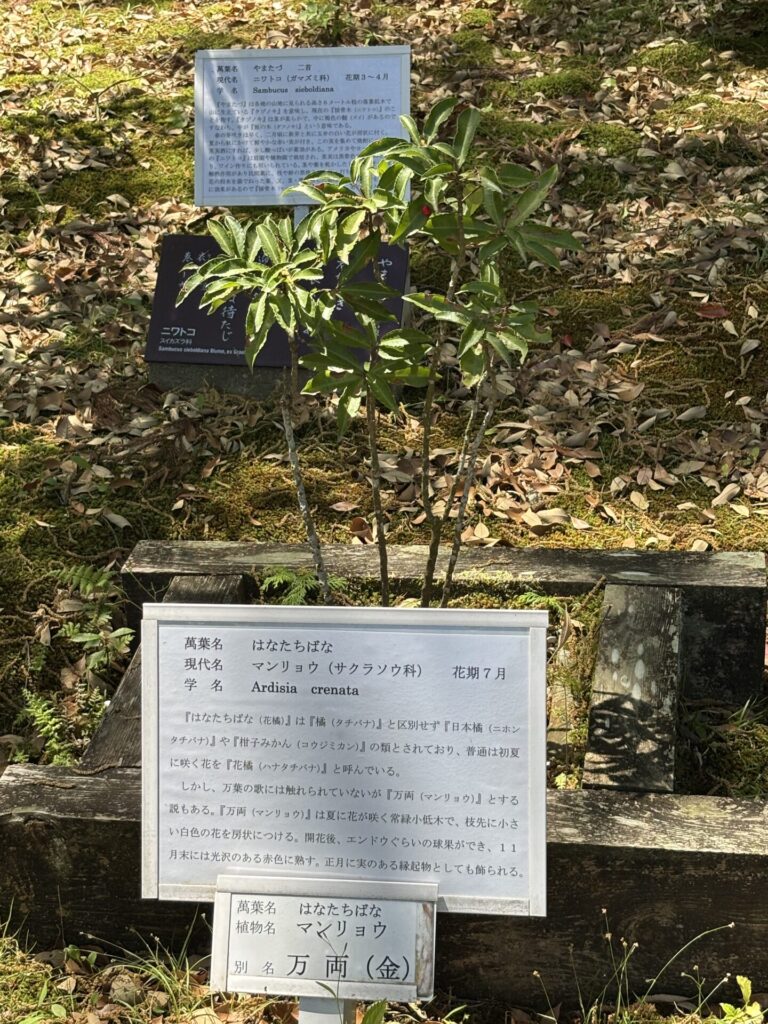
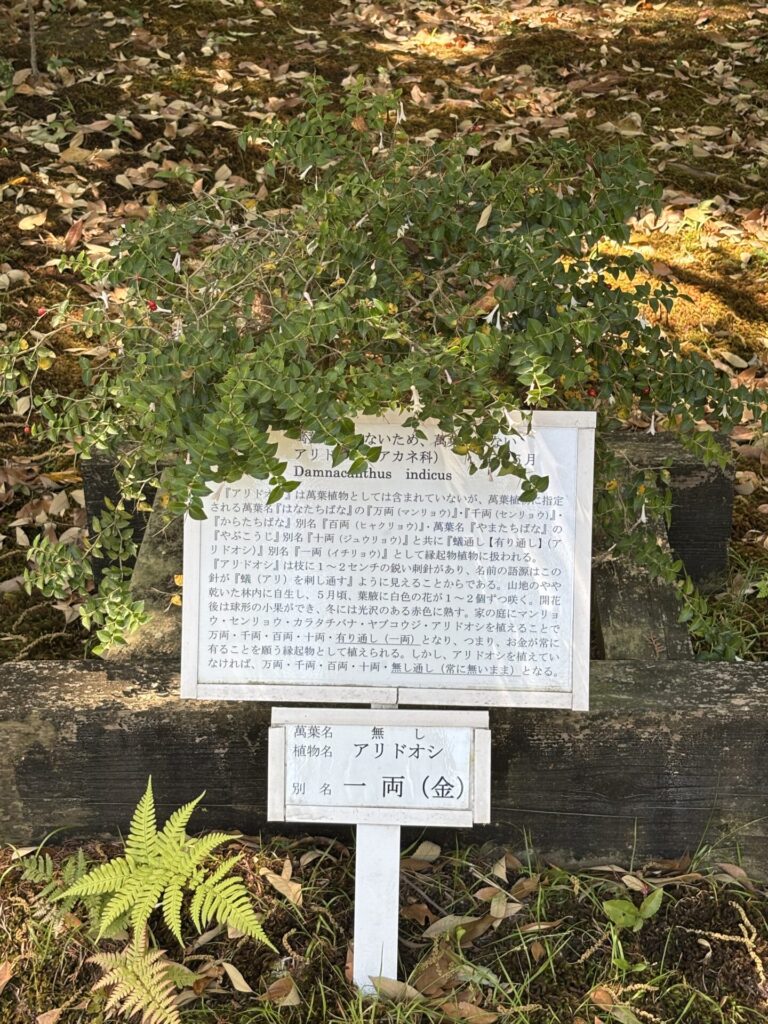
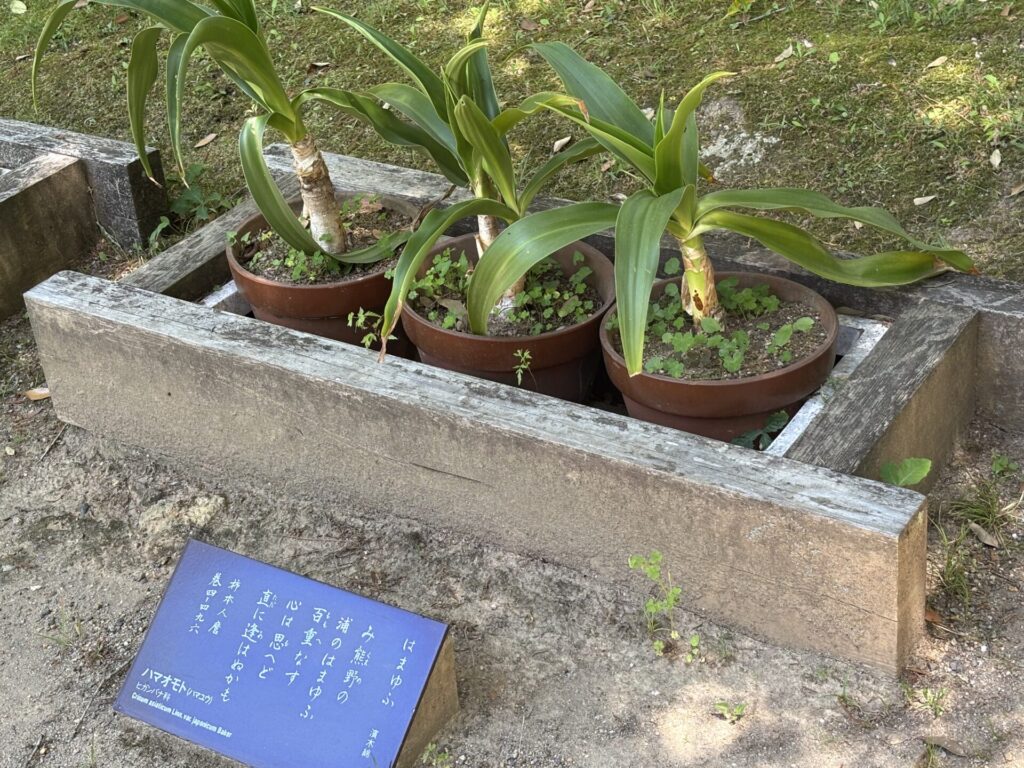
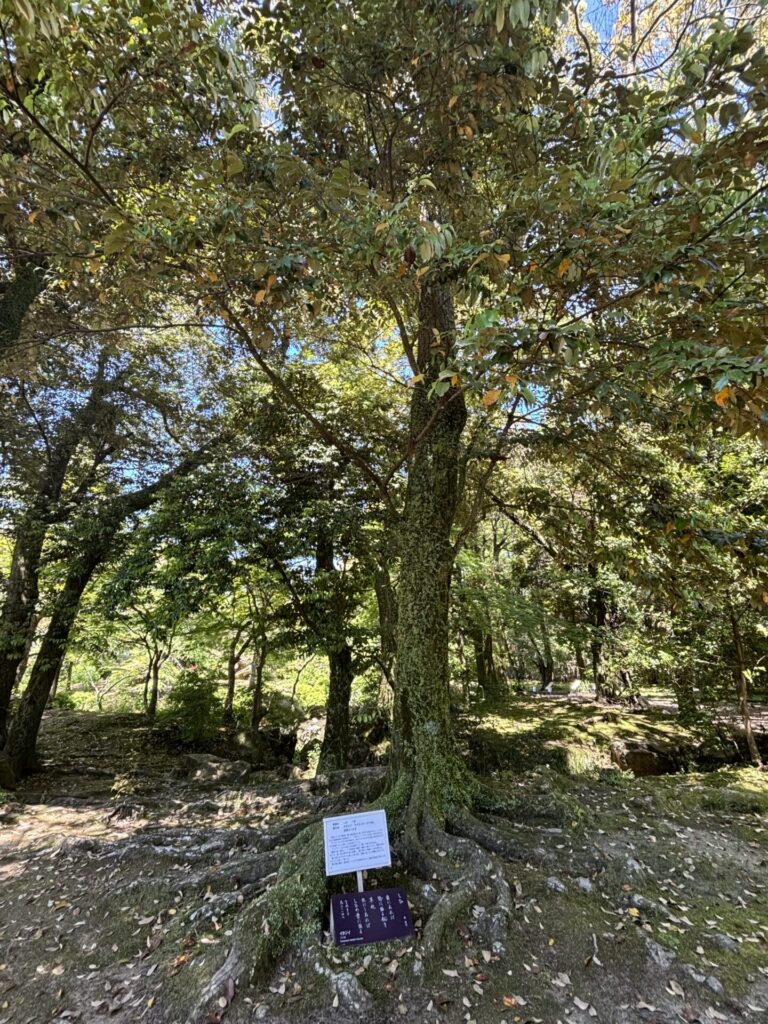
A Garden for Lovers of Japanese Literature
The plants themselves may not be particularly showy, but the garden is filled with species closely connected to classical Japanese literature. It is a wonderful place for anyone interested in Japan’s history, poetry, and literary heritage.
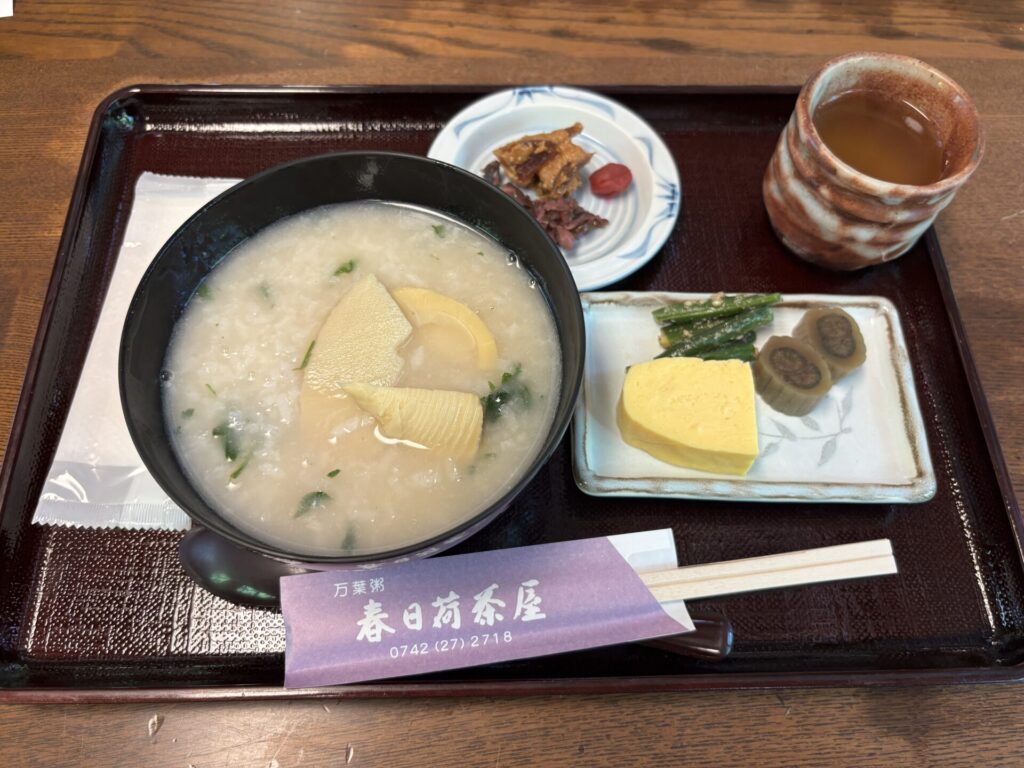
万葉植物園のすぐ外の茶屋では季節ごとのお粥が名物です。
Just outside the garden is a traditional teahouse famous for its seasonal rice porridge, making it a pleasant place to stop after your visit.

コメント