
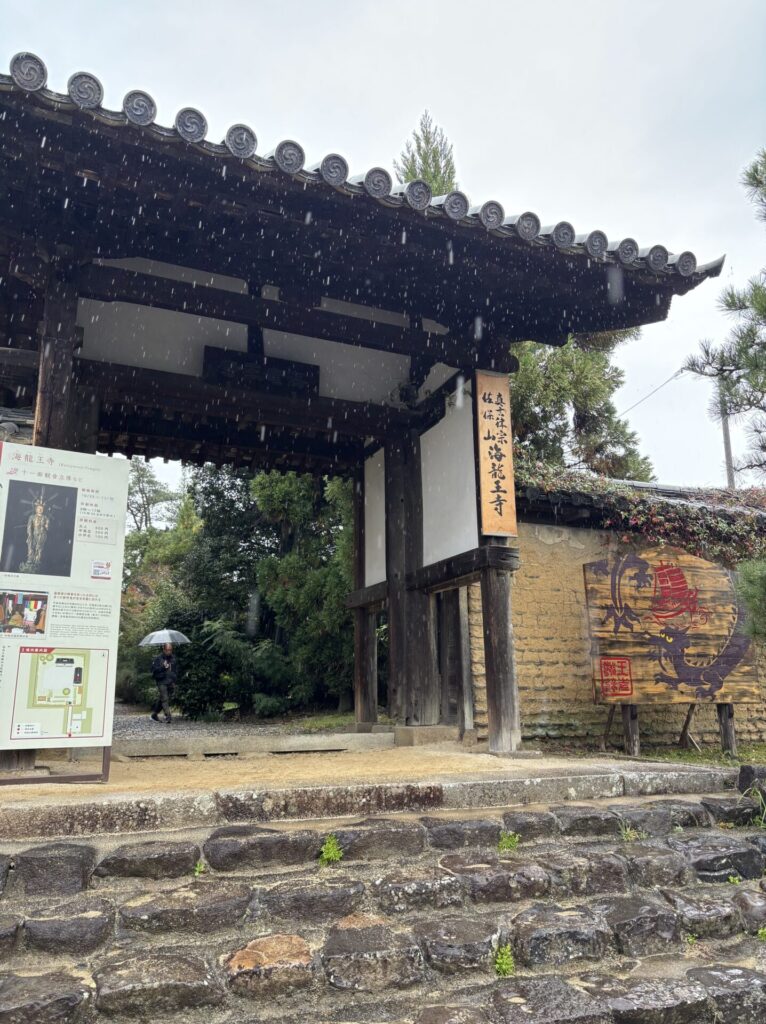
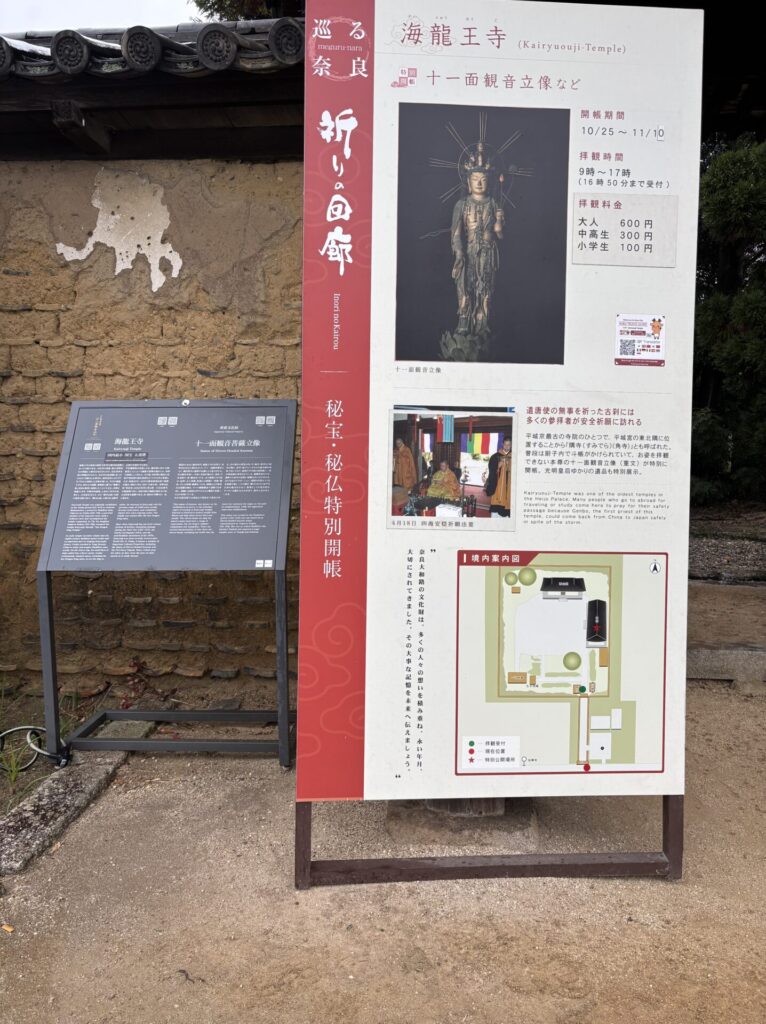
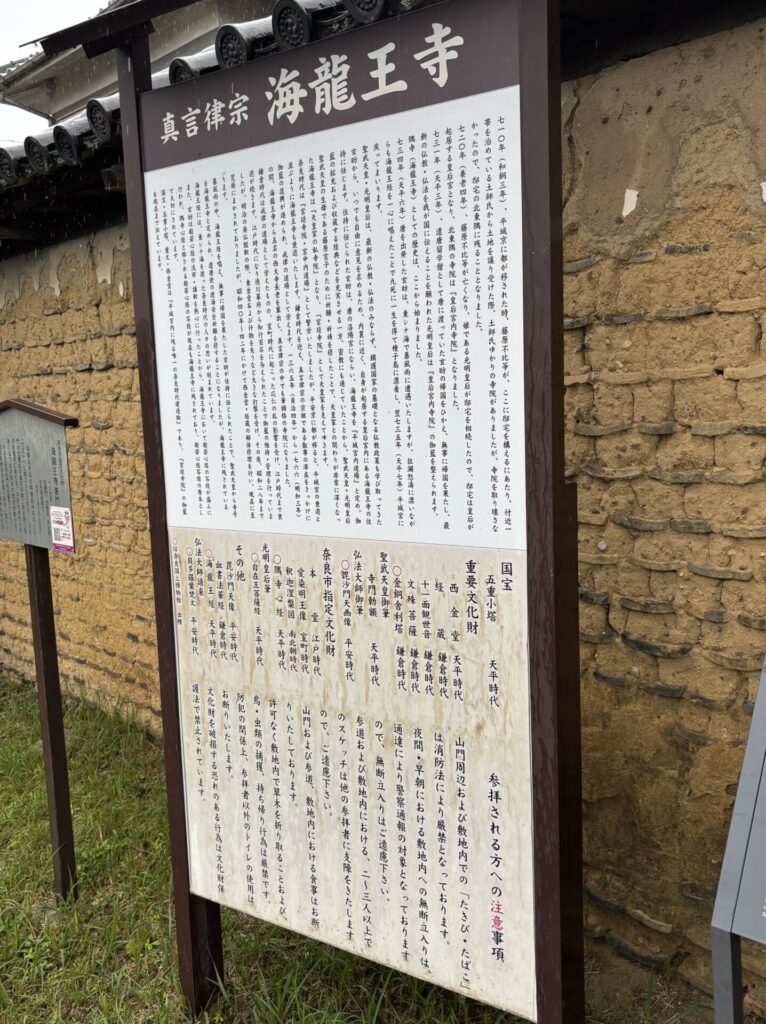
法華寺の隣にあり、もともとは隣にある法華寺とともに光明皇后の皇后宮で、隅にあったことから隅寺とも呼ばれていたそうです。
This temple stands next to Hokke-ji and was originally part of Empress Kōmyō’s palace together with Hokke-ji. Because it was located in a corner of the grounds, it was also called “Sumidera隅寺,” or “the Corner Temple.”
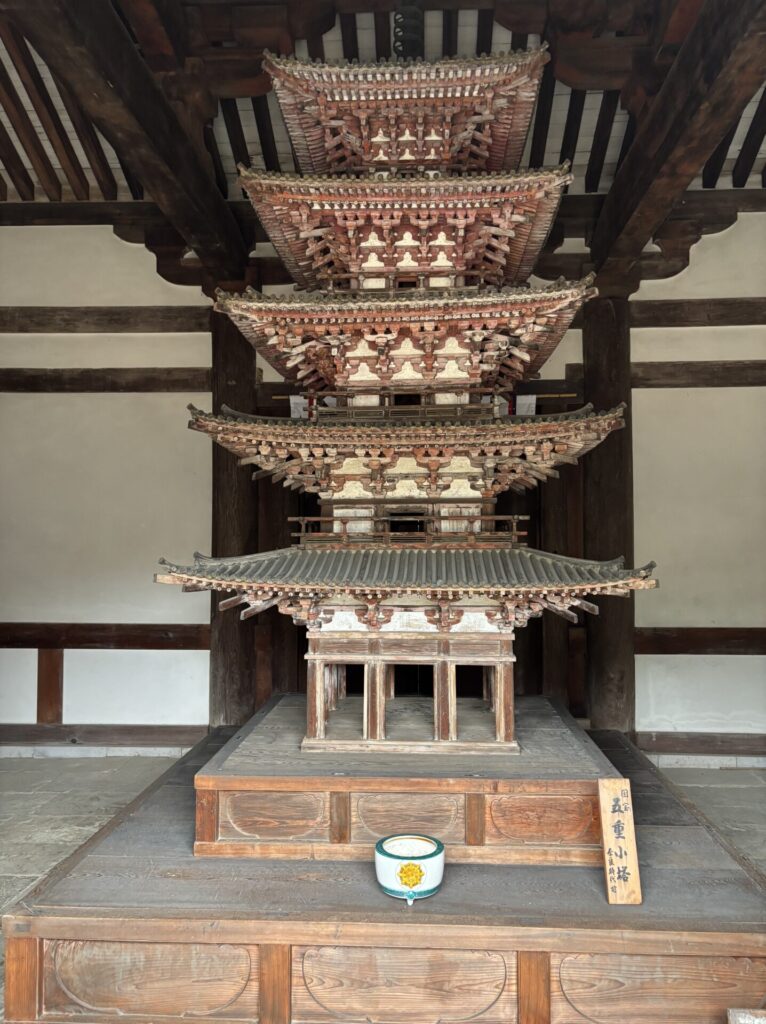
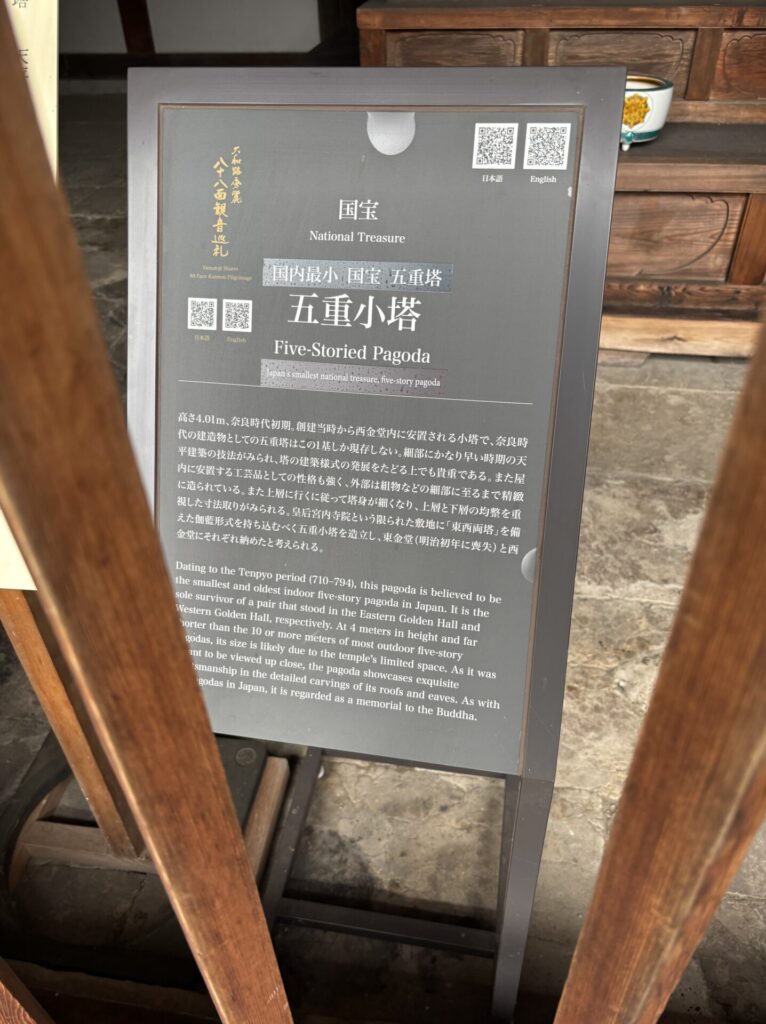
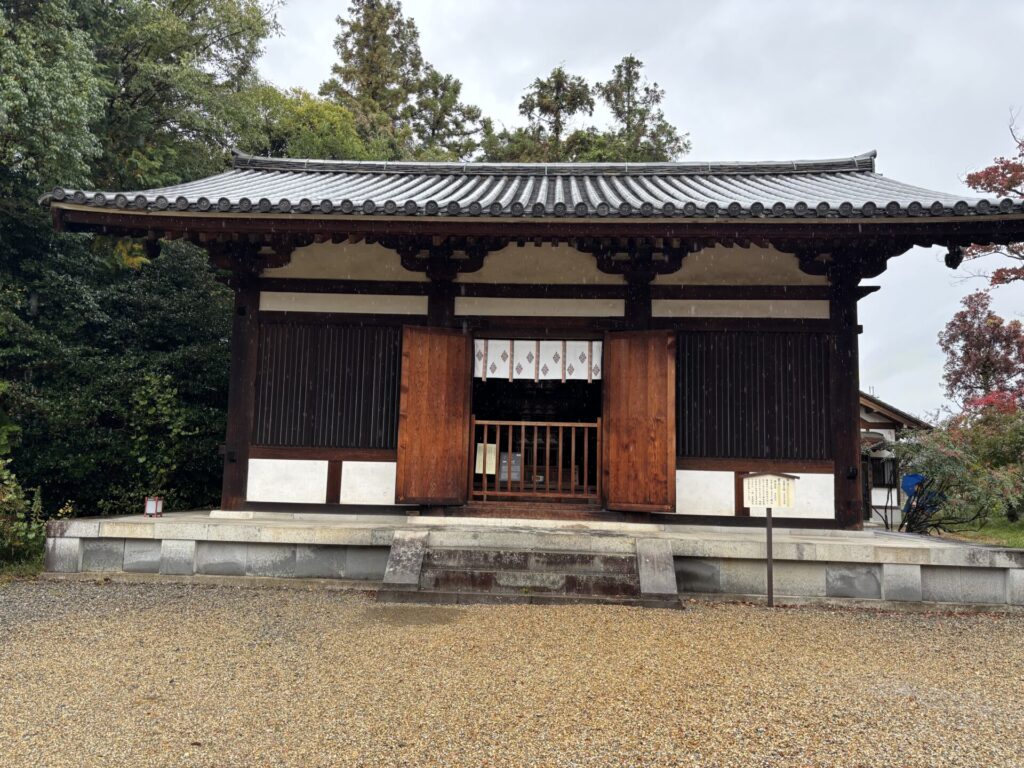
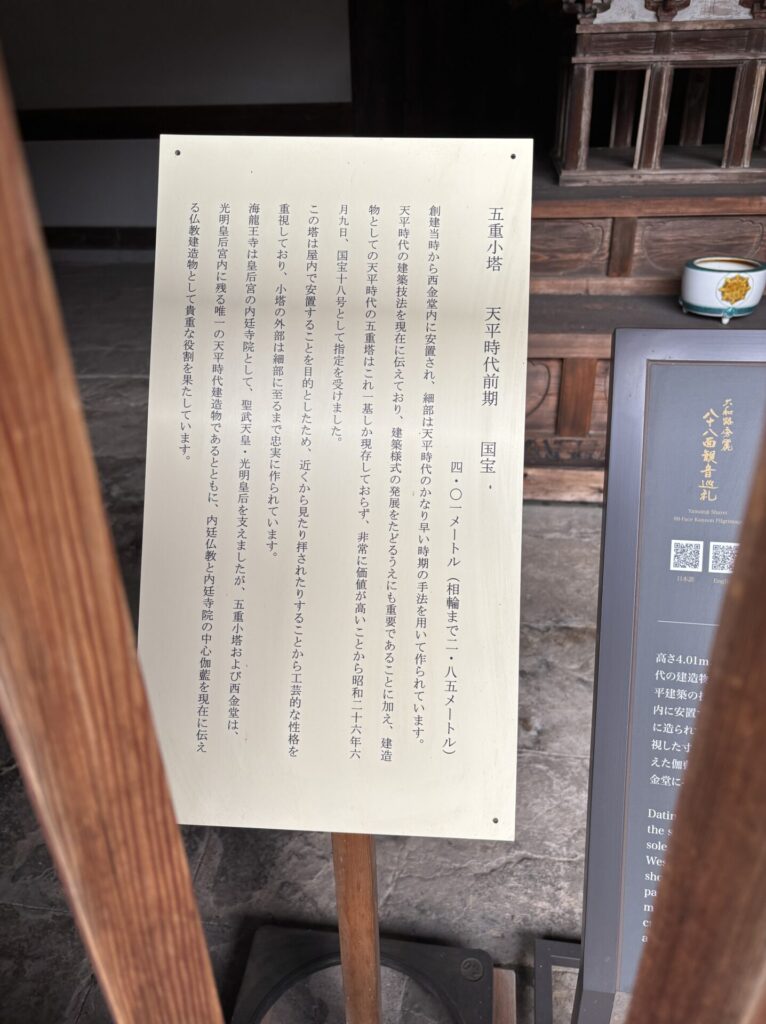
国内最小の五重塔があります。高さ4.01メートル、奈良時代の五重塔はこの塔だけで、非常に価値が高いそうです。屋内に安置されていたため、工芸的な性格が重視され、精緻に作られています。
It houses the smallest five-story pagoda in Japan, measuring only 4.01 meters in height. This pagoda is the only surviving five-story pagoda from the Nara period, making it extremely valuable. Since it was originally kept indoors, it was crafted with an emphasis on decorative artistry and is exquisitely detailed.
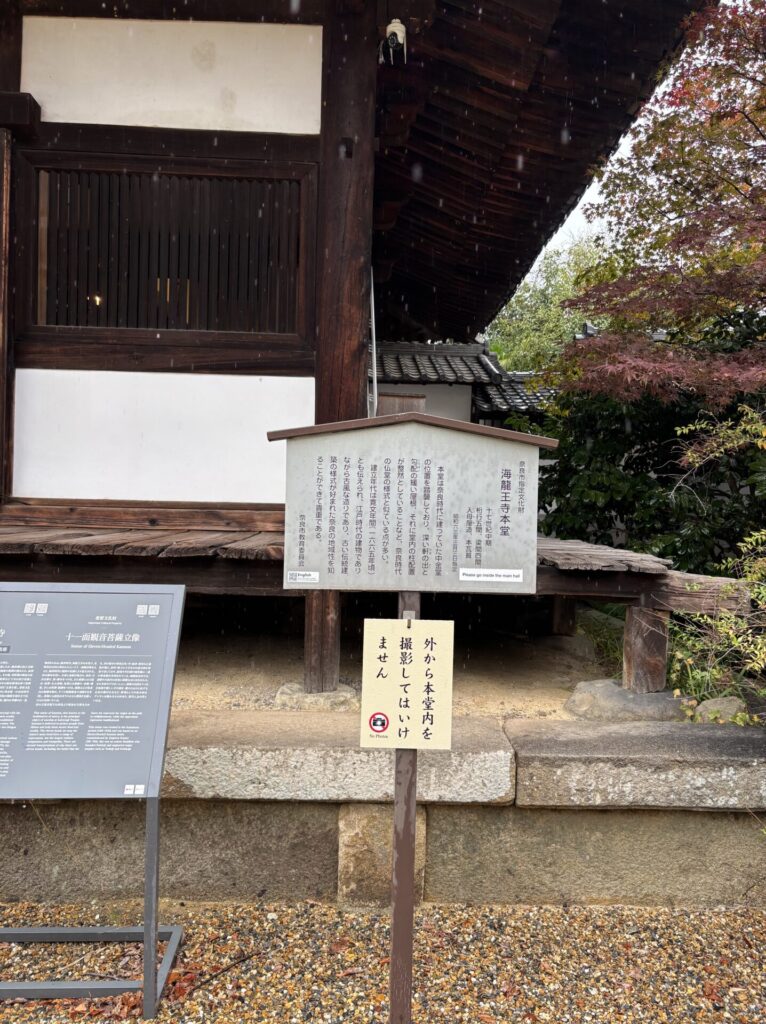
飛鳥時代からの小さな伽藍を、遣唐使の無事な帰還を祈って光明皇后が改修した寺です。寺の改修が完了した天平6年、遣唐使の中で、20年におよぶ唐での生活をへた玄昉の一行だけが日本に帰り、その後玄昉は聖武天皇と光明皇后に信頼され、この寺に住みました。玄昉が唐から帰る途中、日本海で嵐に遭ったとき、海龍王経という経を唱えて無事に帰ることができたため、この寺は海龍王寺と呼ばれるようになったそうです。そのことから、旅行や留学の安全祈願の寺とされています。
This temple, originally a small Asuka-period monastic complex, was renovated by Empress Kōmyō as a prayer for the safe return of the Japanese envoys to Tang China. In 734 (Tenpyō 6), the year the renovations were completed, only the group ,which included Genbō—who had spent about twenty years in Tang China—successfully returned to Japan. Genbō later earned the trust of Emperor Shōmu and Empress Kōmyō and took up residence at this temple.
According to tradition, while returning from China, Genbō’s ship was caught in a storm on the Sea of Japan. By chanting the Kairyūō-kyō (“Sutra of the Dragon King of the Sea”), he was able to reach Japan safely. Because of this, the temple came to be known as Kairyūō-ji, the “Temple of the Sea Dragon King.” For this reason, it is regarded today as a place to pray for safe travels and successful overseas study.
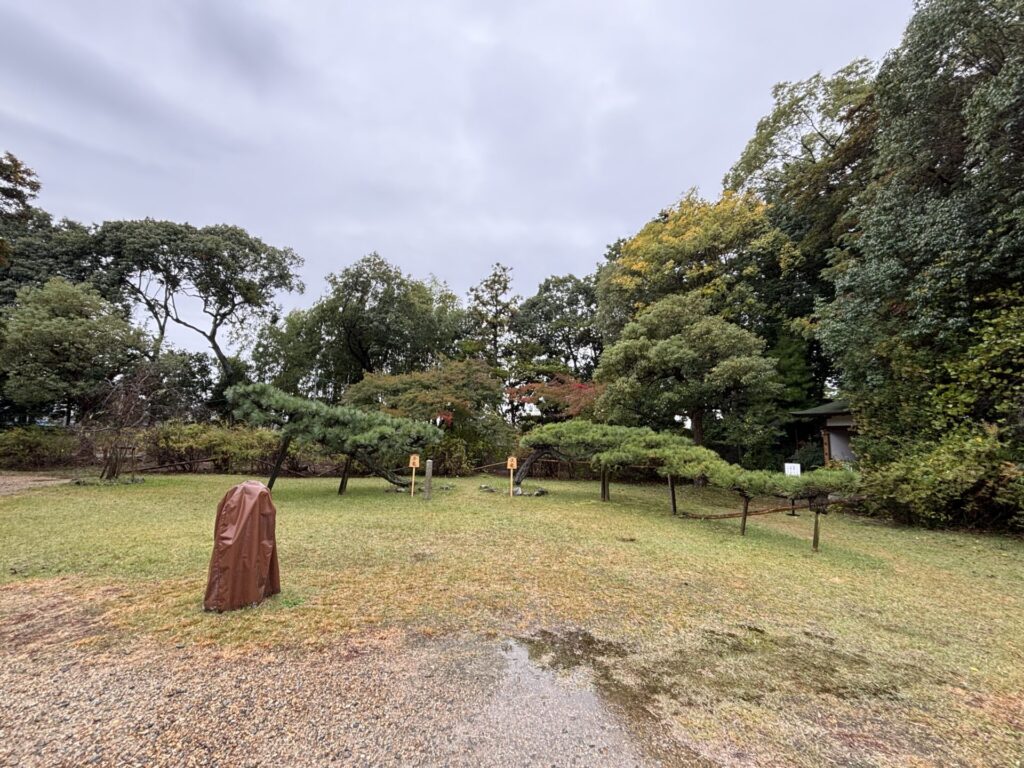
龍の形に整えられた松。右が伏した龍、左は空に昇る龍です。
The pine trees are trimmed in the shape of dragons: the one on the right represents a dragon lying low, while the one on the left depicts a dragon ascending into the sky.

コメント