
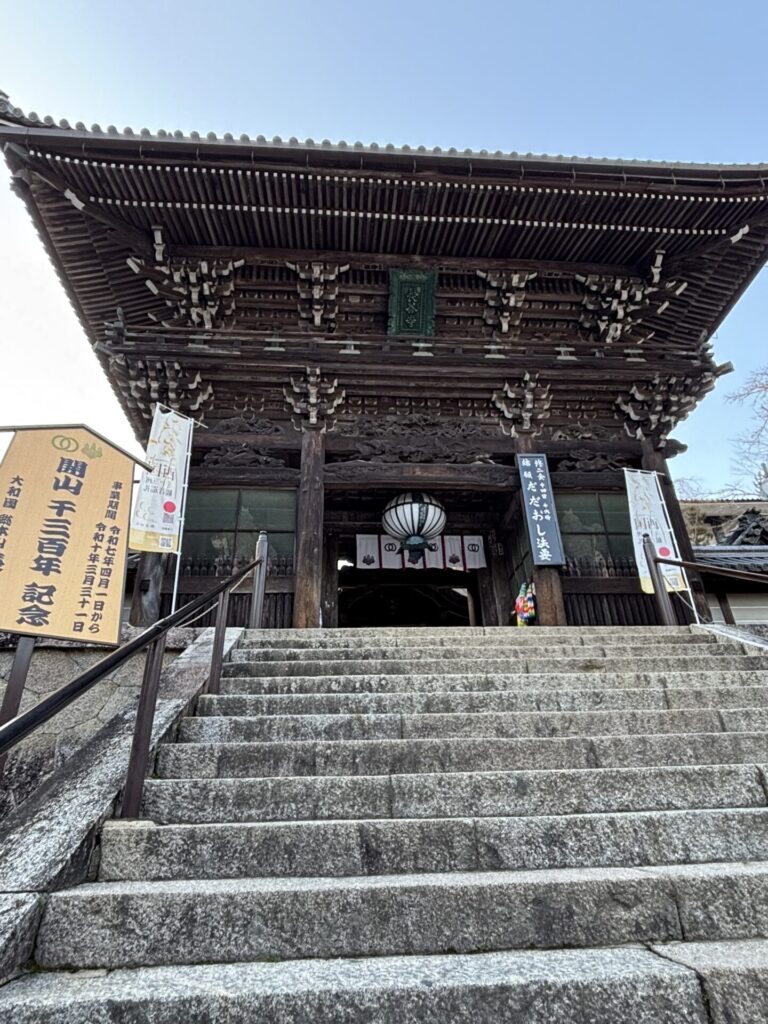
奈良の長谷寺で毎年2月14日に行われる、謎の祭り、だだ押し。
有名なのにインターネットにも詳細が載っておらず、あまりにも興味を引かれて行ってみました。
16:30に着いた時にはすでに本堂は満員となっており、中には入れませんでした。早く着けば牛王印をもらって本堂で見ることができるようです。インドで神聖な動物である牛の王のご利益を得ることができるそうです。
At Hasedera Temple in Nara, there is a mysterious festival called Dadaoshi held every year on February 14.
Although it is famous, there is little detailed information available online. I was so intrigued that I decided to go and see it for myself.
When I arrived at 4:30 p.m., the main hall was already full, and I was unable to enter. If you arrive early, you can receive a Goō-in (a sacred ox seal) and watch the event from inside the main hall. It is said that by receiving this seal, you can gain the blessings of the King of oxes, an animal considered sacred in India.
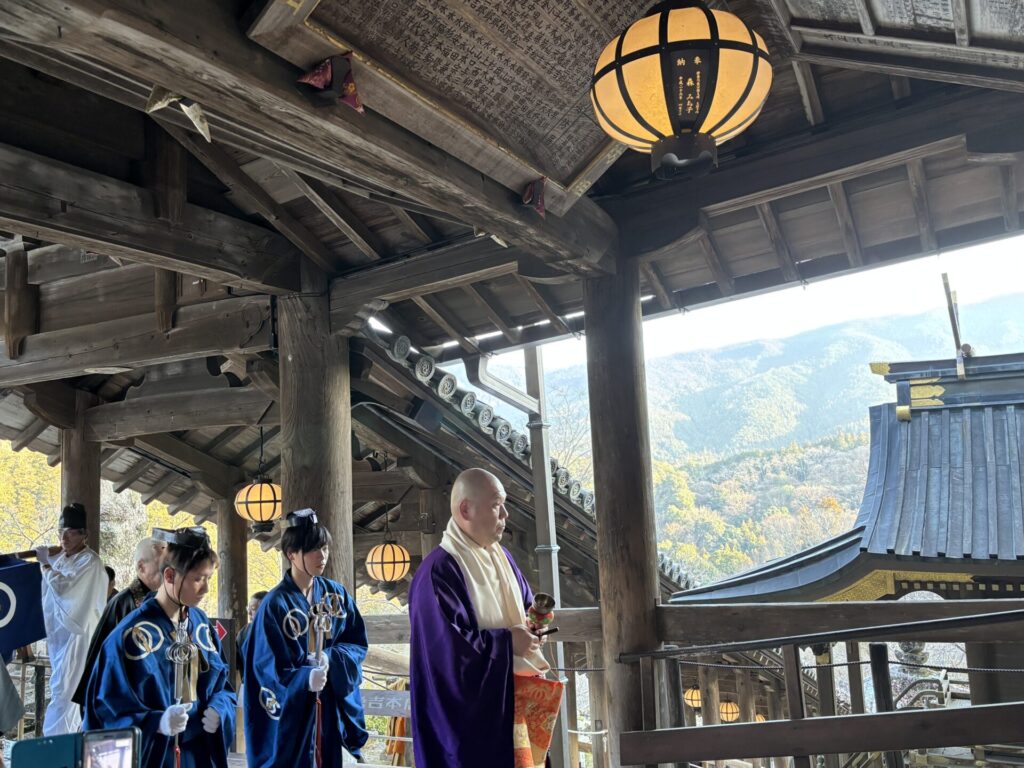
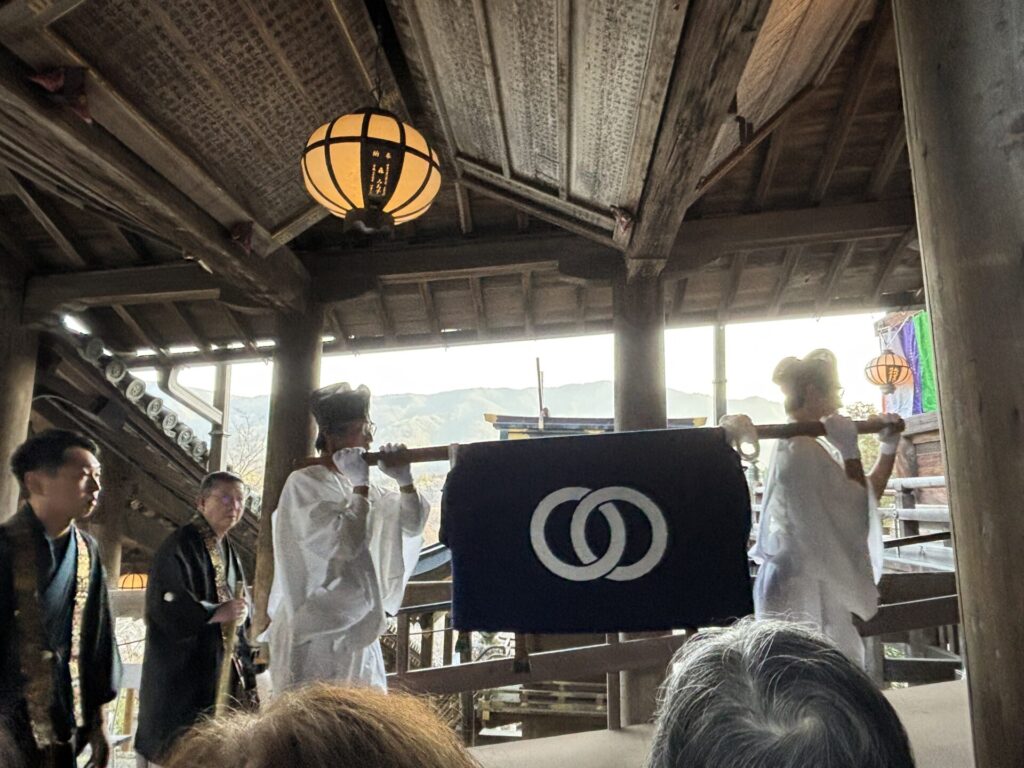
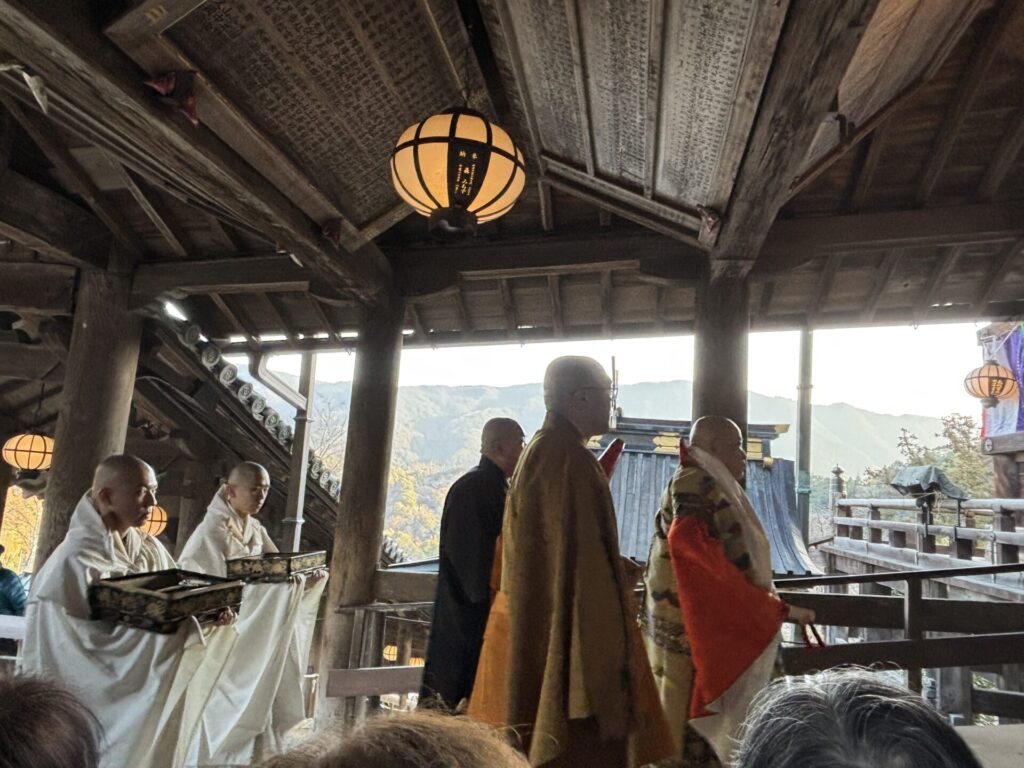
僧侶たちが宝物を下げてゆっくりと回廊を上がります。
17時頃、観音様の前で宝物が取り出され、法要が行われます。色々なお経が読まれますが、長谷寺のお経は何度聞いても迫力があり、体内から何かが湧き上がってくるようです。
The monks slowly ascend the corridor, carrying sacred treasures.
Around 5:00 p.m., the treasures are brought out before Kannon, and a Buddhist service begins. Various sutras are recited, but the chanting at Hasedera has an intensity unlike any other. No matter how many times I hear it, it feels as though something rises from deep within my body.
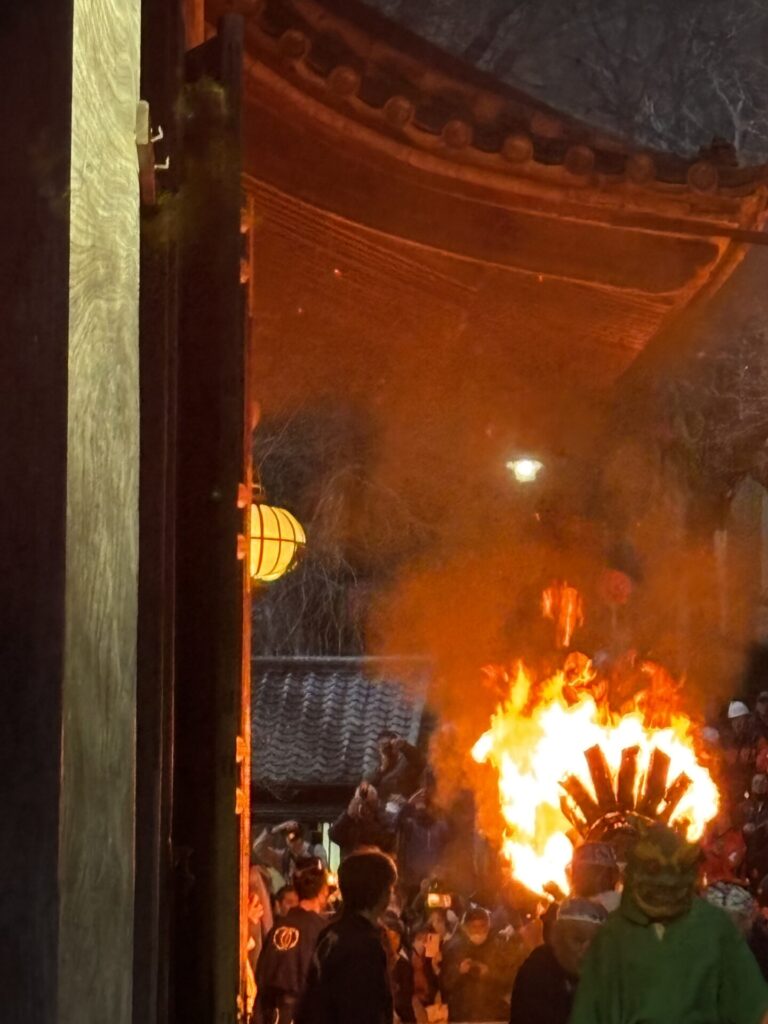
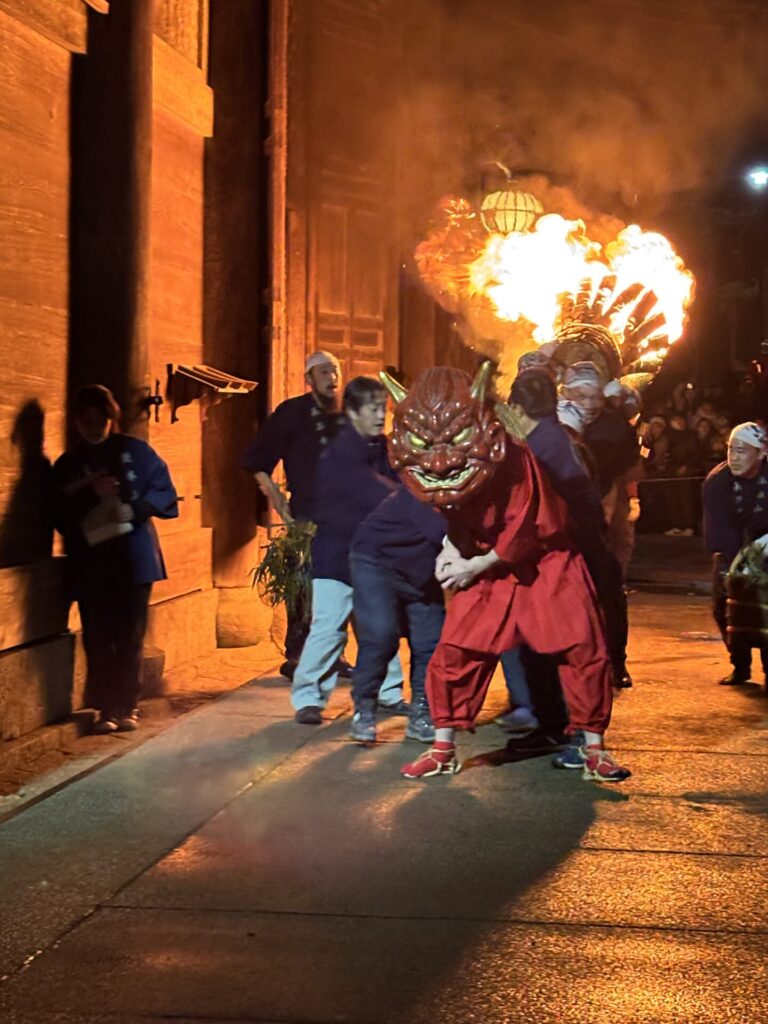
18時近くなり日も暮れてきた頃、鬼たちが長谷寺本堂の周りを歩き始めました。法螺貝の音、鬼が大音声で喚く声、松明を担ぐ男性たちの掛け声、松明の燃える音、迫力があります。
残念ながら本堂には入れなかったのですが、本堂横や本堂後ろにも鬼がやって来ます。
As it approaches 6:00 p.m. and darkness begins to fall, the demons start walking around the Main Hall of Hasedera. The sound of conch shells, the booming shouts of the demons, the cries of the men carrying torches, and the crackling of the flames create an overwhelming atmosphere.
Unfortunately, I was unable to enter the Main Hall, but the demons also come around to the side and behind the hall, allowing people outside to experience the spectacle as well.
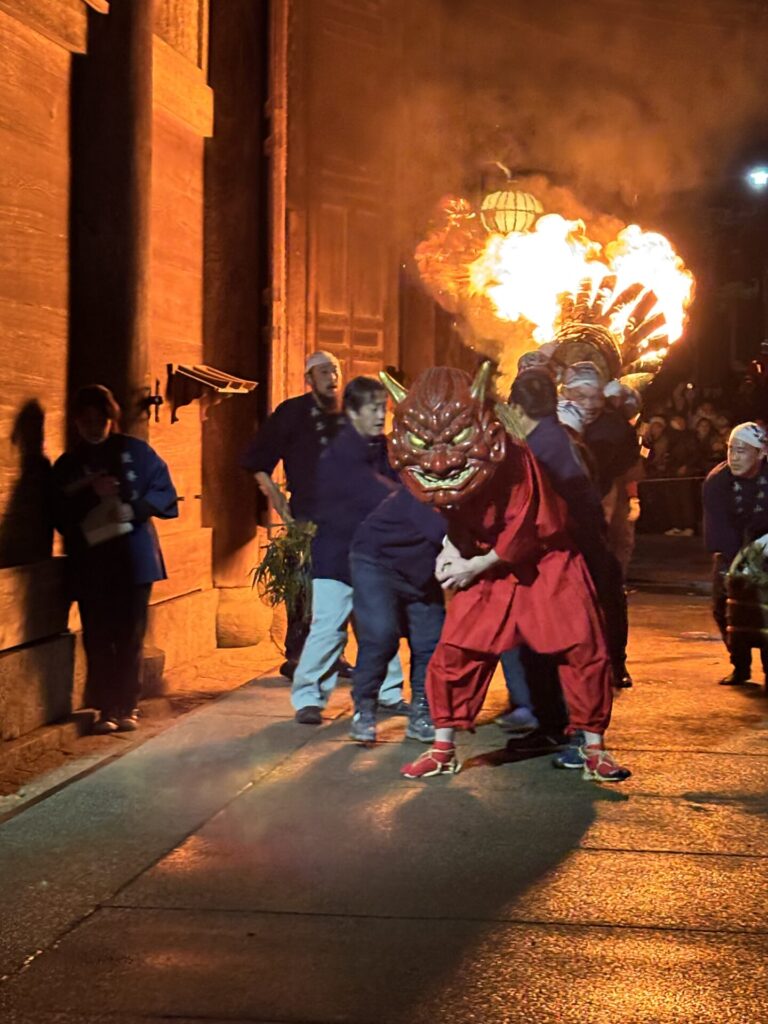
一番大きな面の赤鬼は、喚きながら人がいるほうに顔を突きつけてきます。赤鬼の後からは松明の爆ぜる音と熱気が迫ってきて、大人でも悲鳴をあげて逃げていました。
The largest mask belongs to the red demon. Shouting loudly, he thrusts his face right up toward the crowd. Behind him, the crackling sound and intense heat of the torches surge forward, and even adults scream and run away.
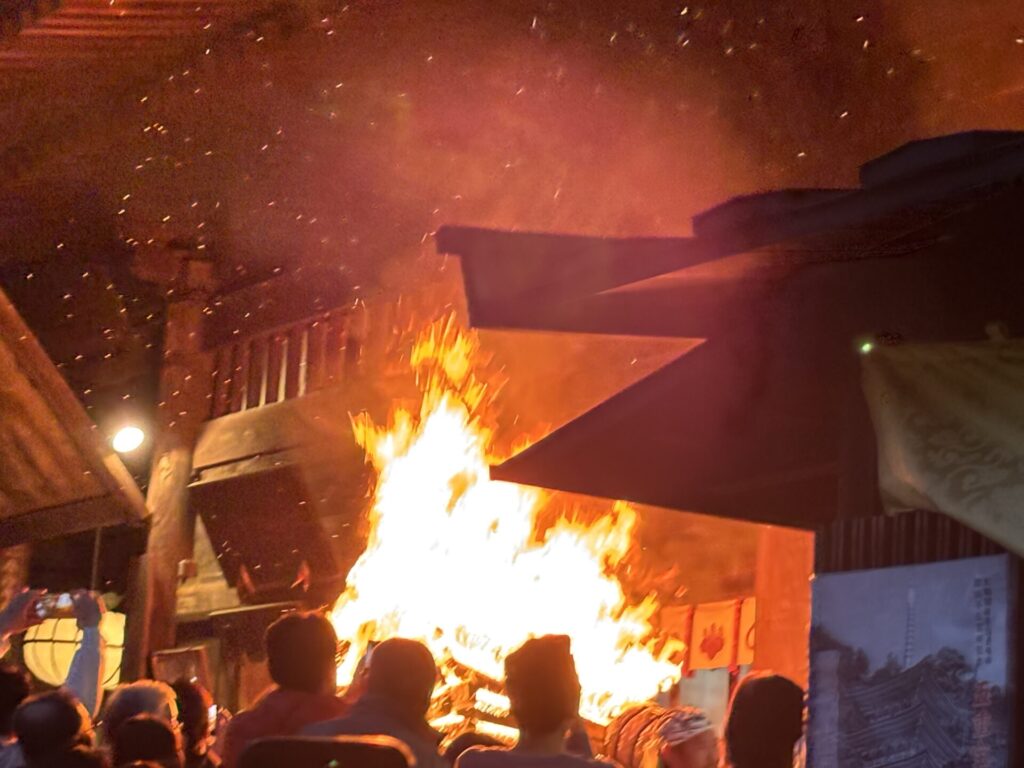
途中、松明と松明がぶつけられる場面もありました。松明の火は屋根まで届き、国宝長谷寺本堂が、燃えているように見えます。1200年続くお祭りだそうですが、これまで無事だったのが不思議な気がします。
At one point, the torches are struck against each other. The flames reach as high as the roof, making the National Treasure Main Hall of Hasedera appear as if it were on fire. It is said that this festival has continued for 1200years, and it feels almost miraculous that it has remained safe all this time.
消防団の方の裏での活躍。
Behind the scenes, members of the local fire brigade are actively working to ensure safety.
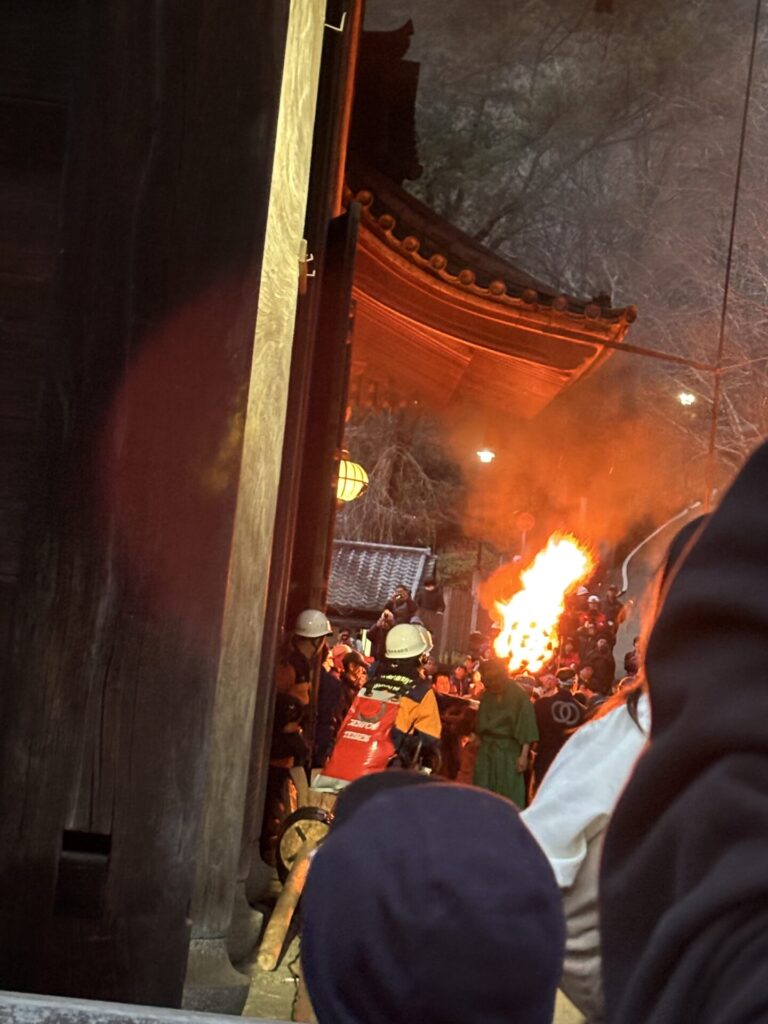
全て終わったのは18時30分。終わってからも興奮冷めやらぬ空気でした。
長谷寺は駅からかなり歩くので、夜道は怖いのでは、とも思いましたが、かなり人がいたので安全でした。
Everything ended around 6:30 p.m., yet even after it was over, the air remained charged with excitement.
Since Hasedera is quite a walk from the station, I worried that the road would feel unsafe at night. However, there were many people around, so it felt secure.
「だだ押し」は、十一面観音に懺悔することで心身を清浄にし、閻魔大王の力による悪魔退散を祈る行事のようです。閻魔大王とは、この世の全てを見通して、死者の生前の行いを裁き、死者の行き先(日本の場合は、極楽の他に地獄など六つの死者の世界があります。)を決める、死者の国の主です。「だだ押し」には、罪を懺悔し災厄から逃れたい、という人々の思いが込められていると思われます。
Dadaoshi is a ritual in which people purify their minds and bodies by confessing their sins before the Eleven-Faced Kannon, and pray for the expulsion of evil through the power of Enma-ō (King Enma).
Enma-ō is the ruler of the realm of the dead. He is believed to see through everything in this world, judge the deeds committed by the deceased during their lifetime, and decide their destination after death. In Japan, this includes not only Paradise but also six realms of the afterlife, such as Hell.
It is thought that Dadaoshi embodies people’s heartfelt wish to repent their sins and escape from misfortune and calamity.
「だだ押し」は、正式には「追儺会(ついなえ)」と呼ばれているそうです。
「追儺」とは、疫病を流行らせる鬼を追い払う行事です。「大儺(たいだ、たいな)」とも言われ、日本では706年から始まり、その後、平安時代の宮中でも行われ、形を変えながら今日の節分の豆まきのもとになったとも言われています。最初に行われた「追儺」がどのようなものだったのかは詳しくは分かっていませんが、「だだ押し」と同じように、鬼の面を使い、鬼を追い出す行事だったようです。ここからは私の推測ですが、「追儺」「大儺(たいだ)」の語感は「だだ」に近いので、「たいだ」がなまって「だだ押し」になったのではないかとも推測できます。また、だだ押しの法印を閻魔大王より与えられたとされる徳道上人が720年頃に活躍していることから、だだ押しの起源も「追儺」と同じように700年代前半に遡ると考えられます。このことから「だだ押し」は、初期の頃の追儺の形を残しているのではないかと考えられます。
“Dadaoshi” is said to be formally known as Tsuina-e (the Tsuina Rite).
Tsuina refers to a ritual for driving away demons believed to spread epidemics. It is also called Taina or Taida. In Japan, the practice is said to have begun in 706, later being performed at the imperial court during the Heian period. Over time, it changed in form and is considered to have become the origin of today’s Setsubun bean-throwing ritual. Although the exact nature of the earliest Tsuina is not clearly known, it appears to have been, like Dadaoshi, a ceremony in which demon masks were used to expel evil spirits.
From here on is my own speculation: the sound of the words Tsuina and Taida is quite close to “dada.” It is possible that Taida gradually evolved phonetically into “Dadaoshi.” Furthermore, since the monk Tokudō Shōnin—who is said to have received the seal used in Dadaoshi from Enma-ō—was active around 720, it is reasonable to assume that the origins of Dadaoshi may also date back to the early eighth century, around the same time as Tsuina.
For these reasons, it may be that Dadaoshi preserves elements of the early form of the Tsuina ritual.

コメント