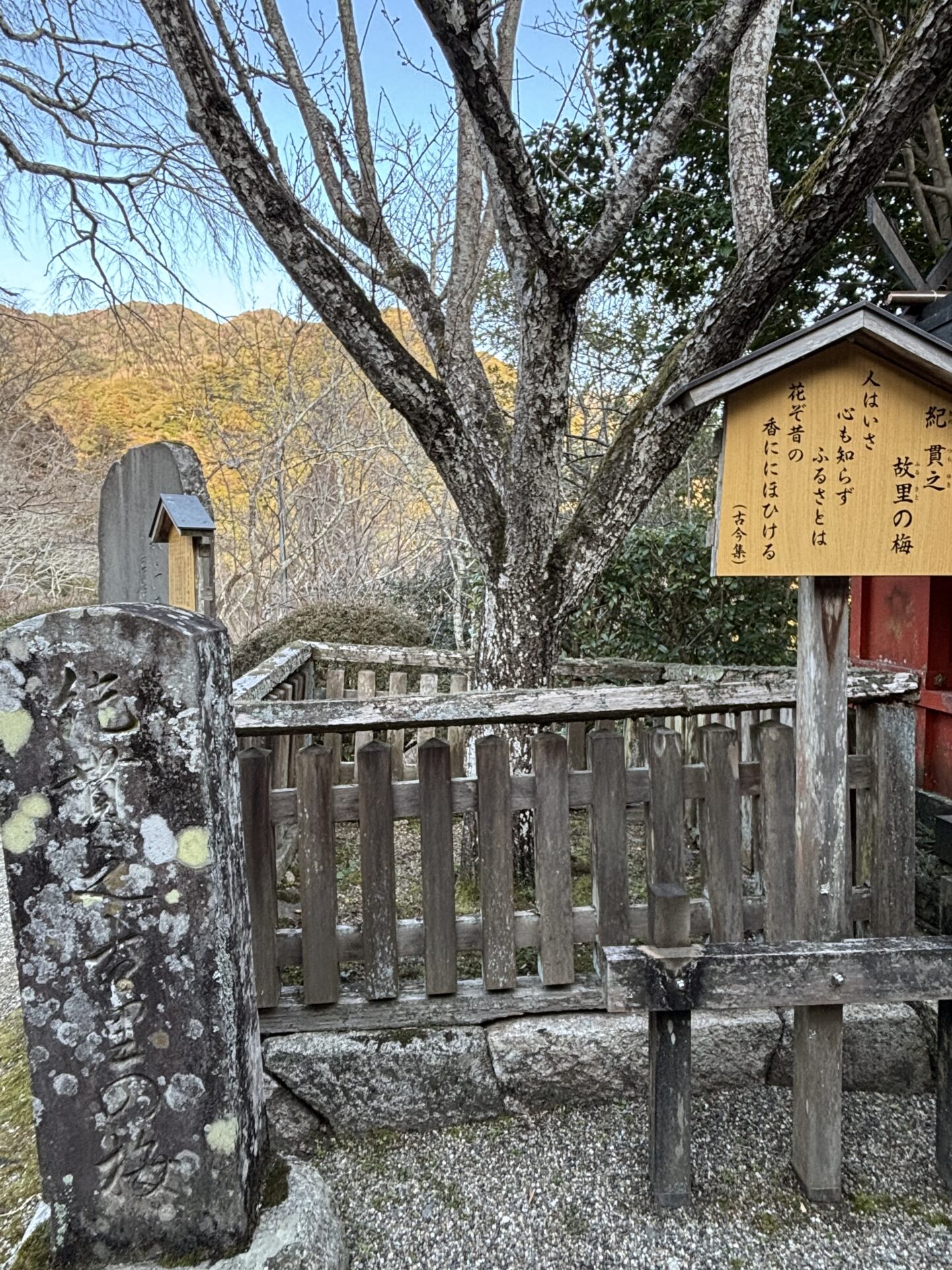
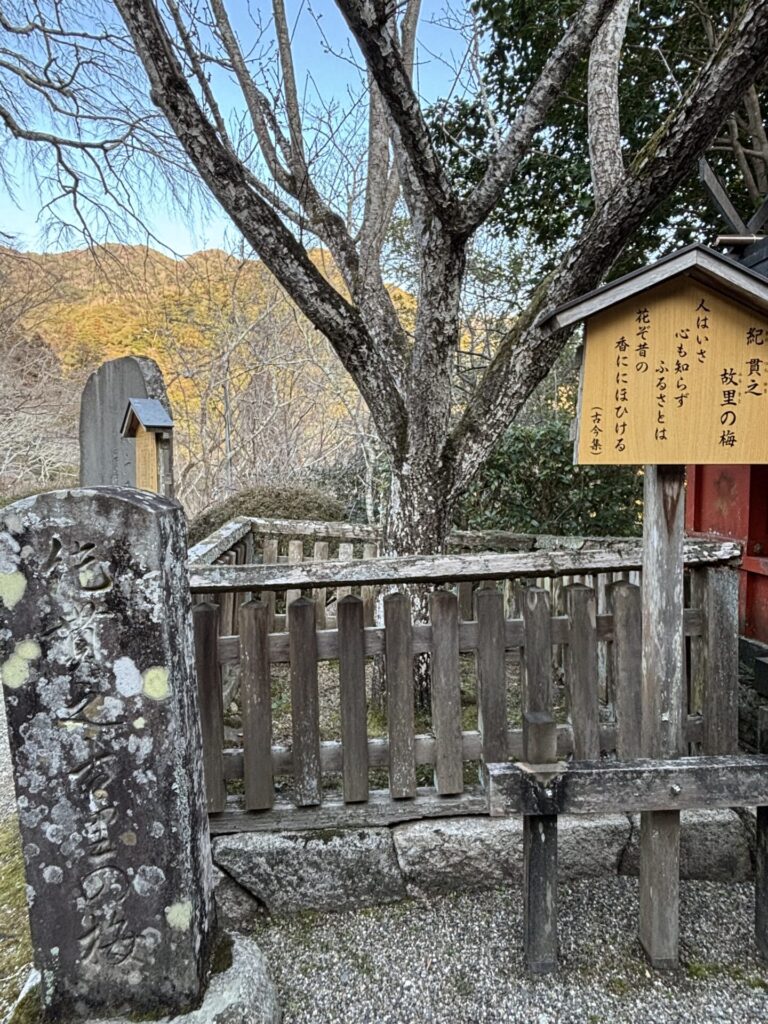
長谷寺には、有名な和歌や俳句の句碑があります。
人はいさ 心も知らず ふるさとは 花ぞ昔の香に にほひける
人の心はさあ分かりません。昔の都では、花が昔と同じ香りで咲いていますね。
At Hasedera Temple, there are stone monuments engraved with famous waka poems and haiku.
“Though I cannot know another’s heart,
In my old hometown,
The blossoms still bloom
With the same fragrance as in days gone by.”
This is a celebrated waka by Ki no Tsurayuki
紀貫之が、長谷寺に参るたびに泊まっていた宿を久々に訪ねたところ、「このように宿はありますよ(私はこの宿であなたを待っていたのに、あなたは長い間来なかったですね)」と言われて、梅の花を折って詠んだとされる有名な和歌の句碑です。
変わらずずっと待っていたと言ってくれる人の心は分からないけれど、花は昔と同じように香っている、という意味です。不確かな人の心と、昔と同じように変わらない花が対比させられています。
It is said that whenever Ki no Tsurayuki visited Hasedera, he would stay at a particular inn. After a long absence, he returned and was told, “The inn is still here, just as before (We have been waiting for you, yet you did not come for such a long time).” Moved by this, he plucked a branch of plum blossoms and composed this poem.
It means:I cannot be certain whether the one who says they have waited for me truly feels the same as before. Human hearts may change. Yet the blossoms bloom with the very same fragrance as in the past.The poem subtly contrasts the uncertainty of human feelings with the constancy of nature.
The stone monument of this waka still stands at Hasedera.
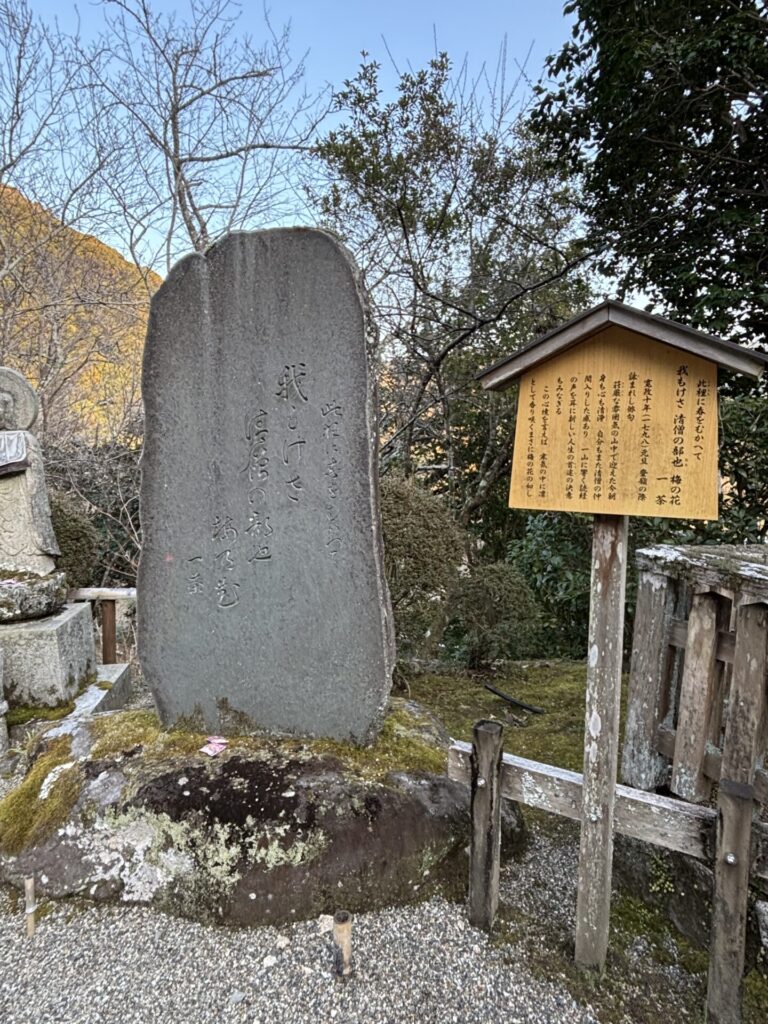
この句碑の内容です。
我もけさ 清僧の部也 梅の花 一茶
荘厳な雰囲気の中で長谷寺で迎えた朝が身も心も清らかで、清らかな僧たちの仲間入りをしたという句だそうです。梅の花のイメージによって、清々しい朝の澄み切った空気がいっそう際立って感じられます。
This stone monument bears the following poem:
“This morning, I too
Become one of the pure monks—
Plum blossoms.”
This haiku was written by Issa
It expresses how, in the solemn atmosphere of Hasedera at dawn, the poet felt both body and spirit purified, as though he had joined the ranks of the pure and devout monks.The image of the plum blossoms makes the crisp, clear air of the morning feel even more vivid.

コメント