
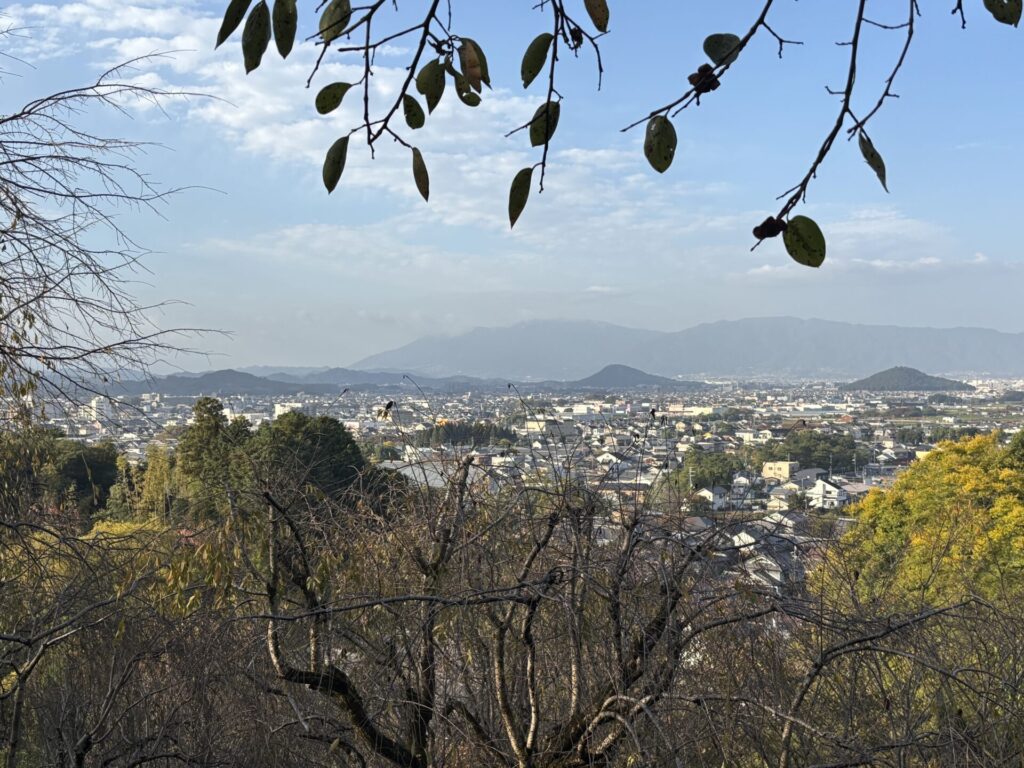
左から、香具山、畝傍山、耳成山。
From left to right: Mt. Kagu香具山, Mt. Unebi畝傍山, and Mt. Miminashi耳成山.
古代から神聖な山とされ、『万葉集』などの古典でも数多く言及されている山々です。この山については、香具山(かぐやま)と耳成山(みみなしやま)が畝傍山(うねびやま)を巡ってのライバル関係にあったという伝説があります。どの山が男でどの山が女かはまだ議論されているようですが、当時は二人の男が一人の女を巡って争うことが多かったため、おそらく畝傍山が女で香具山と耳成山が男なのだろうと推測されています。
Since ancient times, the Yamato Three Mountains have been regarded as sacred, and they are frequently mentioned in classical texts such as the Man’yōshū万葉集. According to legend, Mount Kagu香具山 and Mount Miminashi耳成山 were rivals, both competing for Mount Unebi畝傍山. Although there is still debate over which mountain represents a man and which a woman, it is often assumed that Mount Unebi is female, while Mount Kagu and Mount Miminashi are male. This interpretation reflects ancient society, where it was common for two men to vie for the affection of one woman.
この伝説について『万葉集』中大兄皇子(なかのおおえのおうじ)の歌には、
香具山は 畝傍ををしと 耳成と 相争ひき 神代より かくにあるらし いにしへも しかにこそあれ うつせみも 妻を 争ふらしき
訳 香具山は畝傍を雄々しい(?ここはいとしいという意味?)と思って、耳成と争った、神の時代からこのようなのだ、人間の世も妻を争うようだ。
とあります。
This legend appears in a poem composed by Prince Naka no Ōe中大兄皇子 (later Emperor Tenchi天智天皇)from the Man’yōshū:
Kagu-yama wa Unebi wooshito Miminashi to Aiarasoiki Kamiyo yori Kakuni arurashi Inishie mo Shikanikoso are Utsusemi mo Tsuma wo arasō rashiki
Translation
Mount Kagu, loving Mount Unebi,
contend with Mount Miminashi.
It has been so since the age of the gods.
In ancient times, it was so—
and even in the human world,
men still content with one another
for the sake of a wife.
中大兄皇子(天智天皇)といえば、妻である額田王(ぬかたのおおきみ)と弟大海人皇子(おおあまのみこ)との複雑な恋愛関係でも知られています。もともとは大海人皇子の妻であった額田王は、後に天智天皇に嫁ぎました。しかし額田王が狩場で大海人皇子に会った時、2人は今も抑えきれない恋の歌を贈りあったのでした。
額田王
あかねさす 紫野行き 標野(しめの)行き 野守は見ずや 君が袖振る
訳 紫草を栽培する野を行き、標野(一般の人の立ち入りが禁止された野)を行き、野の番人は見ないのか、君が袖を振って、私に愛を伝えているのを。
大海人皇子からの返事
紫草のにほへる妹を憎くあらば人妻故に吾恋ひめやも
訳 紫草のように美しいあなたを憎く思うならば、人妻のあなたのために私は恋しく思うだろうか。
人妻である額田王への愛を抑えきれない大海人皇子、そんな大海人皇子の愛情表現を心配しつつも受け止める額田王、ロマンチックな和歌です。
Prince Naka no Ōe (Emperor Tenji) is also well known for his complex romantic relationship involving his wife, Princess Nukata, and his younger brother, Prince Ōama (later Emperor Tenmu). Princess Nukata was originally married to Prince Ōama, but she later became the consort of Prince Naka no Ōe. Even so, when Princess Nukata encountered Prince Ōama at a hunting ground, the two exchanged passionate poems that revealed feelings they could not suppress.
Princess Nukata
Akane sasu Murasakino yuki Shimeno yuki Nomori wa mizu ya Kimi ga sode furu
Translation
As I walk through the purple fields,
through the place reserved exclusively for the nobility,
do the guards not see you,
waving your sleeve
to signal your love to me?
Prince Ōama’s Reply
Murasaki no Nioeru imo wo Nikuku araba Hitozuma yue ni Ware koi me ya mo
Translation
If I truly hated you,
you who glow like purple grass,
would I still yearn for you so,
even knowing
you are another man’s wife?
Prince Ōama cannot restrain his love for Princess Nukata, despite her status as a married woman. Princess Nukata, aware of the danger and worried about his open display of affection, nonetheless accepts his feelings with tenderness. Together, their poems form a deeply romantic exchange—one that echoes the ancient legend of the Yamato Three Mountains, where love and rivalry have intertwined since the age of the gods.

コメント